

Growing Chinese Influence in Bangladesh Making India Uneasy: Dhaka's Autonomy is New Delhi's Challenge
Mongla matters because it represents more than a port. It reflects the erosion of inherited strategic privilege in South Asia. India can no longer assume automatic influence in Bangladesh, while Bangladesh cannot expect infrastructure agreements with China to be interpreted as purely economic.
 Jul 16, 2026
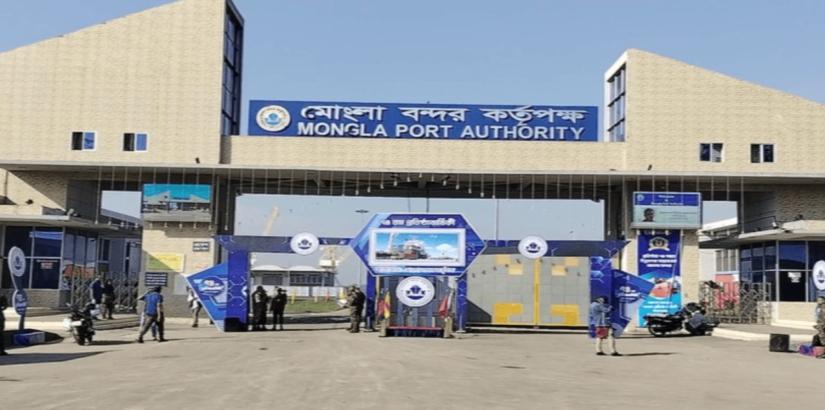
When Bangladesh and China announced cooperation on Mongla Port during Prime Minister Tarique Rahman’s June 2026 visit to Beijing, the arrangement initially appeared to be another infrastructure deal. For India, however, Mongla has become part of a broader strategic picture in the Bay of Bengal, where Chinese-supported ports, economic zones, river projects, connectivity plans, and defense exchanges are increasingly converging.
New Delhi’s concern is not that China will turn Mongla into a naval base tomorrow. The anxiety is cumulative. The June 26 China-Bangladesh joint communiqué covered not only the modernization of Mongla Port, but also the Chinese Economic and Industrial Zone in Chattogram, direct connectivity, cooperation on the Teesta River, maritime affairs, defense exchanges, and a possible “2+2” dialogue involving foreign and defense officials. It also elevated the relationship toward a “China-Bangladesh community with a shared future.” Viewed together, these initiatives suggest to Indian strategists the gradual expansion of Chinese influence on India’s eastern flank.
Geography explains much of this concern. Bangladesh is bordered by India on three sides and opens southward into the Bay of Bengal. Its ports lie close to India’s northeast, eastern coastline, and maritime routes linking South Asia with Southeast Asia. Mongla is therefore important not only because of its present commercial capacity, but because of what it could become when connected to industrial zones, inland waterways, railways, and regional transport corridors.
India's Reservations About Mongla, Teesta
This is why the announcement attracted scrutiny in India. Former Indian High Commissioner to Bangladesh Veena Sikri described Chinese involvement in Mongla as “one big change” from earlier India-Bangladesh understandings. She also argued that China’s role in the Teesta project would be viewed by India as a security risk. Her comments reflect a wider Indian concern: China does not need formal military basing rights to acquire strategic advantages. Civilian projects can remain commercial while also producing knowledge of cargo flows, shipping patterns, logistics networks, and sensitive geography.
The Teesta River project demonstrates this tension most clearly. Bangladesh regards Chinese assistance for the Teesta River Comprehensive Management and Restoration Project as a development opportunity involving flood control, dredging, riverbank protection, and dry-season water management. India views the same project through the lens of its proximity to the Siliguri Corridor, the narrow land link between mainland India and its northeastern states. A sustained external technical presence near this area will inevitably attract Indian attention.
India’s Ministry of External Affairs has made that position explicit. Responding to questions about Bangladesh-China defense discussions, the proposed China-Myanmar-Bangladesh Economic Corridor, and the Teesta project, spokesperson Randhir Jaiswal said India would closely monitor developments in its neighborhood and take appropriate measures when required.
India's Failure, Bangladesh's Opportunity
Yet India’s security narrative is incomplete without acknowledging its own policy failures. Bangladesh turned to China after the proposed India-Bangladesh agreement on sharing Teesta waters failed to materialize in 2011, largely because of opposition from West Bengal. Beijing’s involvement is therefore not simply a strategic entry into India’s neighborhood; it is also Dhaka’s attempt to address a long-unresolved bilateral problem. India may see Chinese technical access as a risk, while Bangladesh sees an opportunity to advance a delayed national project.
Reuters reported that Rahman asked President Xi Jinping to help reduce Bangladesh’s trade imbalance with China, increase imports of Bangladeshi products, and support major infrastructure and industrial modernization projects. China also expressed support for port and water projects and the proposed economic corridor through Myanmar.
This does not mean Bangladesh is aligning exclusively with China. Its strategy remains transactional and focused on preserving autonomy. Rahman has emphasized friendship with all countries while protecting national interests and has promoted a “Bangladesh Before All” policy. As Dhaka University scholar Lailufar Yasmin observed, Bangladesh needs both China and India and must approach the relationship pragmatically. Bangladesh is not seeking to replace India with China; it is trying to expand its diplomatic and economic options.
Risks and Incentives for Dhaka
Nevertheless, closer ties with China carry risks. Bangladesh owes China $6.2 billion, while Chinese firms have invested approximately $7.7 billion, about half in the energy sector. These figures do not prove a “debt-trap” strategy, but they justify careful scrutiny of repayment obligations, contract transparency, environmental standards, and political influence. Strategic autonomy is meaningful only when partnerships remain diversified and institutions retain oversight.
For India, the deeper challenge is that its Bangladesh policy has often been reactive. New Delhi invested heavily in relations with Sheikh Hasina’s government and benefited from security cooperation, connectivity, and political predictability. After Bangladesh’s post-2024 political transformation, that approach became harder to sustain. China has since widened its engagement with the government and multiple political actors.
Constantino Xavier of the Centre for Social and Economic Progress has described China as steadily building influence, while Thomas Kean of the International Crisis Group has warned that prolonged tensions between Dhaka and New Delhi would give Bangladesh greater incentive to move closer to Beijing.
Influence Must be Earned
India’s concerns are therefore understandable, but warnings alone will not preserve its influence. New Delhi needs a policy based on delivery: faster implementation of promised projects, diplomatic sensitivity, reduced border friction, and a serious effort to resolve or depoliticize the Teesta dispute. It must also engage Bangladesh across the political spectrum instead of appearing dependent on one party or political era.
Dhaka must exercise equal caution. Port modernization and river-management projects should serve Bangladesh’s economy rather than become instruments in a great-power contest. The government should welcome investment while insisting on fiscal transparency, parliamentary and institutional oversight, environmental safeguards, and clear restrictions on any future military use of civilian infrastructure.
Mongla matters because it represents more than a port. It reflects the erosion of inherited strategic privilege in South Asia. India can no longer assume automatic influence in Bangladesh, while Bangladesh cannot expect infrastructure agreements with China to be interpreted as purely economic.
Dhaka’s challenge is to preserve autonomy without creating dependency. New Delhi’s challenge is to recognize that influence must now be earned through performance, not assumed through history.
(The author is a Doctorate Candidate in International Politics at Shandong University, Qingdao Campus, China and Assistant Professor Department of Political Science at Bangabandhu Sheikh Mujibur Rahman Science and Technology University, Gopalganj, Bangladesh. The views expressed are personal. He can be contacted at amdad.pols@bsmrstu.edu.bd )







Post a Comment