

Prominence or Pragmatism: India, Pakistan, and the Changing Currency of Global Influence
None of this suggests that Pakistan’s rise is occurring at the expense of India’s decline. Despite its challenges, India remains far more capable than Pakistan in areas such as advanced technology, financial capacity, and strategic alliances. Nevertheless, the evolving global environment suggests that diplomatic flexibility is becoming increasingly important. In other words, the issue is less about visibility or size and more about the ability to operate effectively amid differences and maintain communication during difficult times.
 May 19, 2026
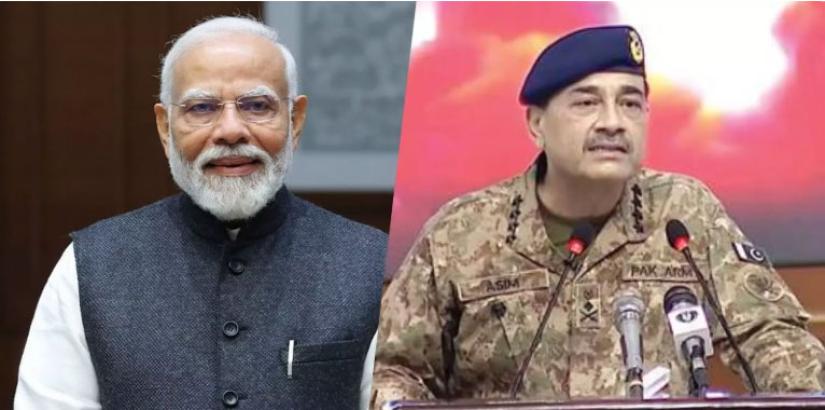
In today’s geopolitics, international prestige is measured not only in terms of how rich in history a state is, but also in terms of its diplomatic viability despite being on opposite sides of global divides. This can be observed by analyzing the histories of both India and Pakistan since their founding in 1947, when British India was partitioned into two separate countries.
Diverging Beginnings After Partition
In the years following Partition, India possessed numerous structural advantages that enabled it to play an active role in post-colonial diplomacy. Being a large country and undergoing a relatively smooth and successful process of independence, India found itself capable of contributing significantly to the shaping of post-colonial policies. Moreover, by participating in the founding of the Non-Aligned Movement in 1961, India established itself as a mediator on the global stage.
Pakistan, however, was much more constrained in its early trajectory. The country faced numerous security and political challenges, and because of its alignment during the Cold War, it did not enjoy the same freedom to pursue an independent foreign policy.
Reputation, however, is not something constant; it changes according to a state’s policy decisions, domestic affairs, and international alignments.
India’s Rise and Domestic Politics
India’s status in the world order has seen tremendous growth during the last decade. Its economic success, regional alliances, and bloc memberships, such as the Quad, have all contributed to the country’s growing importance in the Indo-Pacific region. At the same time, developments within India’s domestic politics have also made it a major international talking point. The emergence of Hindutva ideology has coincided with the rise of the RSS and the BJP government led by Narendra Modi.
Policies such as the Citizenship Amendment Act and the constitutional changes related to Jammu and Kashmir in 2019 have further intensified international attention toward India. Analyses by organizations such as Amnesty International and Human Rights Watch, along with declining freedom ratings from Freedom House, indicate continuing debate over civil liberties, institutional checks and balances, and minority rights. These debates unfold against the backdrop of India’s enduring strategic importance, highlighting the tension between image and substance.
Pakistan’s Geostrategic Relevance
While India continues on its path, Pakistan’s trajectory has diverged somewhat from that of its neighbor. Unlike India, whose approach emphasizes scale and prominence, Pakistan has increasingly focused on pragmatic diplomacy and geopolitics. This can be seen through its involvement in multilateral institutions such as the UN, OIC, and SCO.
Pakistan’s geographical location remains a major strategic consideration. Situated at the crossroads of South Asia, West Asia, and Central Asia, and in close proximity to the Strait of Hormuz — through which around twenty percent of the world’s oil passes — Pakistan cannot be overlooked in regional politics. Moreover, its approximately 900-kilometer border with Iran makes it relevant to Middle Eastern dynamics, especially during periods of friction between the region and the United States.
Pakistan’s geostrategic significance is further reinforced by connectivity initiatives such as the China-Pakistan Economic Corridor (CPEC), launched in 2015 and involving projects valued at over $60 billion. Through ports, railways, energy projects, and industrial development, CPEC strengthens Pakistan’s role as a regional corridor and logistics hub. The development of Gwadar Port also gives Pakistan a significant maritime dimension, linking its interior regions with international shipping lanes.
Situational Diplomacy and Emerging Technologies
Less obvious, yet perhaps more profound in its implications, is Pakistan’s effort to maintain pragmatic ties despite bloc-related tensions. In practical terms, this means Pakistan could potentially function as a communication channel when direct engagement between other states becomes politically difficult. This should not be viewed as mediation in the classical sense of a neutral third-party arbitrator. Rather, it represents a form of situational diplomacy.
More recently, another example of such situational diplomacy has emerged through Pakistan’s adoption of innovative financial technologies. The establishment of a regulatory framework for virtual assets through the Pakistan Virtual Asset Regulatory Authority (PVARA), together with the State Bank of Pakistan, indicates the country’s intention to move from ad hoc technological adaptation toward a more systematic approach.
Considering annual remittance inflows of roughly $30 billion, the use of stablecoin payments could help reduce transaction costs and improve accessibility for millions of Pakistani families. Similarly, the use of surplus electricity for crypto mining and AI-related data centers reflects an attempt to transform structural challenges into opportunities.
This aspect should not be underestimated. States do not usually become mediators because they inspire universal trust; rather, their relevance often stems from their usefulness and ability to operate without disturbing existing geopolitical balances. In this context, Pakistan’s attempt to combine traditional diplomatic methods with modern economic instruments appears to be a response to growing global fragmentation.
Two Contrasting Political Strategies
None of this suggests that Pakistan’s rise is occurring at the expense of India’s decline. Despite its challenges, India remains far more capable than Pakistan in areas such as advanced technology, financial capacity, and strategic alliances. Nevertheless, the evolving global environment suggests that diplomatic flexibility is becoming increasingly important.
In other words, the issue is less about visibility or size and more about the ability to operate effectively amid differences and maintain communication during difficult times. Pakistan’s recent moves in digital financial regulation offer one example of such an approach in practice.
Indian and Pakistani strategies, therefore, can be viewed as examples of two contrasting political models. The first emphasizes scale, prominence, and power projection, even at the cost of attracting criticism from abroad. The second is more pragmatic, focusing on relevance and connectivity in order to secure importance. Pakistan’s approach illustrates this strategy through its combination of geostrategy, international cooperation, and technological adaptation.
Relevance as Currency of Influence
In an increasingly fragmented global order, where traditional boundaries are becoming more blurred, relevance may ultimately emerge as the more valuable currency. Pakistan’s case suggests that, through strategic vision and organized policymaking, even states without long-standing international prominence can position themselves as important players. India, meanwhile, appears increasingly constrained by the moral and political scrutiny that accompanies its growing power.
(The author is a visiting faculty member at the Department of Politics and International Relations, International Islamic University, Islamabad (IIUI), Pakistan. She holds an MS in Strategic Studies from Air University Islamabad. The views expressed are personal. She can be reached at saranazeer2@gmail.com.)





Post a Comment