

Two May Deaths That Left Deep Political Imprint on India and Sri Lanka
For many in India and Sri Lanka, however, the memory of the assassination remains raw. Rajiv Gandhi’s killing was not merely the death of a much-loved former prime minister; it marked the violent spillover of the Sri Lankan ethnic conflict into India itself.
 May 26, 2026
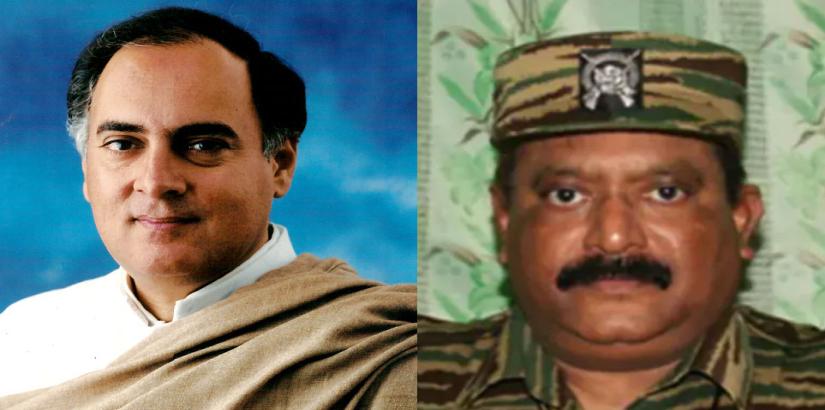
Two commemorations of death anniversaries took place in India and Sri Lanka in the third week of May 2026 - one of a political leader and prime minister and the other of a militant leader and terror mastermind. The assassination of former Indian Prime Minister Rajiv Gandhi in Sriperumbudur, Tamil Nadu on May 21, 1991, remains one of South Asia’s most consequential political killings. Carried out by the LTTE suicide bomber Dhanu during an election rally, the killing reshaped India’s Sri Lanka policy, hardened India’s anti-terror laws, and altered Tamil Nadu politics for generations.
Velupillai Prabhakaran, the militant leader who gave orders for Rajiv Gandhi killing, lived 18 more years until his death at Nanthikadal in north Sri Lanka, the place of the final battle between his terrorist outfit and the Sri Lankan armed forces on May 18, 2009.
Within the first few days of investigations on Rajiv Gandhi assassination, it was established that the LTTE was responsible and the outfit was banned in India. It was revealed during investigations that Prabhakaran wanted to take revenge for Rajiv Gandhi for signing the Indo-Lanka Accord of July 29, 1987 and sending the Indian Peace Keeping Force (IPKF) to Sri Lanka as peacekeepers, who later turned their guns on the LTTE when the militants violated the ceasefire accord. Over 1,100 Indian soldiers died in Sri Lanka in confrontations with the LTTE.
“We will never, never allow the LTTE to succeed,” former Indian Ambassador Gopalaswamy Parthasarathy told this columnist in the late 1990s during a conference in Islamabad, Pakistan. “Not only did Velupillai Prabhakaran ruthlessly kill our former Prime Minister Rajiv Gandhi, by doing so he blatantly interfered in the Indian democratic governing system. We, the Congress, Janata Party or any other Government of India, will never forgive Prabhakaran and his cadres and supporters for what they did,” Parthasarathy had said.
Divided Indian Polity
Every Indian government adhered to the ban and has continued it to date. The ban is renewed every year. Despite that, some political elements in Tamil Nadu retained their support for the Tamil separatist LTTE. Notables among them are Vaiyapuri Gopalsamy alias Vaiko, Senthamizhan Seeman and Srinivasan Ramadoss.
The latest to join the list was TVK Leader Chandrasekaran Joseph Vijay, popularly known as Thalapathy Vijay, the cinema star turned politician who became Tamil Nadu chief minister after a stunning election victory. However, last week, in his comment on the so-called Mullivaikkal Mahaviru commemoration day, Chief Minister Vijay refrained from naming either Prabhakaran or the LTTE. Apparently, New Delhi had cautioned him not to mention the banned organisation or Prabhakaran. Obviously he did not want to antagonise the Congress Party, which is a partner in his Tamil Nadu ruling alliance.
However, the country's ruling Bharatiya Janata Party criticised Congress for extending support to Vijay and for his war remembrance post, pointing out that their leader Rahul Gandhi’s father Rajiv was killed by the LTTE.
The Congress Party, while condemning Prabhakaran who ruthlessly ordered the killing of Rajiv Gandhi, has now taken a more conciliatory approach to the LTTE convicts of Rajiv assassination case. Rajiv’s children Priyanka and Rahul take the view that the convicts were misled and misguided. Priyanka Gandhi also met Nalini Sriharan, one of the convicts in the assassination case, in prison in 2008 as part of what she later described as a personal attempt to come to peace with the tragedy.
In Sri Lanka, there were Mahaviru Day meetings, not only in the Tamil majority north and east, but also in Wellawatte in Colombo, a suburb with heavy concentration of Tamil residents. There were attempts to disrupt the Wellawatte Mahiviru commemoration by a few Sinhala hardliners, but the police intervened to prevent physical clashes.
Terror to Reconciliation
The LTTE cadres who were convicted in the Rajiv Gandhi assassination were released from Tamil Nadu prison after they completed their prison sentence. Thirty-five years later, the surviving convicts in the case are no longer behind bars. Some have returned to Sri Lanka, one has become a practising lawyer, and others are attempting quiet civilian lives far removed from the shadows of India’s biggest terror case.
In November 2022, the Supreme Court of India ordered the release of the remaining six convicts in the assassination case, citing long incarceration periods, conduct in prison, and remission recommendations from the Tamil Nadu government.
The released convicts were A.G. Perarivalan, Nalini Sriharan, V. Sriharan alias Murugan, who married Nalini when they were behind bars, Robert Payas, Jayakumar and Ravichandran. The most dramatic post-prison transformation was of A. G. Perarivalan, once sentenced to death for allegedly procuring batteries used in the bomb device. After spending 31 years in prison, Perarivalan studied law, passed the All India Bar Examination, and in April 2026, formally enrolled as an advocate with the Bar Council of Tamil Nadu. He is now preparing to practise at the Madras High Court in Chennai.
Memory Remains Raw
For many in India and Sri Lanka, however, the memory of the assassination remains raw. Rajiv Gandhi’s killing was not merely the death of a much-loved former prime minister; it marked the violent spillover of the Sri Lankan ethnic conflict into India itself.
As one commentator said, the journey of the Rajiv Gandhi convicts—from death cells to freedom, from prison uniforms to lawyer’s robes—illustrates how terrorism, justice, politics and reconciliation continue to collide decades after the deadly bombing at Sriperumbudur.
(The author, a former Sri Lankan diplomat, is a political and strategic affairs commentator. Views expressed are personal. He can be reached at sugeeswara@gmail.com.)




Post a Comment