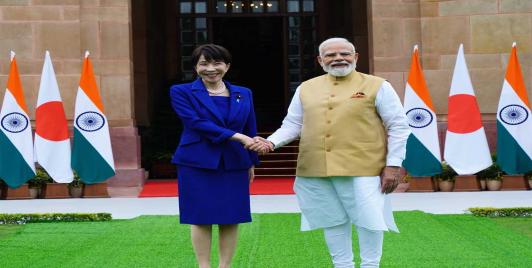


Japanese PM and Indian PM in India

India and Japan’s Next Security Challenge Is Strategic Endurance

India and Japan should conduct regular stress tests involving scenarios such as disruption to an energy route, a cyberattack on logistics infrastructure, loss of an undersea cable or the unavailability of a specialized defense component. 

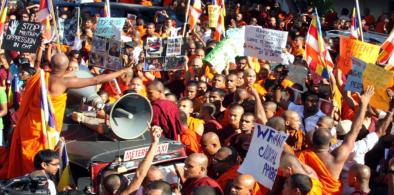
Sri Lanka's Influential Buddhist Clergy Throws a Religious Challenge to Government

Sri Lanka’s Constitution gives Buddhism a special position under Article 9 while also protecting freedom of religion under Article 10 and related constitutional provisions. The government therefore has responsibilities both to protect Buddhist traditions and to ensure that the law is applied fairly across religious communities.

Amid Changing Geopolitics and Internal Turmoil, South Asia may Paradoxically get more European Attention

Some observers wrongly assume Europe's current crises will lead to a retreat from Asia. The opposite may occur. The EU's internal turmoil is accelerating a fundamental redefinition of its external priorities. South Asia is becoming increasingly important

Air Power and National Security: Strategic Choices that the Indian Air Force Needs to Make

Air power will remain central to national security. Whether India has enough of it, in the right form, and can afford it in scarce dollars, is still an open question. ACM Singh is to be commended for his distinguished service and stellar leadership – and more importantly – rendering objective professional advice to the apex leadership, an increasingly rare trait in the current times.

More on Geopolitics, Security and Strategic Affairs

Jammu & Kashmir: A landmark decision, but a work in progress

Internationally, the impact has been positive across the international community and, even China, although initially negatively disposed, has chosen not to be too vociferous in its protestations, writes  Lt Gen Syed Ata Hasnain (retd)  for South Asia Monitor

The pivotal role of Haj in transforming Saudi-India ties

Haj will continue to be the harbinger of cultural and economic cooperation between India and Saudi Arabia, writes Dr H A Nazmi for South Asia Monitor

Modi's ‘high-risk’ coup could yield rich dividends in Jammu & Kashmir

Those who have closely watched Modi believe that the prime minister wanted to give a clear signal that his government would be in a pro-active mode to handle long pending issues, writes Arun Anand for South Asia Monitor

Why Pakistan got trapped in its Kashmir plebiscite demand

The reason Pakistan was afraid of the plebiscite was that the raiders and troops it had sent in “had indulged in loot, arson, rape, and murder in the State. Scores of villages and towns were destroyed and hundreds of thousands of people uprooted, writes Arul Louis for South Asia Monitor

India's move will bring investments into Jammu & Kashmir, create employment

Pakistan can be expected to up the ante on terror, but any misadventure by Pakistan will be suitably responded to by India, writes  Lt Gen Prakash Chand Katoch (retd) for South Asia Monitor
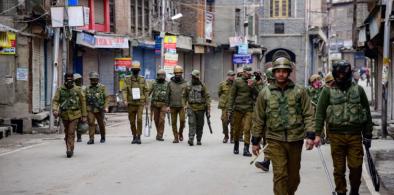
In Kashmiri psyche, Hindu majoritarianism will replace a multicultural democratic India as national symbol

If, in the name of security, the BJP can, with one stroke, undo the federal asymmetry which was a product of the unique circumstances pertaining to the accession of J&K state to India, with a complex set of legal and constitutional mechanisms, the same can be done to the Northeast special powers, but with greater ease, writes Reeta Tremblay for South Asia Monitor

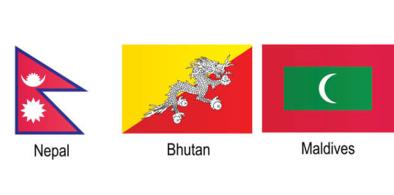
The course of three South Asian democracies - Nepal, Bhutan and Maldives

After a decade, these three countries - Nepal, a Hindu majority country, Bhutan, a Buddhist country and Maldives, an Islamic country - make a compelling study in the journey of democracy, writes Rishija Singh for South Asia Monitor

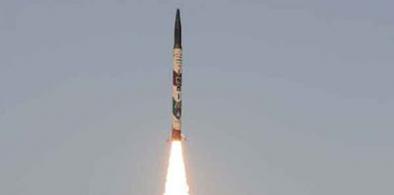
India's nuclear policy has destablised South Asia: A Pakistani view

Despite dramatization of Pakistan’s nuclear capabilities, it is quite clear that South Asia has remained safe from any major conflict due to Pakistan’s nuclear weapons, writes Rabia Javed for South Asia Monitor

The dichotomy in Bangladesh: Democracy or development

By narrowing the space for dissent and dichotomizing values, the ruling Awami League has effectively defanged the opposition, media as well as ordinary people writes Rishija Singh for South Asia Monitor

India's hyper-nationalist narratives helped Pakistan Army stay relevant

The warmongering narrative, primarily driven by the ruling party and the media at large, may fetch some electoral gains to the BJP  but it has proved to be welcome fodder for the Army in Pakistan as it tries to reinvent itself to remain relevant, writes Mayank Mishra for South Asia Monitor

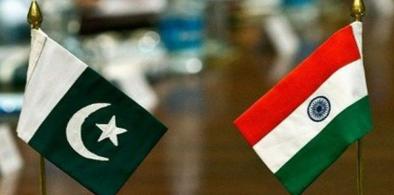
India and Pakistan: Will there be a spring in ties?

As those who follow the India-Pakistan dynamic would know, there are two aspects to this relationship, often diametrically at odds with each other. A neutral observer would not know where the truth lies - perhaps, in between

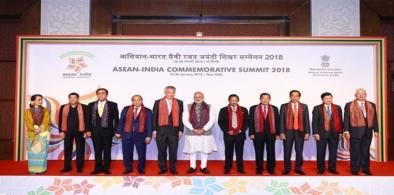
India-ASEAN partnership: New Delhi must provide a balance to Beijing

Some foreign policy analysts from Southeast Asia have questioned the lack of performance by India, hinting at a subtle resistance to the concept of “Indo-Pacific” as a replacement to the old “Asia-Pacific,” writes Tunchinmang Langel for South Asia Monitor

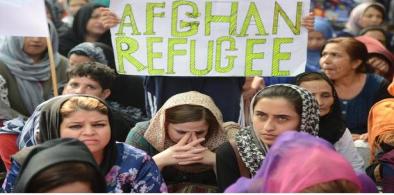
Afghan refugees in India: The nowhere people

Given their situation, the only reason most Afghan refugees are staying on in India is to get a chance to go to any European country, writes Khatima Emami for South Asia Monitor

History tells us Pakistan Army will play spoiler

In a tumultuous fortnight, during which many an illusion was shattered at the turn of the year, some home truths emerged in the chronically accident-prone ties between India and Pakistan