
China’s Xi Jinping meeting with North Korea's Kim Jong Un

Xi Jinping’s Loosening Leverage Over North Korea Amid Shifting Indo Pacific Security Dynamics

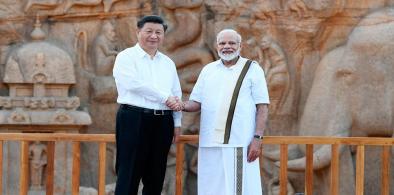
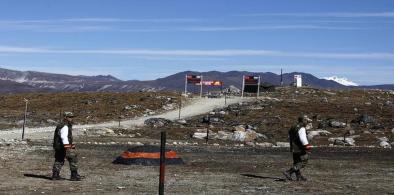
China in recent times has elevated some of its key bilateral relations, Vietnam, Pakistan, North Korea, to the level where they are now considered by Beijing as  consequential to regional and global peace and stability. China’s foreign and 'grand strategy' is aimed at realizing a shared destiny for mankind and nurturing a new type of great-power relations within a multipolar world. This requires a strategic alignment between China’s strategy and others.

Bangladesh's 'Red Telephone' Breach: More to it Than Meets the Eye?

More importantly, the alleged sabotage occurred during a period of political transition following the developments of August 2024. Institutional loyalties, political rivalries, and competing networks of influence continue to shape Bangladesh's political landscape. In such a context, any breach involving the Prime Minister's secure communications infrastructure deserves careful examination.

Between the Melody Moment and the Hard Work Ahead: Modi's Europe Tour Outcome Will Depend on Delivery in Coming Years

India's MSME sector, the backbone of its export economy, remains largely unequipped to navigate European standards and certification requirements. As ABC Live noted, the next stage will be tougher than negotiation: India must now prove that its exporters, MSMEs, regulators, ports, testing labs, and state governments can actually use the agreement. A framework signed in Gothenburg means nothing to a textile exporter in Tiruppur who cannot get a product certified to EU standards.

Why India and Pakistan Must Move From Rivalry to Responsibility: In Fragmenting Global Order, South Asia Cannot Afford Internal Paralysis

The central lesson is simple: unresolved India-Pakistan hostility weakens South Asia from within. It prevents trade, blocks institutions, raises nuclear risk, politicizes water, militarizes borders, and diverts attention from human development. Both countries will continue to disagree on major issues. But disagreement does not require permanent hostility. Strategic maturity means building rules to manage conflict before conflict manages the region.

More on Geopolitics and Strategic Affairs

Is Pakistan likely to face more US sanctions after American troops leave Afghanistan?

Pakistan fails to realize that with US troops exiting Afghanistan, Washington will no longer overlook the generation of terrorism and recruitment of child soldiers by Pakistan, especially when it is wedded to Beijing against the US, writes Lt Gen P. C. Katoch (Retd) for South Asia Monitor 

Bhutan’s king leads from the front nation's battle against Covid-19

Although Bhutan will succeed in its vaccination drive, the scramble in the South Asian region for doses underscores the highly iniquitous access to vaccines to fight Covid-19, writes N. Chandra Mohan for South Asia Monitor

Dalai Lama turns 87: Should India continue to keep him at arm's length?

The Chinese Communists were never shy in shaking hands with insurgents and rebels from India. In contrast, the Dalai Lama has never wielded a weapon. In that sense, he is also a Mahatma Gandhi, writes M.R. Narayan Swamy for South Asia Monitor

Nepal in need of massive judicial reforms to ensure implementation of court orders

The Supreme Court of Nepal issued 246 verdicts in 2019-2020 to be implemented by the various ministries, The government, in most cases, didn’t comply with the court orders, writes Ravi Nayak for South Asia Monitor

How remote-area vaccination is boosting India's security

The government’s vaccination outreach to remote border areas, in Kashmir and the Northeast, and the local people's smiling embrace of these efforts was an indication of their comfort level and confidence in the Indian system, writes Nilova Roy Chaudhury for South Asia Monitor

Can the US underwrite regional stability against emerging Chinese threats?

In the long run, if tactically implemented, the B3W initiative can also help India and its allies balance China’s String of Pearls strategy in South Asia and beyond, writes Pradeep S. Mehta for South Asia Monitor

Uttar Pradesh will be a bellwether of Modi's continuing popularity

A defeat in Punjab or in Goa will not bother the BJP too much. But UP is different not only because its location in the heartland has always provided significant pointers about political trends, writes Amulya Ganguli for South Asia Monitor

Can Imran Khan's 'Pakistaniyat' help improve the country's self-image?

“Hollywood-Bollywood vulgarity” has been one of Imran Khan’s pet peeves for long and he has ordered the drafting of a new nationalist, culturally-centred film policy for Pakistan that is yet to be made public, writes Mahendra Ved for South Asia Monitor

Bangladesh struggling to vaccinate its people amidst a looming third wave of Covid 19

Public health experts believe that Bangladesh, despite having a good record of conducting vaccination programs, has failed in the case of the Covid  jabs because of its earlier reliance on a single vaccine, writes Rakib Al Hasan for South Asia Monitor

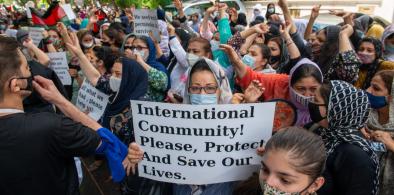
Can the Afghan government channelise numerous people's movements into a new anti-Taliban front?

If the Afghan government can accurately manage the spontaneous movements of the people and prevent them from becoming mere tools for the warlords, not only can it create a new front against the Taliban, but also mobilize public opinion to a large extent, as it is already doing to some extent, writes Saleem Payenda for South Asia Monitor

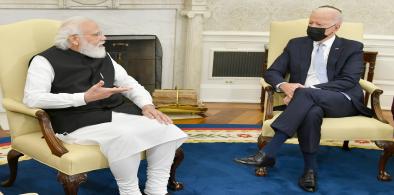
Modi's Kashmir meeting has many regional ramifications, will be keenly watched

Unless Kashmir moves towards democratic governance - and New Delhi is able to reach some kind of modus vivendi over it with Islamabad - it will remain vulnerable to extremist influences and spillovers from the notorious AfPak terror sanctuaries, writes Tarun Basu for South Asia Monitor

US military exit from Afghanistan will be China's strategic gain

The US will realize its strategic blunder of surrendering Afghanistan to the Taliban after the entire Af-Pak-Iran region comes under Chinese influence, writes Lt Gen Prakash Katoch (Retd) for South Asia Monitor

India's digital talent can be harbinger of new direction in Japan-India cooperation

Hamstrung by the shortage of digitally skilled hands, Japan needs to rope in digital talents from India that constitutes one of the biggest digital talent pools, writes S. Majumder for South Asia Monitor

Why India is losing ground in Sri Lanka

India has to reflect on its own conduct vis-à-vis smaller neighbors including Sri Lanka to have some idea of why country after country it had counted as friends are leaning towards China, writes  M.R. Narayan Swamy for South Asia Monitor

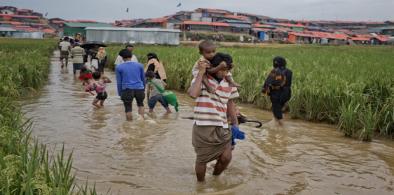
International community needs to extend humanitarian assistance to Bangladesh to end lingering Rohingya crisis

Bangladesh cannot solve the Rohingya crisis alone; the international community should come forward in implementing the promised humanitarian actions and work in coordination with Bangladesh to find a durable solution to the festering problem, writes Shaikh Abdur Rahman for South Asia Monitor