For diaspora Indians around the world, Udhas became an emblem of their pining for their home back in India with his 1986 raging hit “Chitthi Aayi Hai” from the movie ‘Naam’, written by Anand Bakshi and composed by Laxmikant Pyarelal.


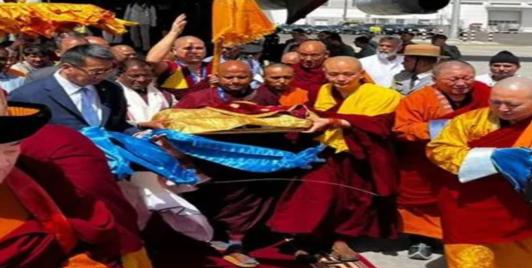
The profound emotional connection was vividly evident in 2022 when, as the Indian delegation accompanying the relics entered the Gandan monastery, members of the crowd reached out to touch them, expressing their reverence for those who had come "from the land of the Buddha".

One idea which both young and senior activists are exploring is about the possibility of a series of visits by youth teams to the South Asian capitals to meet with the leadership. They want to explain how deeply young people are affected and committed to address the crisis of climate change, global warming, and especially the fragility of the mountain regions as witnessed in the recent devastation in Nepal.

The Taliban may curate the museum. The newsroom must curate the context. Without that context, international television risks giving an extremist movement something it has always sought, not necessarily agreement, but attention; not necessarily legitimacy, but spectacle.

For an Indian audience, the most meaningful response to W.R.A.P. is not the comforting declaration that Indians and Pakistanis are identical. Such a claim can erase real histories and differences as readily as nationalism exaggerates them.

For diaspora Indians around the world, Udhas became an emblem of their pining for their home back in India with his 1986 raging hit “Chitthi Aayi Hai” from the movie ‘Naam’, written by Anand Bakshi and composed by Laxmikant Pyarelal.
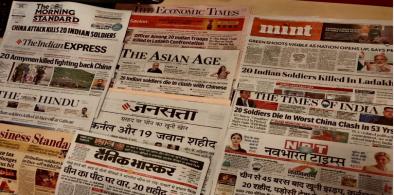
The mainstream Indian media, a section of which has mostly been a subject of the nationalist government’s monopolistic control, has often served the ends of the dominant elite
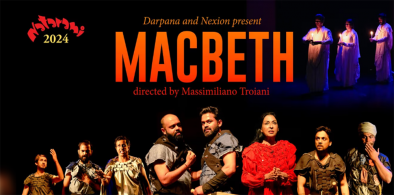
Sharply directed by Massimiliano Troiani, Sarabhai’s ‘Macbeth’ is an allegorical musical interpretation of this Shakespearean classic about power at any cost.

There is no feeling or empathy in AI. It can churn huge numbers and will be able to analyze, “think” and react to external inputs but has no wisdom and feelings. Till that happens humans will always have an upper hand.
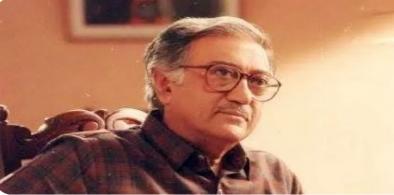
Since his was the only hit parade of its kind for at least two and half decades, Sayani became a formidable name within the Hindi cinema industry.
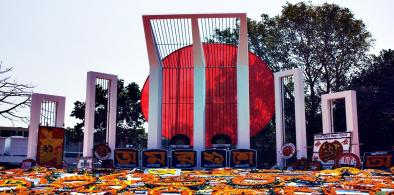
The whole world now recognizes the spirit and zeal for our culture and heritage. Bangladesh's people's sacrifices will be truly appreciated and commemorated when every nation imbibes the sense to pay proper homage to their linguistic heritage.

Facebook has become a tool for spreading hatred, sexual perversion and extremism. When people comment on sensitive topics like religion and gender, many cross the line of decency.
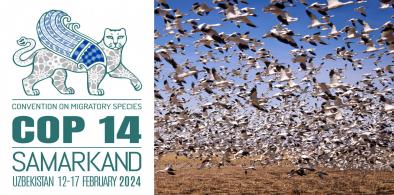
Keeping track of the migratory birds visiting the university campus, and how the impact of climate change would impact the migration of migratory birds, are among the subjects being promoted for research in universities across the globe. These include Beijing University, Royal University of Bhutan, University of SJP in Sri Lanka, HNB Garhwal University in India which are in the network of the Green TERRE Foundation.
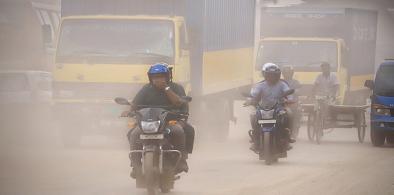
In response to public interest litigation filed by Human Rights and Peace for Bangladesh (HRPB), Bangladesh's High Court recently issued a nine-point directive to authorities to tackle the capital's life-threatening air pollution.

During the conversations that took place afterward, the journalists discussed why Nepal’s government, press, and civil society have not been more vocal about what they termed as a genocide being enacted by Israel in Gaza.
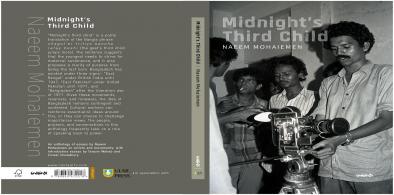
The essays cover distinct areas, exploring minority experiences and a wider Bengal, including, inevitably, West Bengal.
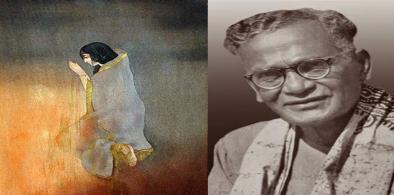
A democratisation of art, drawing from folk culture that is in direct contact with the realities of those who live close to the cycles of nature, represents a modern outlook that draws inspiration from contemporary reality.

The hyped technology has led us into a frenzied time where we either switch between TV channels or move our fingers on our smartphone screen for the next reel or newsfeed. Stuck within the labyrinth of visual images we are yet to find a new strategy to recover the lost humanity.
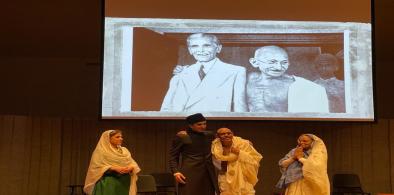
Against this backdrop, the staging of Dr Ahmed’s “Gandhi and Jinnah Return Home” in the Washington D.C. area offered a rare opportunity to witness peacebuilding at play. In one of the play's scenes, Jinnah and Gandhi resurface to debate the costs of partition alongside contemporary Indians and Pakistanis. After many rounds of dialogue, the two embrace one another.

The chemistry between Dharmendra and Shabana Azmi in the latest Karan Johar film ‘Rocky aur Rani’ suggests that Indian audiences are beginning to recognise that older people don’t just have a pulse, they actually have a heart!