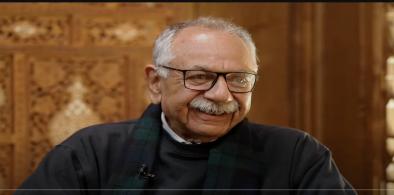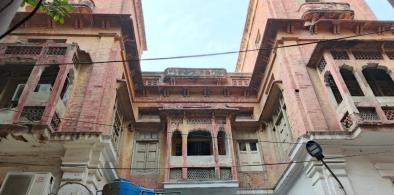


It is unbearable to even imagine being forced to leave your hometown or risk being slaughtered simply because you belong to a different religion. But I did not find any bitterness in Bani Singh's eyes for Lahore or my country, Pakistan.
Across South Asia, the difference between prejudice and collapse is not the existence of hate. Every society has it in varying shades. The difference is whether the majoritarian state internalizes hate against the ‘other’, whether FIRs get diluted, trials get delayed, mobs get garlanded and impunity driven violence against minorities becomes low-cost. When that happens, the poison is not outside the system. It becomes the system.
And perhaps this is precisely what many readers, particularly South Asian readers navigating fractured contemporary lives, have been missing without fully realising it: fiction willing to slow down long enough to notice the fragile, passing intimacies through which people continue surviving one another.
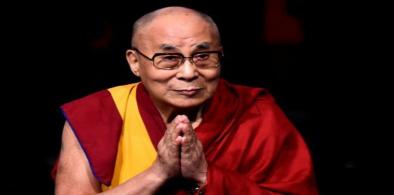
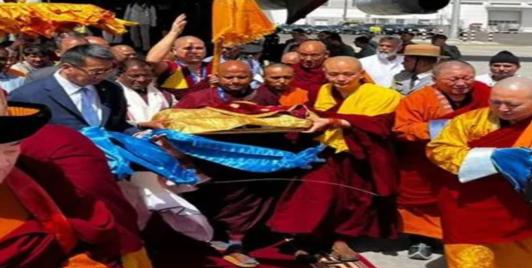
Thurman said that Tibet was not an individual nation-state question but something that goes far beyond that. “It is not about a people yearning for freedom from an invading state. It is about a very valuable society struggling to keep its centuries-old tradition of intellectual evolution alive.” He said that while he was hopeful that the problem would be resolved soon, “and during His Holiness’ lifetime,” it was hard to put a timeframe to it.
The perceived push from a political leadership that has roots in Gujarat, the split in the locally rooted Shiv Sena that was engineered, the resentment it brewed among ordinary citizens and the history of Maharashtra -- which was born on May 1, 1960 after a bitter struggle that split the erstwhile Bombay State into two distinct linguistic states of Maharashtra and Gujarat -- are all complex and contributory factors to the evolving political unrest in middle-class Mumbai.
It is unbearable to even imagine being forced to leave your hometown or risk being slaughtered simply because you belong to a different religion. But I did not find any bitterness in Bani Singh's eyes for Lahore or my country, Pakistan.
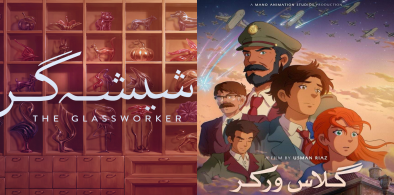
The connection between Isabella Stewart Gardner and two Pakistani filmmakers highlights the universal power of art. As Gardner's museum inspires visitors, The Glassworker seeks to expand Pakistani cinema and animation, globally presenting the country’s artistic heritage.
The excessive demonisation of Muslims in Bollywood in the last decade is quite well documented. The heightening of communal tensions in recent times has been cashed in by Hindi filmmakers who have developed an incessant need for Muslim villains in their films. Whether the script allows it or not, filmmakers like Vanga Reddy and Rohit Shetty have proven that the plot can be bent over and around to make sure that the antagonist is a Muslim.
Such a scene would likely face significant resistance in contemporary Kerala. The prevailing climate of communalism and sectarian divisions within Malayalee society would likely lead to demands for a ban on the film, with critics citing it as blasphemous. This highlights the increasing intolerance towards artistic expression that challenges religious sensibilities.
As India celebrates Mathematics Day, it is crucial to recognize figures like Allama Mashriqi, whose contributions to mathematics and society continue to resonate. While Ramanujan’s genius is rightly celebrated, the exclusion of Mashriqi—a Muslim mathematician of extraordinary talent—is both unjustified and a missed opportunity for inclusivity.
Discussions with various senior Pakistani diplomats in Colombo as well as Sri Lankan diplomats in Pakistan led to my first visit to Pakistan in September 2023 to participate in the people-centered initiative ‘Enduring Friendship’ events in Karachi, Islamabad and Lahore to commemorate the 75th anniversary of Sri Lanka-Pakistan diplomatic relations.
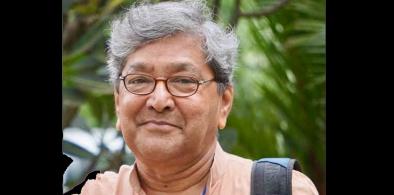
Benegal came across as a man of refined sensibilities and great empathy for the human condition, which clearly reflected in his cinema.
Singaporean, Chinese, Indian, Pakistani, Arabic – in fact all varieties of English are acceptable as part of ‘World Englishes’ as long as they serve the communicative purpose of language.
Fear of death has also been drastically reduced in people who have experienced near death experience (NDE). NDE seems to happen when a person is declared clinically dead but after some time returns to life. Quite a number of people during the NDE episode have also reported that their whole life flashes by and almost all their past actions become visible.
Sufism’s relationship with other religions is characterized by respect and recognition of shared values. Sufi leaders often participate in interfaith initiatives, promoting cooperation and understanding. This engagement not only builds bridges between communities but also fosters a sense of secularism, where religious authority does not dominate public life.
What needs to be understood for prevention is that most of the time these processions, which are well armed, deliberately decide to pass through Muslim majority areas, with loud music and provocative and abusive slogans. It has become a pattern that someone will climb over the mosque and replace the green flag with saffron flag and the crowds down below dance and give a big applause.
Minus any of the JRD charisma, and in fact distinctly uncharismatic as he was, Ratan Tata still stood out as a gentlemanly leader who kept a sense of grace and an understated manner in a business world that has gotten all too loud and flamboyant
To my mind Ratan Tata’s greatest gift to the group was that he consolidated all the Tata companies under one umbrella with tighter control and mandated them to do more social work.
Navika Sagar Parikrama II will cover more than 21,600 nautical miles (approx 40,000 km) in five legs with stop overs at four ports for replenishment and maintenance as required. The broad contour of voyage will be (a) Goa to Fremantle, Australia, (b) Fremantle to Lyttleton, New Zealand, (c) Lyttleton to Port Stanley, Falkland, (d) Port Stanley to Cape Town, S Africa and (e) Cape Town to Goa.
How Bangladesh has used the weakness of Indian Bengalis for the 'Padma ilish' to pursue its hilsa diplomacy with India was seen as far back in September 1996 when I K Gujral, then external affairs minister in the government of Prime Minister H D Deve Gowda, visited Dhaka to tie up the loose ends in the Ganga Water Treaty that the two countries were negotiating.