

The International Court of Justice, which has its seat in The Hague, the Netherlands  (photo by ICJ)

ICJ’s Myanmar Ruling a Landmark Moment in International Law

Wider interest in the Myanmar case is reflected in the participation of eleven countries in the case: Belgium, Canada, Denmark, the Democratic Republic of the Congo, France, Germany, Ireland, the Maldives, the Netherlands, Slovenia and the United Kingdom. Yet, they are not parties to the dispute.

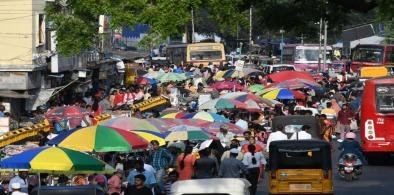
Whose City is it? Reclaiming the City Through the 'Right to Walk'

Development of a city cannot be measured only through kilometres of asphalt laid or investments it attracts. It must be measured through the extent to which a person can walk safely from one neighbourhood to another avoiding the cars, physical barriers and complicated bureaucracy.

Trumpism: An American Legacy That Will Outlast Trump

America may elect presidents with very different personalities and styles of governance. Yet they will inherit a political landscape in which the issues raised and the priorities advanced by Trumpism will continue to matter. Trump may eventually leave the political stage, but the political and economic forces that gave rise to Trumpism will remain.

The Cockroach Janta Party: Can it Live up to Expectations?

Whether or not the CJP would eventually give rise to a new political party is impossible to say. But if it does, it should be genuinely different, not just one more among a large menagerie of parties, but the expression of a political culture that is, in the truest sense, remedially different.

More on Governance, Public Policy, Politics and Law

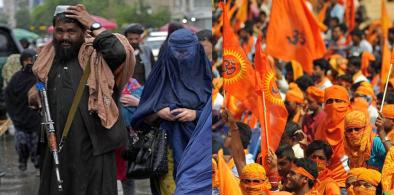
Taliban's Patriarchy And The Hindutva One: What Is Similar And What Is Different

Every form of politics that cloaks itself in religion tends to preserve feudal values and promote hostility toward the “other.” Even Christian fundamentalism reinforces patriarchal norms. Nazi Germany, too, confined women to the three Ks—Kirche, Küche, Kinder (Church, Kitchen, Children). As we condemn patriarchy and the denial of human rights, we must recognize that all sectarian nationalisms—those rooted in religious or racial superiority—share these regressive traits.

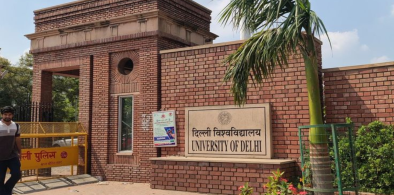
Rethinking Affirmative Action in India’s Universities: Needed Structural Reform, Not Symbolic Arithmetic

Reservation in education has achieved moral legitimacy and expanded access, but it has also created new inequalities and stagnation. Its future lies not in expansion or abolition, but in redefinition. Affirmative action must evolve from symbolic arithmetic to structural reform, grounded in data and fairness.

Are Corporates Driving India’s Ladakh Policy?

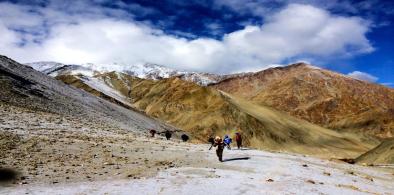
In Ladakh, it is not just 150 sq km of pasture land allotted to corporates for solar power projects, but also the mining on land of corporate choosing. Why bother about the ecology, environment and disasters? 

UAE Bank's Acquisition of Indian Bank: A New Paradigm In Growing UAE–India Cooperation

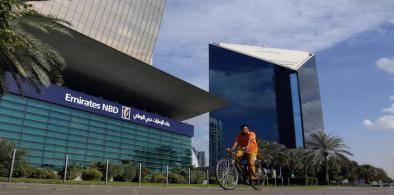
If executed smoothly, this transaction will serve as a template for future cross-border collaborations, especially within the framework of CEPA and the broader India–UAE economic corridor. It demonstrates that when capital, strategy, advisory prowess and bilateral ambition converge, remarkable outcomes follow. 

Afghanistan-Pakistan Truce And The Regional Conundrum

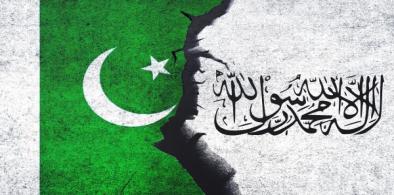
With nine terrorist camps destroyed by India in Op Sindoor, the Lashkar-e-Taiba (LeT) and Jaish-e-Mohammed (JeM) camps in Pakistan are being relocated deeper inside – in the Khyber Pakhtunkhwa region. This could bring them in conflict with the TTP, unless they decide to join hands. Notably, Pakistan has formed an alliance between the LeT and the Islamic State Khorasan Province (ISKP or ISIS-K)

2025 Economics Nobel Prize: Can India Offer Its Own Development Model?

A possible model based on Spirituality + Technology = Sustainability and Happiness may help in reducing greed, provide equitable distribution of resources and provide a new paradigm of development not only for India but for mankind. Once the mighty engine of innovation starts in India then the Darwinian evolution of the disruptive model of Phillipe Aghion and Peter Howitt will follow.

Sri Lanka’s Delicate Tightrope Walk Between Asian Powers

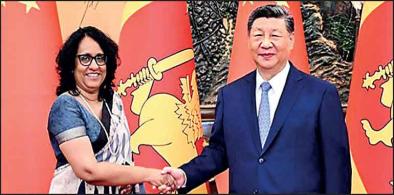
The island-nation’s strategic location in the Indian Ocean has placed it at the centre of intensifying geopolitical competition and rivalry between China and India. Sri Lanka’s experience in balancing its own priorities and needs with the competing interests and concerns of India and China through the lens of project financing has largely succeeded despite occasional hiccups

Theatreisation Of Military In India: No Need To Copy Foreign Models

Theatreisation of military, while conceptually appealing, is not a one-size-fits-all solution. India’s strategic geography — with two contiguous adversaries, interlinked land-sea challenges, hybrid threats, and extraordinarily diverse terrain — does not lend itself to neat theatre divisions.

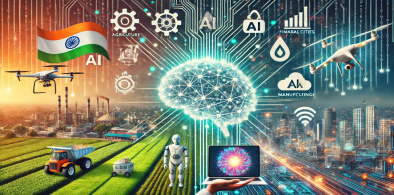
India’s AI Journey: Transforming Fiscal Management For A Developed India

AI is proving to be more than just a digital tool; it is becoming a fiscal multiplier. By tightening compliance, improving revenue forecasts, preventing leakages, and guiding expenditure, AI is reshaping India’s fiscal landscape. Recent tax reforms under the GST regime adjusting slabs to reduce rates on essentials while taxing luxury goods higher were made possible through AI-driven fiscal analytics.

Can India Defend Its Vast Maritime and Underwater Domain Against Regional Rivals?

India’s underwater defence remains a top priority. The Navy currently operates 19 submarines—16 conventional and three nuclear-powered (including two ballistic missile submarines and one leased nuclear attack submarine). China, by contrast, possesses 60–70 submarines, including 12 nuclear-powered platforms, and aims to grow to 80 submarines within the decade

Can India's Growth Story Be Built On The Backs of Exploited Labour?

When companies see they can get away with violation of labour laws or erode the dignity of workers or do worse with regard to their workforce, more violations of the kind will follow. The only antidote is to put down illegality with an iron hand, to impose exemplary costs on businesses that have little regard for people and to send the message that violations will be met with firm and swift action. 

Israel’s Shadows behind Settlers Policy in Sri Lanka

This controversial project of the mid-1980s, inspired by Israeli models, ultimately failed to achieve its intended outcomes. Nevertheless, Israeli involvement left a lasting imprint on the Mahaweli Development Project and agricultural settlements in Sri Lanka. The continuing association between the military and the Mahaweli Development Project may, in part, be attributed to practices introduced by Israeli advisers during the 1980s.

India’s Economic Self-Reliance Is A Strategic Necessity

India’s economic self-reliance is not about shutting the doors to the world. It is about standing firm during crises, reducing vulnerabilities, and becoming globally competitive. The philosophy of Atmanirbhar Bharat represents a pragmatic approach: be self-reliant in areas where dependence is dangerous, and globally integrated in sectors where India can lead.

When An Opportunity Became A Trap: Exploitative With Little Innovation, Indian IT Sector Caught In A Bind

The Indian software and IT services giants have for long been accused of running body shops, a business fashioned out of what essentially is labour arbitrage turned into a fine art. The sector has consistently denied this, arguing that they have moved up the value chain and that they compete on quality, not price.

Imagining A New South Asia - and Its Unrealised Freedoms

When I think back to Wagah, what stays with me is not the barbed wire, but the wind -- the same wind moving across the border without asking permission. I think of rivers that carry stories of children whose laughter sounds the same in Lahore, Delhi, Dhaka, and Kathmandu.

Newsletter Subscription

The subscriber's email address.
Stay informed - subscribe to our newsletter.