

Bad news for India from the Maldives: India needs to get neighbourhood act together
As it stands today, Maldives is going to be drawn deeper into China’s strategic sphere. Chinese presence in Maldives is set to increase.
 Apr 22, 2024
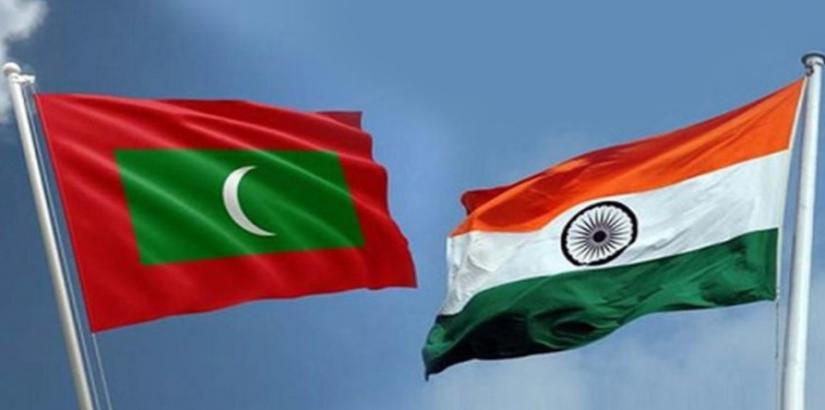
Maldives’ pro-China President Mohamed Muizzu ruling People's National Congress (PNC) has won a supermajority in the Maldives Parliament by bagging 60 seats in the parliamentary elections held on April 21, 2024. This landslide victory is against the backdrop of Indian media propagating that Muizzu’s fate hung in the balance since he spoiled relations with India by walking on a knife edge.
Now that Muizzu’s PNC has scored an emphatic win in the parliamentary elections, the rhetoric in our media has shifted to the drop in Indian tourists to the Maldives and how Maldives attracts about 25 percent of its GDP directly from tourism. According to the Maldives Tourism Ministry, as of March 2, 2024, only 27,224 Indian tourists had visited the island nation, marking a 33 percent decline compared to the previous year.
Notably, 67,399 Chinese tourists visited Maldives in January-March 2024, compared to 17,691 Chinese tourists in the same period during 2023 – an increase of 281 percent. During Muizzu’s visit to Beijing, he was assured that the number of Chinese tourists visiting Maldives would be increased.
During 2023, over 1.7 million tourists visited Maldives, the largest majority being Indians (2,09,198), followed by Russians (2.09,146), and Chinese (1,87,118). Whether an increase in Chinese tourists to Maldives would fill up the lack of Indian tourists remains to be seen. However, we do need to look at our foreign policy concerning our immediate neighbors, including our ‘big brother’ attitude, and learn from others, especially China.
India caught unprepared
Muizzu won the presidential election in November 2023, not only because of being pro-China but also capitalizing on an anti-India wave in the island nation. Was our ambassador at Male, our foreign minister and diplomats of our Ministry of External Affairs (MEA), as well as our external intelligence agency, aware of this anti-India wave? If in the affirmative (as was apparent since the Abdulla Yameen regime), what was done to negate it? Information warfare aside, do we have a strategy to deal with such situations in our immediate neighborhood?
Or do we believe in karma and simply wait for neighbors to simply fall in our lap? Approximately, 29,000 Indians live and work in the Maldives and almost 22,000 of them live in capital Male. How do we use this resource to further India’s national interests?
At the time of taking control of Hambantota Port in Sri Lanka for 99 years, Beijing sought permission from Colombo to place one company of PLA (People's Liberation Army) at Hambantota, which was denied. Every Chinese project on foreign soil is undertaken by PLA-owned or PLA-linked companies, which have the presence of PLA personnel in civil attire. China has been practicing this over the past several decades, which is well known. Why else then did we position naval personnel and aircraft in Maldives?
Rather than focusing on how China has debt-trapped Sri Lanka, Pakistan, Maldives and others, India's foreign policy strategists need to work out how to further its national interests. The present system of empty rhetoric cannot work. If the prime minister speaks to the presidents of Russia and Ukraine and they invite him, the rhetoric in the media that India is being asked to mediate a ceasefire in Ukraine is the limit of stupidity. New Delhi needs to seriously address our relations with all our immediate neighbors rather than bragging about having assumed the leadership of the Global South.
Deeper into Beijing's grasp
As it stands today, Maldives is going to be drawn deeper into China’s strategic sphere. Chinese presence in the Maldives is set to increase. A Chinese naval base under the garb of transshipment point, as also rest and maintenance, would come up in Maldives, which should be viewed together with Chinese naval presence in Sri Lanka (Hambantota), Pakistan (Gwadar), Myanmar (Kyaukphu and Coco Islands) and Bangladesh (Peuka Submarine Base).
A PLA base could even come up at Maldives’ Uthuru Thila Falhu atoll (closest to India) under the Maldives-China agreement for China to undertake an agriculture project after land reclamation, as predicted by Fayyaz Ismail, Chairperson of the Maldivian Democratic Party (MDP), the main opposition party of Maldives.
India's foreign policy pundits need to get their act together and work out a proactive strategy for our immediate neighborhood.
(The author is an Indian Army veteran. Views are personal).





Post a Comment