

Bangladesh at the Crossroads: Economic Reckoning and the Fragile Promise of Reform
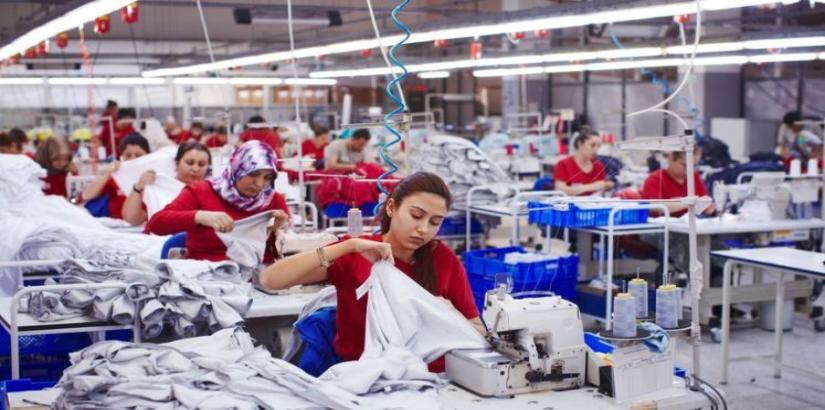
Yunus paved the way for this election with his credibility as interim administrator intact, but his economic legacy will now be under scrutiny. The man who brought microcredit to the world’s poor — a model replicated across dozens of countries — has struggled to arrest the decline of Bangladesh’s industrial base. Between August 2024 and July 2025, nearly 245 factories closed, displacing approximately 100,000 workers.
 Feb 18, 2026
As Bangladesh went to the polls for the 13th Jatiya Sangsad election, it did so under the shadow of a political and economic rupture that had been years in the making. The road to this moment began with the deeply flawed January 7, 2024, general election — an exercise widely condemned as a democratic charade. Official figures for the 2026 voter turnout was placed at 48 percent, a low margin for the revolution that preceded it. However, the Election Commission’s own real-time monitoring dashboard briefly recorded the figure at around 32 percent before it was revised upward. Either way, the numbers told the same story: a disengaged populace, a neglected ballot, and an establishment that had lost legitimacy well before it came to power.
In 2024, the Awami League’s Sheikh Hasina secured a fourth consecutive term in an election her principal rival, the Bangladesh Nationalist Party, refused to contest. Independents filled the opposition benches. Six months later, a student-led uprising brought the entire edifice down. On August 5, 2024, Hasina fled to India. Three days later, Nobel laureate Muhammad Yunus was sworn in as Chief Adviser of an interim government, tasked with steering the country back toward democratic legitimacy, placing unwanted pressure on a reform agenda and the repatriation of the Rohingya, displaced from Myanmar.
Yunus’s administration pursued an ambitious overhaul of Bangladesh’s institutional architecture. Eleven reform commissions were established covering governance, the judiciary, public administration, and constitutional design. Their recommendations were consolidated into the July National Charter — a comprehensive framework of 84 proposals intended as a blueprint for state reconstruction.
In October 2025, the Advisory Council approved the Representation of the People (Amendment) Ordinance, introducing sweeping changes to the country’s electoral laws: fugitives facing prosecution were barred from contesting; electronic voting machines, widely distrusted as a tool of manipulation under the previous government, abolished; the ‘no vote’ option reinstated; and all political donations exceeding Tk 50,000 required to make transaction through traceable banking channels, with donors required to hold a valid tax identification number. These were meaningful structural reforms, particularly for the banking system which was drained. Whether they translated into a genuinely free and fair election is the question that today’s vote must answer.
Deteriorating Fiscal Health
Behind the political turbulence lies an economic reckoning that had been suppressed for far too long. For much of the past two decades, Bangladesh was celebrated as one of South Asia’s development success stories — a low-income country that had engineered rapid poverty reduction and GDP growth on the back of its readymade garment (RMG) industry and a steady flow of remittances from the Bangladeshi diaspora. The taka held its value. The macroeconomic indicators gleamed.
But the miracle rested on precarious foundations. RMG workers, overwhelmingly women, bore the cost in wages that never kept pace with productivity or inflation. When export revenues softened or external shocks hit, the gap was papered over by remittances and concessional lending from multilateral institutions. Bilateral support from Japan, China, and India filled residual shortfalls. The architecture held — until it didn’t. Food inflation reached 14 percent under the interim administration; overall inflation, 11 percent. The World Bank revised its growth forecast for fiscal year 2025 downward from 5.7 to 4 percent. While the foreign reserves that had dwindled alarmingly under Hasina have begun to recover, the underlying vulnerabilities remained unaddressed. Nowhere was this more starkly illustrated than in Bangladesh’s stalled graduation from Least Developed Country (LDC) status — a milestone that would have marked its formal transition into the ranks of developing nations and unlocked new terms of trade. Additionally, it would impact the deteriorating fiscal health, macroeconomic instability, and widening structural deficits that have now been forced into postponement, indefinitely deferring what was meant to be the crowning symbol of the country’s development story.
Politics of Economic Exclusion
The student uprising of 2024 was ostensibly about a government quota system reserving a disproportionate share of civil service positions for descendants of muktijoddhas — the freedom fighters who took up arms in Bangladesh’s 1971 Liberation War. To a generation entering the labour market and finding it almost entirely closed, the system read as dynastic entitlement dressed in patriotic language. If your ancestry could not be traced to the liberation struggle, the implicit message was that the nation did not fully belong to you.
This is not Bangladesh’s first encounter with the politics of economic exclusion. The immediate catalyst for the 1971 split from Pakistan was, at its core, economic: the systematic concentration of industrial, administrative, and financial power in the hands of a West Pakistani elite, replicating the colonial structure within a nominally post-colonial state. The echoes under Sheikh Hasina grew uncomfortable and deliberate.
Needed an Economic Contract
Yunus paved the way for this election with his credibility as interim administrator intact, but his economic legacy will now be under scrutiny. The man who brought microcredit to the world’s poor — a model replicated across dozens of countries — has struggled to arrest the decline of Bangladesh’s industrial base. Between August 2024 and July 2025, nearly 245 factories closed, displacing approximately 100,000 workers. Unemployment among graduates remained acute. Informal employment has absorbed the overflow, but at wages and conditions that represent a structural retreat rather than a recovery.
The reforms are real. The election has happened. But sustainable stabilisation requires more than institutional redesign: it demands an economic contract that reaches the first-generation learner, the garment worker, and the unemployed graduate — the constituencies whose patience built this country and whose frustration finally led to violent decline of ‘the Battle of the Begums’ electoral system.
(The author is editor and faculty at the Institute of Human Rights and Democratic Governance, Spring University Myanmar. She has previously worked at the Netaji Institute for Asian Studies in Kolkata, and on commissioned projects for several ministries to monitor developments during the 2018 elections in Bangladesh and Myanmar’s higher education sector. She can be reached at: dipannitamariabagh@gmail.com )





Post a Comment