

Engineering Threat Perceptions: TTP, ISI and Bangladesh’s Security Narrative
The sudden amplification of TTP-related narratives in Bangladesh appears strategically timed. Observers note that between August 2024 and February 2026, there were credible concerns regarding the facilitation—both overt and covert—of visits by Pakistan-linked militant actors into Bangladesh. Yet, these developments did not receive comparable international attention.
 May 06, 2026
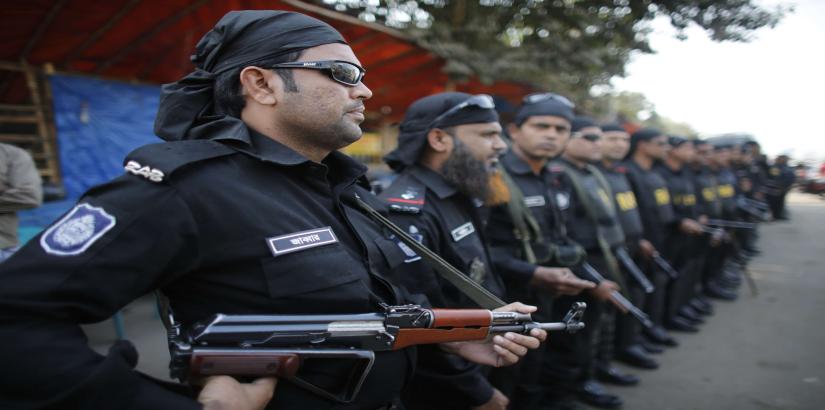
Bangladesh’s strategic importance in South Asia has grown significantly in recent years, placing it at the intersection of competing regional and global interests. As geopolitical rivalries deepen, the country is no longer insulated from the subtle pressures of influence operations and narrative-building campaigns. Emerging claims surrounding extremist linkages within its security forces must therefore be examined not only as isolated reports, but as part of a broader geopolitical context.
South Asia’s security landscape is undergoing a subtle yet consequential transformation, where influence is increasingly exercised through narratives rather than direct intervention. In this evolving environment, Bangladesh has emerged as a critical arena—not of conventional conflict, but of competing strategic messaging. Recent developments suggest that external actors may be attempting to reshape perceptions of threat within the country’s security apparatus, raising important questions about intent and long-term implications.
Manufacturing a TTP Threat
A new narrative is taking shape—one that centers not on visible conflict, but on the calculated projection of fear. At the heart of this narrative lies an alleged attempt by Pakistan’s Inter-Services Intelligence (ISI) to manufacture a “TTP threat” within Bangladesh, raising critical questions about motive, timing, and strategic intent.
More than five decades after Bangladesh’s independence, the country finds itself confronting a new and complex security narrative. Following the August 2024 jihadist upheaval, Pakistan and its notorious intelligence agency, the Inter-Services Intelligence (ISI), emerged as influential actors, allegedly operating through deep-state alignments within Bangladesh’s political landscape.
Taking advantage of the situation, the ISI reportedly established multiple operational nodes in Dhaka, alongside covert presences in sensitive Bangladesh–India border areas, often using madrassa networks as cover. During this period, several Islamist-jihadist groups—including Ansar Al Islam (a local affiliate of Al Qaeda) and Hizb ut-Tahrir—became increasingly active, openly advocating the transformation of Bangladesh into a Sharia-based state or even a Caliphate.
Simultaneously, anti-India activities rose to alarming levels. Individuals linked to Pakistan-based militant outfits such as Lashkar-e-Taiba (LeT) and Jaish-e-Muhammad (JeM), along with elements associated with Hamas, were reportedly frequenting Bangladesh under the guise of religious gatherings. Notably, voices within Pakistan’s military and political establishment began openly referring to Bangladesh as a potential “eastern front” in the event of renewed tensions with India.
However, a dramatic shift occurred following the general elections of February 12, 2026. Jamaat-e-Islami—widely perceived as enjoying backing from Islamabad and sympathetic international actors—failed to secure sufficient seats to form a government. Instead, the Bangladesh Nationalist Party (BNP) achieved a decisive victory, effectively ending the controversial 18-month rule of Muhammad Yunus. The electoral outcome sent a clear signal: pro-Pakistan Islamist political forces face formidable barriers in achieving power through democratic means.
In response, Pakistan’s ISI appears to have recalibrated its strategy. A new narrative began to take shape—one centered on amplifying fears of Tehrik-e-Taliban Pakistan (TTP) infiltration within Bangladesh, including within its disciplined forces.
Questions About TTP Involvement
On April 23, 2026, the Indian outlet Northeast News published a report claiming that the Bangladesh Air Force’s intelligence wing had intensified internal surveillance following alleged indications of links between certain personnel and Pakistani militant organizations. The report further suggested that authorities were attempting to uncover the extent of supposed TTP penetration within segments of the force.
According to the same report, several personnel had either been detained or had fled abroad—allegedly to Pakistan, Portugal, Turkey, and New Zealand—prior to enforcement actions.
However, critical scrutiny of such claims raises important questions. The characterization of TTP as a “Pakistani terror organization” requires nuance. While widely designated as a terrorist entity internationally—including by the United States in 2010 and by the United Nations in 2011—TTP is fundamentally an anti-State militant group operating against Pakistan itself. Islamabad formally banned TTP in August 2008, citing its involvement in violent insurgency and attacks on state institutions.
United Nations documentation notes that TTP’s primary objective is the overthrow of the Pakistani government in favor of an emirate governed by its interpretation of Islamic law. The group has consistently targeted Pakistani military and political figures, underscoring its adversarial relationship with the Pakistani state.
Strategic Signalling on Extremist Infiltration?
Against this backdrop, the sudden amplification of TTP-related narratives in Bangladesh appears strategically timed. Observers note that between August 2024 and February 2026, there were credible concerns regarding the facilitation—both overt and covert—of visits by Pakistan-linked militant actors into Bangladesh. Yet, these developments did not receive comparable international attention.
This raises a critical question: why the current emphasis on alleged TTP links within Bangladesh’s armed forces?
One plausible explanation lies in strategic signaling. By projecting concerns about extremist infiltration within the Bangladesh Air Force, such narratives risk placing the institution under heightened international scrutiny—particularly from the United States and the United Nations. This could have tangible consequences, including potential limitations on Bangladesh’s highly regarded participation in UN peacekeeping missions.
Moreover, the propagation of such claims may serve a broader objective: to generate internal distrust within Bangladesh’s defense establishment. If left unchecked, this could erode cohesion within the Air Force and potentially extend to the Army and Navy, thereby weakening institutional stability.
If perception can be engineered, it can also be weaponized. The growing emphasis on alleged extremist infiltration in Bangladesh’s armed forces risks creating precisely the kind of internal unease that adversarial actors seek to exploit. For Dhaka, the imperative is clear—verify before reacting, assess before accepting, and ensure that national security is guided by facts rather than fear. In an age of narrative warfare, vigilance must extend beyond borders and into the realm of information itself.
(The author is a journalist, writer, and editor-publisher of the Weekly Blitz. He specializes in counterterrorism and regional geopolitics. He can be contacted at salahuddinshoaibchoudhury@yahoo.com, follow him on X: @Salah_Shoaib )





Post a Comment