

In Fragmenting Global Order, South Asia Needs Strategic Balancing, Regional Cooperation
South Asia’s problem is not that it lacks importance. Its problem is that it lacks collective strategy. Each country is trying to survive the new order separately. India seeks global-power status. Pakistan seeks strategic relevance and economic stability. Bangladesh seeks balanced partnerships and export security. Sri Lanka seeks recovery. Nepal seeks space between two giants. The Maldives seeks bargaining power. Bhutan seeks quiet sovereignty. Afghanistan seeks recognition and survival.
 May 06, 2026
The global order is no longer moving in one clear direction. The post-Cold War idea of a rules-based, open, and increasingly connected world is under pressure. Major powers now compete through trade barriers, sanctions, technology controls, military alliances, energy politics, and infrastructure financing. The IMF has warned that global growth is slowing, from 3.3 percent in 2024 to 3.2 percent in 2025 and 3.1 percent in 2026. The WTO has also warned that trade fragmentation along geopolitical lines could damage the global economy. This means the world is not simply becoming multipolar. It is becoming more divided, more transactional, and more uncertain.
This fragmentation is visible everywhere. The United States and China are competing over semiconductors, artificial intelligence, critical minerals, military influence, and supply chains. Russia’s war in Ukraine has changed Europe’s security thinking and energy map. The Middle East remains unstable, with energy shocks repeatedly affecting Asian importers. Protectionism is also rising. In 2025, the World Bank warned that higher U.S. tariffs could slow South Asia’s growth in 2026, especially by affecting Indian exports in labor-intensive sectors. For a region still dependent on exports, remittances, food imports, fuel imports, and development finance, these shifts are not abstract. They directly affect jobs, prices, debt, and diplomacy.
At Centre of Changing Order
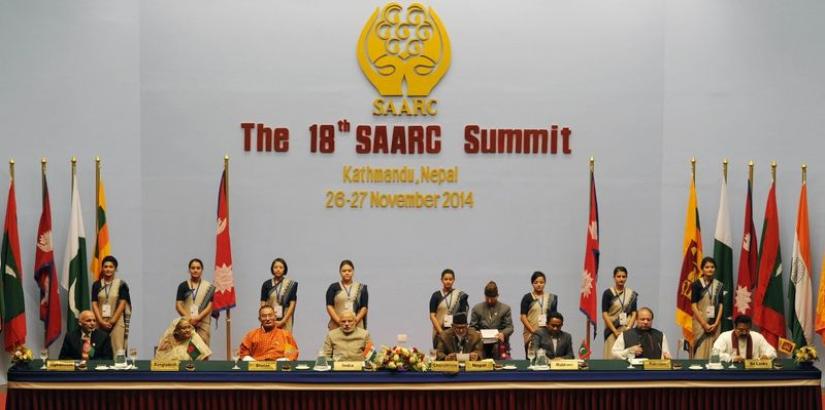
South Asia stands at the center of this changing order, but not always as a united actor. The region has nearly two billion people, nuclear powers, major sea lanes, rising consumer markets, strategic ports, fragile democracies, and some of the world’s most climate-vulnerable communities. Yet it remains one of the least integrated regions in the world. SAARC is largely inactive, India-Pakistan hostility blocks regional cooperation, and smaller states often balance between India, China, the United States, Japan, Russia, and the Gulf. The World Bank projected South Asia’s growth at 6.6 percent in 2025, slowing to 5.8 percent in 2026, showing that the region remains economically dynamic but vulnerable to external shocks.
Exemplar in Strategic Balancing
India is the region’s largest power and the clearest example of strategic balancing. It is a member of the Quad with the United States, Japan, and Australia, but it also maintains ties with Russia. It competes with China along the border and across the Indian Ocean, while also depending on global trade and energy flows. India wants to be seen as a voice of the Global South, but it also wants a larger role in Western-led institutions. This gives India influence, but also pressure. The 2025 India-Pakistan military crisis showed how quickly regional tensions can become international concerns.
Strategic Value, Economic Fragility
Pakistan faces fragmentation from a more difficult position. Its strategic value remains high because of its geography, nuclear status, China ties, and role near Afghanistan. But economic fragility limits its choices. Pakistan’s close relationship with China, especially through the China-Pakistan Economic Corridor, gives it infrastructure and diplomatic support. At the same time, debt pressure, inflation, political instability, and repeated IMF dependence reduce its room for independent maneuver. The 2025 conflict with India also showed that Pakistan’s security choices remain tied to great-power competition, especially as India accused China of providing “live inputs” to Pakistan during the crisis.
Large Population, Growing Economy
Bangladesh is increasingly important in this fragmented order. Its garment exports, Bay of Bengal location, growing economy, and large population make it strategically valuable. But this also means more pressure from competing powers. China has expanded its footprint in infrastructure and defense. The United States has shown growing interest in offering alternatives to Chinese defense systems. India, meanwhile, remains central because of geography, trade, water, security, and people-to-people ties. Recent deals also show Bangladesh’s balancing act. The Rooppur nuclear plant, financed largely by a Russian state loan, is moving toward operation, while Bangladesh has also signed a major Boeing aircraft deal worth about $3.7 billion. These choices show how Dhaka is trying to work with multiple partners at once.
Multiple Partners, Debt Dependence
Sri Lanka shows the risks of entering the fragmented order with weak economic foundations. Its 2022 economic collapse turned debt, ports, fuel, and foreign policy into matters of national survival. China and India both became central to its debt and recovery debates. Japan also played a major role, signing a deal in 2025 to restructure $2.5 billion of Sri Lankan debt. The IMF said in 2025 that Sri Lanka had made progress, but still had “no room for policy errors,” with poverty at 24.5 percent. Sri Lanka’s lesson is clear: small states can benefit from multiple partners, but debt dependence can reduce sovereignty.
Centre of Subregional Cooperation
Nepal is another example of careful balancing. It sits between India and China, two powers with competing interests. Nepal depends heavily on remittances, tourism, hydropower, and cross-border trade. Its hydropower potential gives it new importance. In 2025, Nepal began exporting 40 megawatts of electricity to Bangladesh through India’s grid, under a tripartite arrangement. This was a small but meaningful regional breakthrough. It showed that South Asia can still cooperate when energy, geography, and political will align. But Nepal also remains vulnerable to domestic instability, climate disasters, and pressure from both neighbors.
Bargaining Small State of Strategic Value
The Maldives has become one of the clearest symbols of Indian Ocean competition. Its location gives it strategic value far beyond its population size. President Mohamed Muizzu first moved closer to China and campaigned on reducing India’s military presence. China and the Maldives upgraded their relationship in 2024. But by 2025, India was again back in reckoning, with Prime Minister Narendra Modi announcing a $565 million credit line and free trade talks after Maldives-initiated high-level discussions. This shows the new reality of South Asian diplomacy. Smaller states are not passive. They bargain, shift, and seek benefits. But they also face risks when external competition enters domestic politics.
Modernising Economy, Preserving Sovereignty
Bhutan has followed a quieter path. It has traditionally maintained close ties with India, especially in hydropower, security, and trade. But Bhutan also faces pressure from China over border negotiations and from global economic changes affecting tourism, youth employment, and migration. Its challenge is to preserve sovereignty while modernizing its economy. In a fragmented world, even quiet diplomacy becomes harder. Bhutan’s strength is caution, but caution alone may not be enough if great-power rivalry deepens in the Himalayas.
Easy to Ignore, not Easy to Contain
Afghanistan remains the region’s most isolated case. Since the Taliban returned to power in 2021, Afghanistan has faced diplomatic isolation, sanctions, humanitarian crisis, and economic collapse. It is also affected by climate stress, food insecurity, and the return of refugees from neighboring countries. The country’s exclusion from normal regional cooperation creates security and humanitarian risks for all of South Asia, though India continues to give humanitarian assistance. A fragmented world makes Afghanistan’s crisis easy to ignore, but not easier to contain.
Lack of Regional Vision
South Asia’s problem is not that it lacks importance. Its problem is that it lacks collective strategy. Each country is trying to survive the new order separately. India seeks global-power status. Pakistan seeks strategic relevance and economic stability. Bangladesh seeks balanced partnerships and export security. Sri Lanka seeks recovery. Nepal seeks space between two giants. The Maldives seeks bargaining power. Bhutan seeks quiet sovereignty. Afghanistan seeks recognition and survival. These are understandable national strategies, but they do not yet form a regional vision.
The region needs practical cooperation, not grand declarations. Energy trade, climate adaptation, disaster response, food security, digital connectivity, migration governance, and public health can become areas of cooperation even when political disputes remain. The Nepal-Bangladesh electricity trade through India shows that limited cooperation is possible. The Bay of Bengal can become a platform for connectivity, not only competition. South Asian states should also negotiate harder as a group for climate finance, debt relief, fair trade access, and safer migration routes.
The global order is fragmenting, but South Asia does not have to fragment with it. The region can either become a chessboard for outside powers or a set of confident states that cooperate where interests overlap. The choice will depend on leadership, institutions, and public pressure. In a divided world, neutrality is difficult, but blind alignment is dangerous. South Asia’s best option is strategic balance, regional cooperation, and domestic resilience. Without these, the region will remain important to everyone except itself.
(The author is a research assistant, Centre for Governance Studies, Dhaka, Bangladesh. Views expressed are personal. He can be reached at saifulislam@cgs-bd.com)





Post a Comment