

India’s set to Become Significant Player in Global Arms Market
India’s deepening defence ties with both the United States and the European Union are particularly significant. India’s designation as a “Major Defence Partner” by the US and the ongoing development of a long-term defence cooperation framework highlight the strategic convergence between the two countries. Similarly, the recent EU–India Security and Defence Partnership signals Europe’s recognition of India as a key player in maintaining regional and global stability
 Apr 10, 2026
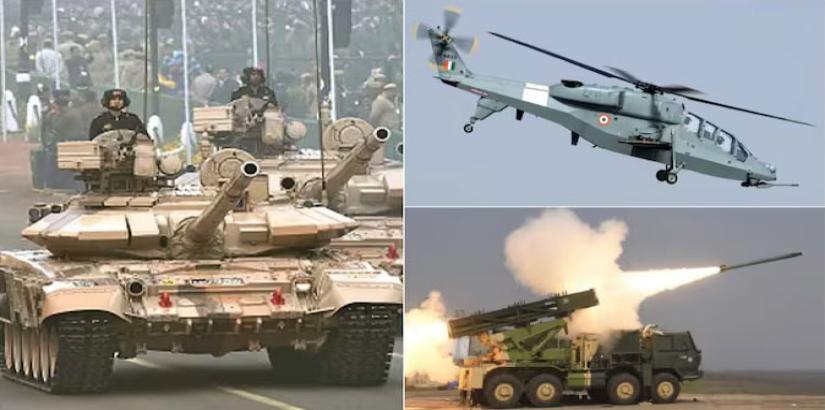
India’s steady transition from one of the world’s largest arms importers to an emerging defence exporter marks a significant structural shift in its strategic and economic trajectory. For decades, India’s defence preparedness depended heavily on foreign suppliers, creating vulnerabilities in times of geopolitical uncertainty. Today, however, the rapid rise in defence exports, coupled with expanding domestic manufacturing capabilities, signals a new phase in India’s global engagement—one that blends strategic autonomy with economic ambition.
The latest data underscores the scale of this transformation. India’s defence exports reached an unprecedented ₹38,424 crore in FY 2025–26, registering a remarkable year-on-year growth of over 60 percent. This is not merely a statistical milestone; it reflects a deeper institutional and industrial evolution. Over the past five years, defence exports have nearly tripled, demonstrating sustained momentum rather than a one-off surge. The fact that Indian defence products are now reaching more than 80 countries indicates growing global confidence in their quality, reliability, and cost-effectiveness.
A particularly notable aspect of this growth is the balanced contribution from both public and private sectors. Defence Public Sector Undertakings (DPSUs) accounted for slightly over half of total exports, with a dramatic 151 percent increase in their export performance. At the same time, the private sector contributed nearly 45 percent, maintaining steady growth and demonstrating its increasing integration into global supply chains. This synergy between state-led and private enterprise is crucial, as it ensures both scale and innovation within the defence ecosystem.
India’s Technological Sophistication
The diversification of exported products further strengthens India’s position. The country is no longer limited to exporting low-value components; it is increasingly supplying complete systems and advanced platforms. The export of systems such as the BrahMos missile, the HAL Tejas fighter aircraft, the Akash air defence system, and the Pinaka rocket system illustrates India’s growing technological sophistication. The interest shown by countries across Southeast Asia, Africa, and Latin America suggests that Indian defence products are becoming viable alternatives to traditional suppliers.
This transformation has not occurred in isolation. It is closely linked to policy reforms aimed at improving ease of doing business in the defence sector. Streamlined export procedures, digitised approval mechanisms, and simplified regulatory frameworks have significantly reduced bureaucratic delays. The increase in the number of registered defence exporters—from 128 to 145—may seem modest, but it reflects a broader trend of expanding participation and confidence among Indian firms. The role of the Department of Defence Production and coordinated policy support has been instrumental in this regard.
At the political level, this shift aligns closely with the vision of self-reliance articulated by the Indian government. The emphasis on “Atmanirbhar Bharat” in defence is not merely about import substitution; it is about building a globally competitive industrial base that can both meet domestic needs and serve international markets. Defence Minister Rajnath Singh has repeatedly highlighted that India’s goal is to become a major defence manufacturing hub, and the current export figures suggest that this ambition is steadily being realised.
The geopolitical context has also played a crucial role in shaping opportunities for India. The ongoing fragmentation of the global order, coupled with conflicts such as the Russia–Ukraine war, has led many countries to diversify their defence procurement sources. Traditional suppliers are either constrained by political considerations or overwhelmed by their own strategic commitments. In this environment, India’s emergence as a reliable and relatively neutral supplier offers an attractive alternative.
Simultaneously, shifts within Western alliances are opening new avenues for cooperation. The evolving stance of the United States under leaders like Donald Trump, including periodic tensions within NATO, has prompted both the US and European countries to rethink aspects of their defence strategies. The growing emphasis on burden-sharing and strategic autonomy in Europe has led to increased interest in partnerships beyond the transatlantic framework.
In this context, India’s deepening defence ties with both the United States and the European Union are particularly significant. India’s designation as a “Major Defence Partner” by the US and the ongoing development of a long-term defence cooperation framework highlight the strategic convergence between the two countries. Similarly, the recent EU–India Security and Defence Partnership signals Europe’s recognition of India as a key player in maintaining regional and global stability. These partnerships are not limited to arms sales; they encompass joint production, technology transfer, and collaboration in emerging domains such as cyber security and artificial intelligence.
Growing Demand for Trusted Partners
What makes this moment especially consequential is the broader trend of deglobalisation and protectionism. As countries increasingly prioritise domestic industries and secure supply chains, there is a growing demand for trusted partners who can offer both reliability and flexibility. India’s democratic credentials, relatively stable political environment, and expanding industrial base position it well to meet this demand. In many ways, India stands at the intersection of competing global trends—benefiting from both the fragmentation of traditional supply chains and the search for new, dependable manufacturing hubs.
However, challenges remain. While export growth is impressive, India still lags behind established defence exporters such as the United States, Russia, and France in terms of scale and technological depth. Issues related to quality assurance, timely delivery, and after-sales support need continuous attention. Moreover, the private sector, despite its growing role, requires greater access to financing, technology, and global markets to fully realise its potential.
Another critical aspect is the need for sustained investment in research and development. Indigenous innovation will determine whether India can move up the value chain and compete in high-end segments such as advanced fighter jets, next-generation submarines, and cutting-edge missile systems. Collaboration with global partners can accelerate this process, but it must be complemented by strong domestic capabilities.
Integration in Global Supply Chains
Despite these challenges, the trajectory is clearly positive. The integration of Indian firms into global supply chains, the increasing acceptance of Indian defence products, and the alignment of policy, industry, and strategic objectives all point toward a durable transformation. Defence exports are not just a source of revenue; they are a reflection of national capability, technological progress, and geopolitical relevance.
In this sense, India’s rise as a defence manufacturing hub represents a convergence of economic and strategic interests. It enhances national security by reducing dependence on imports, boosts economic growth through high-value manufacturing, and strengthens diplomatic influence by positioning India as a key partner in global security architecture. As the world navigates an era of uncertainty and shifting alliances, India’s evolving role in the defence sector offers both opportunities and responsibilities.
If current trends continue, India is well on its way to becoming not just a participant but a significant player in the global arms market. The challenge now is to sustain this momentum, address structural gaps, and ensure that growth in defence exports translates into long-term strategic advantage.
(The author is an Associate Fellow, Manohar Parrikar Institute for Defence Studies and Analyses (MP-IDSA), New Delhi and former Professor and ICCR Chair, University of Dar-Es-Salaam, Tanzania. Views expressed are personal. He can be reached at anandkmrai@gmail.com)




Post a Comment