

India’s Tightrope: Why New Delhi Cannot Take Sides in the U.S.–Iran War
The question India needs to answer is not whether to side with Washington or Tehran. That framing is itself a trap. The question is whether India has the political will to build the energy independence, the institutional credibility, and the diplomatic infrastructure that would make such a choice genuinely unnecessary.
 May 03, 2026
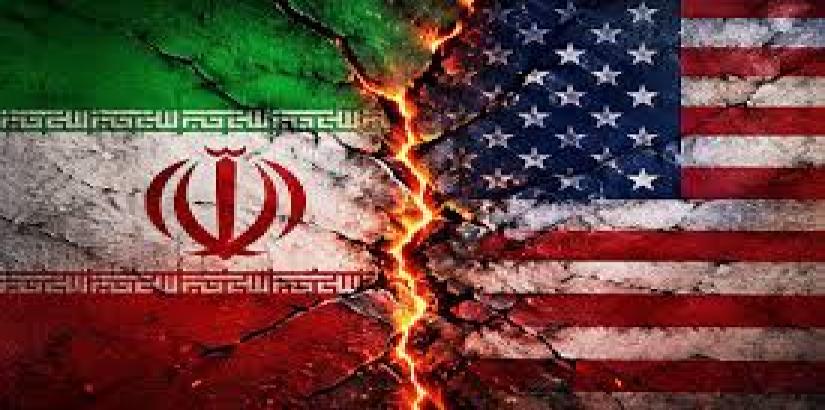
On February 25, 2026, Indian Prime Minister Narendra Modi stood in the Israeli Knesset and declared that “India stands firmly by Israel’s side.” Thirty-six hours later, U.S. and Israeli missiles began striking Iran. The timing has haunted Indian foreign policy ever since.
India did not start this war. But it cannot escape it. The U.S.–Iran conflict, which erupted on February 28, has exposed a structural vulnerability at the heart of Indian grand strategy — one that no amount of diplomatic balancing can paper over.
Energy Crisis at the Kitchen Table
The Strait of Hormuz carries roughly 20 percent of the world’s daily oil and liquefied natural gas. When Iran closed it on March 1, India felt the consequences almost immediately. More than 90 percent of India’s LPG (liquefied petroleum gas) imports pass through that strait. Over 330 million Indian households depend on LPG to cook their food.
Within days, protests had erupted across the country over gas shortages. In Bengaluru, only 10 percent of hotels received their gas supplies. In Mumbai, commercial refill delays stretched from two to eight days. On the black market, a standard 14.2-kg cylinder reached 4,000 rupees. On Amazon, sales of induction stoves jumped thirtyfold.
The government invoked the Essential Commodities Act of 1955, imposing a four-tier gas rationing system to protect household supply. More than 220,000 Indian nationals were repatriated from the Gulf region. Brent crude surged from $80 to $120 per barrel between March 2 and March 9. Household spending on cooking fuel rose 7 percent almost overnight.These are not abstract geopolitical numbers. They are the lived reality of a war India played no part in starting but is paying a steep price for sustaining.
Silence That Spoke Volumes
India’s official position has been neutrality. In practice, that neutrality has looked considerably less neutral. Modi condemned Iranian missile attacks on Gulf Arab states but said nothing about the U.S.–Israeli strikes on Iran. The government stayed silent when the U.S. Navy sank an Iranian warship returning from a multilateral naval exercise hosted by India. It blocked a documentary about a Palestinian child killed by Israeli forces, citing diplomatic sensitivities.
Every other founding BRICS member — Russia, China, and Brazil — condemned the war. India alone did not.
The costs of that silence became clearer as the weeks passed. When a ceasefire was eventually brokered after two weeks of fighting, it was mediated not by India but by Pakistan, alongside Egypt and Turkey. The Straits Times observed that India was experiencing “heartburn” over Pakistan’s visible diplomatic role. Opposition leader Rahul Gandhi called it a failure of foreign policy. The Wire described Pakistan’s emergence as a mediator as a “stinging strategic setback for New Delhi.”
For a country that has spent years building its credentials as the voice of the Global South, this was more than an embarrassment. It was a signal that strategic ambiguity has limits.
Web New Delhi Is Caught In
India’s dilemma is not a failure of will. It is a failure of structure. New Delhi has spent decades weaving a dense web of relationships that now pull in opposite directions simultaneously.
Iran is not simply a neighbor. It is a critical energy partner. The Chabahar Port project — India’s connectivity lifeline into Central Asia, bypassing Pakistan — runs through Iranian territory. The India–Middle East–Europe Economic Corridor depends on Gulf stability. Approximately nine million Indians work in the Gulf, sending home nearly $120 billion in remittances each year.
At the same time, India has deepened its defense and technology ties with Israel, upgraded to a Special Strategic Partnership just days before the war began. Its relationship with the United States, built painstakingly over two decades, underpins its technology supply chains, its defense procurement, and its aspirations as a major power. Washington has made its expectations clear. At the 2026 Raisina Dialogue, the U.S. Deputy Secretary of State Christopher Landau warned: “India must understand that we will not make the same mistake with India that we made with China.”
India has spent years reducing defense import dependence. A deeper tilt toward American systems would reverse that effort, binding Indian logistics and planning to U.S. timelines.
This is the trap. Aligning too openly with Washington risks losing Tehran, destabilizing the Chabahar corridor, and undermining the remittance economy that sustains millions of Indian families. Staying too close to Iran risks straining the U.S. relationship that India sees as essential to its long-term rise.
What Strategic Autonomy Requires
There is a distinction worth making between principled restraint and strategic drift. India’s silence has too often looked like the latter. Its critics have a point: condemning Iranian attacks on Arab states while staying mute on U.S.–Israeli airstrikes does not constitute neutrality. It constitutes a tilt disguised as a posture.
India’s 2022 decision not to join Western sanctions against Russia at least had internal logic. By keeping Moscow engaged, New Delhi was protecting its own interest in multipolarity. But silence on a war that concentrates more power in American hands works against that same goal. As one analyst noted: “If the United States succeeds in effecting regime change in Tehran, the direct consequence would be greater concentration of power in U.S. hands. This would militate against the promotion of multipolarity.”
The UAE partnership offers a glimpse of a more coherent approach. In January 2026, India finalized a $3 billion LNG deal with the UAE and moved toward a strategic defense partnership. National Security Adviser Ajit Doval traveled to Abu Dhabi as the crisis deepened. This kind of proactive energy diplomacy — diversifying supply, building new relationships, reducing Hormuz dependency — is the long game India needs to be playing more urgently.
The Question That Remains
India is the world’s third-largest oil consumer. Its strategic petroleum reserves cover just 11 days of consumption. Its LPG infrastructure is configured for Gulf crude. Its refinery capacity cannot be retooled overnight. These are not rhetorical vulnerabilities. They are engineering facts.
The war in West Asia did not create these vulnerabilities. It merely revealed them. And what it revealed is that India’s much-vaunted strategic autonomy has, in practice, been built on an assumption — that the Gulf would stay stable, that the Hormuz would remain open, and that the U.S.–Israel relationship would never drag New Delhi into a conflict it had no interest in fighting.
Those assumptions no longer hold. The question India needs to answer is not whether to side with Washington or Tehran. That framing is itself a trap. The question is whether India has the political will to build the energy independence, the institutional credibility, and the diplomatic infrastructure that would make such a choice genuinely unnecessary.
Or will it wait for the next crisis to expose the same fault lines all over again?
(The writer is a London-based political analyst and commentator specializing in U.S. foreign policy, international security, and Middle East geopolitics. Views expressed are personal. He can be contacted at decobeauty@aol.com)





Post a Comment