

Iran's Crisis Has Repercussions Beyond Borders: Will Sovereignty Survive Only By Permission?
India’s response to Iran’s crisis illustrates the dilemmas facing middle powers navigating a polarised global order. While reaffirming principles of sovereignty, non-intervention and dialogue, New Delhi has largely confined itself to cautious diplomacy. For a country that positions itself as a voice of the Global South and a defender of strategic autonomy, such restraint invites scrutiny. Silence at moments of legal strain is never neutral. It contributes to the gradual normalisation of coercive precedent.
 Jan 16, 2026
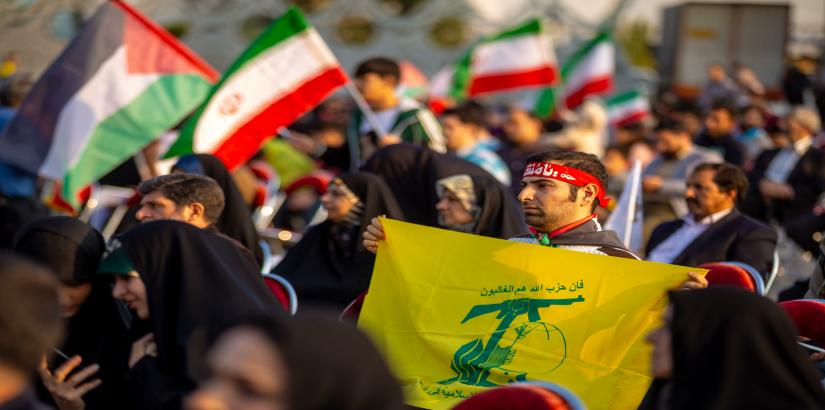
Iran’s current turmoil is often narrated as a story of domestic collapse, economic distress, governance deficits and popular unrest rooted in authoritarian rule. These realities are undeniable and have imposed severe costs on ordinary Iranians. Inflation, unemployment, currency collapse and violent repression of dissent have created conditions of sustained social exhaustion. Yet when this framing is presented in isolation, it obscures a deeper and more unsettling truth: Iran’s political and economic trajectory has, for decades, been shaped by systematic external intervention. From sanctions and diplomatic isolation to covert operations and persistent threats of force, Iran has been subjected to one of the longest-running experiments in externally driven destabilisation in modern international politics. Any serious analysis of the present crisis must therefore move beyond internal pathologies and confront the international architecture that has consistently constrained Iranian sovereignty.
Sanctions, Covert Action, And Weaponisation Of Law
The foundations of this architecture can be traced to 1953, when the CIA and MI6 orchestrated the overthrow of Iran’s democratically elected Prime Minister Mohammad Mossadegh after he nationalised the country’s oil industry. Declassified documents now leave little doubt that sovereignty was subordinated to strategic and economic interests. This episode did not merely alter Iran’s political trajectory; it embedded a durable logic that regime change could be justified when framed as protection of “order” or “interests.” That logic has endured in more sophisticated forms. Many unilateral and extraterritorial sanctions have functioned less as tools of behavioural correction than as instruments of economic attrition. While routinely defended as lawful pressure, their humanitarian consequences are well documented. Access to medicine, food security, employment and financial stability have all been severely affected, raising serious concerns under principles of proportionality and collective punishment in international law. Alongside economic coercion, covert operations have played a persistent role. Cyber-attacks, assassinations of Iranian scientists, infrastructure sabotage and intelligence operations, widely attributed by investigative reporting to foreign agencies, reveal a shadow conflict conducted outside any recognised legal framework. These actions are rarely subjected to the same normative scrutiny applied to Iran’s conduct, exposing a striking asymmetry in the application of international legality.
Asymmetric Legality And Regional Power Politics
The United States and Israel occupy a central place in this coercive landscape. Both invoke security imperatives to justify actions against Iran, yet their regional record complicates such claims. From Iraq and Libya to Syria and Gaza, interventions framed as stabilising or humanitarian have instead produced enduring instability, mass displacement and humanitarian catastrophe. Ongoing allegations of serious violations of international humanitarian law in Gaza, documented by United Nations agencies and human rights organisations, further weaken the moral authority with which coercive policies against Iran are defended. When law is applied asymmetrically, it no longer restrains power; it begins to serve it. The present crisis unfolds in the aftermath of the June 2025 escalation, which saw Israel and Iran engage in direct military confrontation. The episode revealed how swiftly prolonged proxy pressure can spill into open conflict, deepening internal repression and normalizing external escalation. The promotion of exile-led political alternatives, including figures such as Reza Pahlavi, reflects a familiar regime-change script. History across West Asia offers little evidence that externally curated leadership transitions produce democratic outcomes. More often, they deepen fragmentation, delegitimise organic dissent and prolong cycles of violence. The resurrection of dynastic memory as a democratic solution is neither neutral nor accidental. It reflects an enduring preference for controllable outcomes over genuine self-determination.
Internal Power, Clerical Authority And Limits Of Legitimacy
Condemning external aggression does not absolve Iran’s internal political structure from scrutiny. The concentration of authority under the doctrine of Velayat-e-Faqih has progressively narrowed political participation and weakened republican accountability. Unelected institutions dominate elected ones; security imperatives routinely override civil liberties. Economic mismanagement, corruption and the prioritisation of regional militarisation over domestic welfare have deepened public alienation. The suppression of dissent: from journalists and trade unionists to women’s rights activists, has eroded the regime’s moral credibility, particularly among Iran’s post-revolution generation. These failures are not peripheral. They are central to understanding why protests have been persistent, widespread and resilient. Equally important is the distinction between Iran as a state and the global Shia community it often claims to represent. Ayatollah Ali Khamenei’s political authority does not translate into universal religious leadership. Major Shia centres, particularly the Najaf school led by Grand Ayatollah Ali al-Sistani, have long rejected the politicisation of clerical authority, espousing a quietist tradition. Across South Asia, the Gulf, and Africa, Shia communities follow independent Maraji and do not subscribe to Iran’s model of theological governance. Iran’s claim to speak for Shia Islam globally is therefore less a religious consensus than a strategic construction.
Shia Communities And Cost Of Geopolitical Confrontation
The repercussions of escalating confrontation around Iran extend far beyond its borders. Shia minorities across West Asia and South Asia risk being securitised, surveilled or targeted whenever Iran becomes the focus of geopolitical escalation. At the same time, divisions within Shia societies are deepening, between those who view Iran as a necessary counterweight to Western-Israeli dominance and those who fear that Tehran’s regional posture invites perpetual instability and backlash. This presents a profound ethical dilemma. Shia political thought is historically rooted in resistance to injustice and arbitrary power. When state repression, strategic brinkmanship or proxy warfare appear to contradict these principles, moral authority erodes. The tragedy is not merely political; it is theological and social.
India’s Cautious Diplomacy Under Scrutiny
India’s response to Iran’s crisis illustrates the dilemmas facing middle powers navigating a polarised global order. While reaffirming principles of sovereignty, non-intervention and dialogue, New Delhi has largely confined itself to cautious diplomacy. For a country that positions itself as a voice of the Global South and a defender of strategic autonomy, such restraint invites scrutiny. Silence at moments of legal strain is never neutral. It contributes to the gradual normalisation of coercive precedent. Consistency and not convenience is what gives sovereignty its meaning.
Crisis Larger Than Iran, Sovereignty By Permission?
The protests have been met with severe repression, with human rights groups and media reporting large-scale fatalities amid information blackouts and restricted verification. Iranian authorities, however, have alleged that elements of the unrest were externally fuelled, citing seizures of weapons and arrests linked to foreign coordination. While these claims remain contested and independently unverifiable, they illustrate how narratives of internal dissent and external intervention have become increasingly entangled. Opposing illegal external intervention does not require romanticising internal authoritarianism. Critiquing Iran’s governance does not dilute the gravity of US-Israeli destabilisation. Both realities must be held simultaneously. To choose one while erasing the other is to collapse analysis into ideology.
Iran’s crisis is therefore larger than Iran. It is about whether sovereignty endures as a right or survives only by permission, granted or withdrawn by powerful states. International law is not undone by declaration, but by habit, when coercion is normalised, exceptions multiply and power faces no sustained resistance. If coercive intervention continues to be recast as lawful governance, the rules-based order risks surviving only in form, not in substance. Iran today stands as a test case of whether legality can still restrain power, or whether power will continue to operate under the guise of law.
(The author is an Advocate at the Jammu Bench of the High Court of J&K and Ladakh and a Doctoral Scholar at SCALSAR, Symbiosis International (Deemed University), Pune. Views expressed are personal. He can be contacted at aqib.juris@gmail.com )





Post a Comment