

Khamenei's Assassination and a Fractured Iran: Regional and Global Ramifications of a War of Attrition
Khamenei’s assassination terminates an epoch of ideological confrontation, yet inaugurates profound uncertainty. Legally and normatively, it imperils protections for sovereign leaders; strategically and politically, it probes Iran’s institutional fortitude; religiously and narratively, it unveils unifying and divisive societal forces. Diplomatic containment—through intermediaries such as Oman or Qatar—must prioritise the transition's fragility without incitement. Absent such prudence, this strike risks catalysing a wider regional conflagration, where initial tactical triumphs yield enduring strategic costs.
 Mar 10, 2026
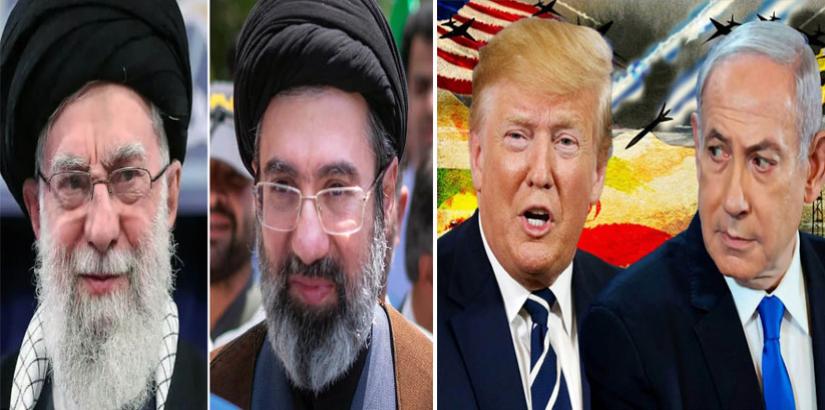
The targeted assassination of Ayatollah Ali Khamenei on 28 February 2026 stands as one of the most consequential decapitation strikes in contemporary international relations. As Supreme Leader of the Islamic Republic since 1989, Khamenei has served as the regime’s ideological anchor, strategic resolve, and institutional endurance. His assassination at age 86, in the initial salvo of joint U.S.-Israeli airstrikes codenamed Operation Epic Fury and Operation Roaring Lion, has unleashed a cascade of repercussions that extend far beyond immediate military gains, reshaping Iran's internal dynamics, and testing the boundaries of global norms.
Khamenei got assasinated at his Tehran residence alongside family members, senior military officers, and close advisers. Iranian state media reported the news of the assassination the very next day, announcing a 40-day official mourning period along with nationwide internet restrictions and the Basij, a paramilitary militia, being ordered out to maintain public order. The strike happened to be just one part of a larger operation that took down around 2,000 targets among which were the elite IRGC (Islamic Revolutionary Guard Corps) command centres, missile production facilities, naval assets, and nuclear-related facilities such as Natanz. This well-targeted strike, which was made possible by the sharing of advanced intelligence by the Mossad, Unit 8200, and U. S. cyber capabilities, points to the ongoing changing of decapitation strategy in warfare today.
Military Setbacks, but Systemic Collapse Unlikely
Militarily, the assassination has yielded partial but significant disruptions. Attacking Khamenei and several leading commanders has set the brakes in the command and control hierarchies of the regime, causing a substantial decline in both the number and quality of Iran's missile retaliatory barrages. As a result, coalition forces have enhanced their air superiority and have been able to attack deeper into the enemy territory. Despite this, Iran's asymmetric weaponry, which includes drones, ballistic missiles, and proxy militias, continues to make the coalition pay. For instance, the Strait of Hormuz is frequently closed, and these actions exert a lot of upward pressure on global energy prices. These types of missions might drastically undermine the operational capacities of the target for a while, but a systemic collapse is very unlikely; even the most resilient regimes can withstand the blow. With Iran, the hybrid theocratic-republican nature of the regime allows for a certain degree of resilience relative to disintegration; in other words, a war of attrition, looking very likely rather than a situation where the regime is quickly changed.
This military reality is intertwined with Iran's ongoing political transition. Under Article 111 of the constitution, a three-person Leadership Council—comprising President Masoud Pezeshkian, the head of the judiciary, and a senior cleric—now exercises interim authority until the Assembly of Experts appoints a permanent successor. Contenders included Mojtaba Khamenei, whose sway in security and clerical domains positioned him as a continuity candidate by the hardliners, alongside establishment moderates like Ali Larijani. Factional rivalries between hardliners prioritising retribution and reformists advocating de-escalation could continue and exacerbate instability. The IRGC, in assuming an amplified role in quelling dissent, further militarises the political landscape, potentially entrenching praetorian influences at the expense of civilian institutions.
In response, Iran's interim leadership has pledged severe reprisals, mobilising proxy forces across Lebanon, Yemen, and Iraq while enforcing stringent domestic measures—including internet blackouts and intensified Basij deployments—to forestall protests from evolving into systemic challenges.
Religiously, Khamenei’s demise disrupts the doctrine of Velayat-e Faqih, which entrusts supreme authority to a jurist as the representative of the Imam. Being a 'marja al-taqlid' and at the same time, the longest-serving Supreme Leader, Khamenei integrated Shiite theology with revolutionary practice, thereby giving the regime a divine legitimacy. While his absence leads to a significant deficiency in legitimacy, which hardline clerics will have to deal with without delay, reformist critiques might lead to the weakening of the theocratic structure if that does not happen.
Public Mourning, Western Portrayals
Public mourning has illuminated a narrative far more nuanced than external portrayals suggested. The United States and Israel, with the help of friendly media and groups of Iranian exiles, have for a long time portrayed Khamenei as a hated dictator who depended on repression rather than voluntary consent to maintain his power. This narrative asserted that if he were removed, there would be widespread celebration and the regime would collapse. The situation after the assassination has been the opposite of this prediction. Official media has described the murder as "Zionist, American barbarism," turning Khamenei into a symbol of national sovereignty and the strength of standing up to imperialism. Huge funerals and marches, attracting millions despite constant threats, have demonstrated strong mobilisation to honour his memory, particularly among hardliners and those who see him as a defender against foreign interference. Such collective grief belies the Western belief that the majority of people are disappointed. Consequently, mourning serves two purposes: it strengthens a government's legitimacy through a shared religious performance and, at the same time, it reveals social divisions that may have been overlooked.
Legally, the operation contravenes core tenets of international humanitarian law. The 1973 Convention on Crimes against Internationally Protected Persons deems assassinations of heads of state as serious offences. while the Hague Regulations and Geneva Conventions mandate distinction and proportionality, barring treacherous killings. Though justified by the U.S. and Israel as preemptive self-defence under UN Charter Article 51—invoking Iran’s proxy threats and nuclear pursuits—the targeting of a sovereign leader strains these justifications. U.S. Executive Order 12333’s anti-assassination clause, typically exempted from combat scenarios, faces reinterpretation here. Sparse precedents, such as the 1979 Soviet execution of Afghan President Hafizullah Amin, underscore the rarity and peril of such acts, which could prompt International Criminal Court inquiries despite jurisdictional hurdles.
Normatively, the assassination challenged the post-World War II ban on killing foreign heads of state even in times of war. Supporting the idea of using precise strikes against leaders in their own country, it lowers the level of deterrence between states and creates a more permissive environment for resorting to force, besides weakening the notion of mutual restraint that forms the basis of civilized relations between states.
Split in Global Responses
Global responses reflect these fractures. For example, the U. S. and Israel praise the killing as a serious blow to terrorism and proliferation. On the other hand, Russia and China define the act as cold-blooded killing and offer Iran both diplomatic and logistical help. Besides the European Union, Pakistan, India, and certain Gulf states, most are calling for de-escalation, whereas the UN Security Council is yet to arrive at a consensus on the matter, even after holding urgent meetings.
Khamenei’s assassination terminates an epoch of ideological confrontation, yet inaugurates profound uncertainty. Legally and normatively, it imperils protections for sovereign leaders; strategically and politically, it probes Iran’s institutional fortitude; religiously and narratively, it unveils unifying and divisive societal forces. Diplomatic containment—through intermediaries such as Oman or Qatar—must prioritise the transition's fragility without incitement. Absent such prudence, this strike risks catalysing a wider regional conflagration, where initial tactical triumphs yield enduring strategic costs.
(The author is an MPhil Scholar in International Relations at the University of the Punjab, Lahore, Pakistan. My academic research focuses on international security, geopolitical conflict, and the governance of emerging technologies in global politics. Views expressed are personal. She can be contacted at aleenasaifullah68@gmail.com )




Post a Comment