

A New Dawn in Kathmandu: India Must be the First Responder to Nepali Needs
Given that Nepali citizens enjoy national treatment in India, greater enrolment in higher education institutions across Uttarakhand, Uttar Pradesh, Bihar, and West Bengal should be encouraged. India must remain the first responder to Nepal’s needs at all times. Sustained cooperation and mutual trust can help realise the vision of “Viksit Nepal” alongside “Viksit Bharat.” Regional frameworks such as SAARC, BBIN, and BIMSTEC should be leveraged to strengthen Nepal’s alignment with India across international platforms.
 Mar 30, 2026
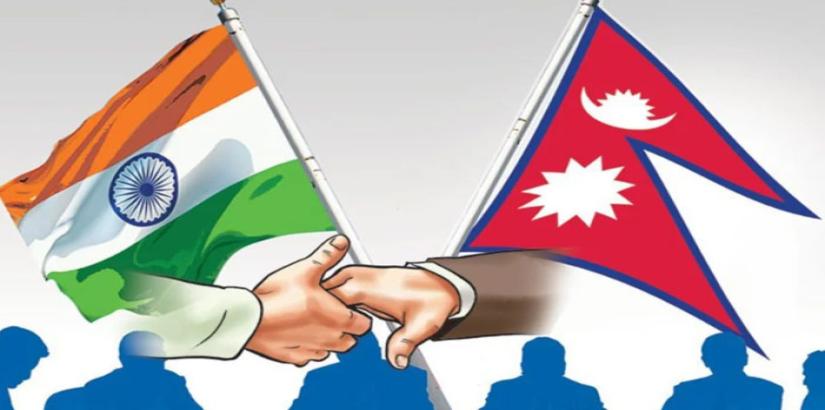
Indian relations with Nepal have been fraught for several years now, with the Nepali leadership under Prime Minister KP Sharma Oli—who has now been arrested—and his government and legislators continually courting China while repeatedly provoking India. Nepal restricted the use of Indian currency, initiated a border dispute by claiming sovereignty over Lipulekh-Limpiyadhura, through which India was constructing modern infrastructure, altered its maps to include the newly disputed areas, and even printed the revised map on its currency notes.
Meanwhile, Kathmandu moved ever closer to Beijing, opening new transit routes to the sea through China, even though, at a length of nearly 2,600 km, these were largely symbolic. Nepal accepted Chinese assistance for infrastructure projects despite Indian concerns, including the new airport at Pokhara and a proposed railway line linking Kathmandu to China.
Implementation of Nepal’s bilateral hydroelectric projects slowed. Nepal also explored offering Gurkha mercenaries for service in foreign armies beyond the UK and India.
Consequently, bilateral relations at the government-to-government (G2G) level deteriorated, although India continued to support people-to-people (P2P) and business-to-business (B2B) ties. Tourism to Nepal was encouraged by including significant sites there in Indian pilgrimage circuits. India continued to support Nepal’s educational and healthcare needs, maintained free movement, and extended national treatment to Nepali citizens—except for voting rights and participation in India’s diplomatic service.
However, even within India, a degree of disenchantment with Nepal has emerged, despite millennia-old familial and economic linkages, affectionately termed the “roti-beti ka rishta.” Tourism from India declined, while transit facilitation for Nepali goods faced bottlenecks, including delays, leakages, and labour-related disruptions at ports. Rail cargo services were also curtailed.
Opportunity to Repair Ties
The general elections in Nepal, resulting in the victory of the RSP party and the decimation of the Nepali left wing, present a rare opportunity to restore bilateral ties—not only to their traditionally friendly and cooperative footing, but to elevate them further.
In pursuit of its “Neighbourhood First” policy, India must engage the new government of Nepal, led by 35-year-old Prime Minister Balendra Shah, with pragmatic, problem-solving initiatives aimed at shared prosperity. A key priority is addressing transit bottlenecks faced by Nepal through Kolkata. India could grant access to a deepwater seaport capable of handling container vessels, with onward rail connectivity to Raxaul-Birgunj and other agreed transit points. This would reduce dependence on transshipment hubs like Colombo or Singapore, significantly lowering Nepal’s logistics costs.
India should also encourage its investors to manufacture in Nepal for both domestic consumption and export under a “Made in Nepal” label, enabling duty-free access to global markets. At the same time, India must help Nepal develop distinct branding for its agricultural products, such as tea, ensuring that premium Darjeeling tea retains its authenticity and value.
Investments in Nepal’s tourism infrastructure can be complemented by promoting joint pilgrimage circuits and adventure tourism. Additionally, India could support Nepal’s green transition by installing EV charging infrastructure nationwide, upgrading rural roads, and integrating fibre-optic connectivity alongside electrification projects.
Health, Education, and Connectivity
Nepal’s hydropower projects should be fast-tracked, with India committing to purchase surplus electricity. This would also help mitigate recurring floods in Bihar and Uttar Pradesh. India could assist in building an east-west electrified railway corridor in Nepal, with north-south spurs connecting to Indian railway networks, including a Kathmandu–New Delhi link.
Healthcare cooperation can be strengthened through a nationwide telemedicine network, supported by medical colleges and major hospitals in key regions. This would improve access for remote hill populations while building domestic medical capacity. Similarly, regional engineering colleges could support infrastructure development and maintenance.
Trade facilitation measures, such as enabling Nepali products to obtain BIS, FSSAI, and other Indian certifications, would boost bilateral commerce. Financial integration, including harmonised banking systems and UPI linkages, could further ease trade and travel. Expanding recruitment into Gorkha regiments would enhance employment opportunities while reinforcing India’s strategic depth in the Himalayan region.
Cooperation and Mutual Trust
Given that Nepali citizens enjoy national treatment in India, greater enrolment in higher education institutions across Uttarakhand, Uttar Pradesh, Bihar, and West Bengal should be encouraged.
India must remain the first responder to Nepal’s needs at all times. Sustained cooperation and mutual trust can help realise the vision of “Viksit Nepal” alongside “Viksit Bharat.” Regional frameworks such as SAARC, BBIN, and BIMSTEC should be leveraged to strengthen Nepal’s alignment with India across international platforms.
(The author is a former Indian ambassador and South Asia watcher. Views are personal.)





Post a Comment