

Pakistan’s Afghan Blowback: Strategic Depth Turns Strategic Liability
The larger lesson is sobering. Pakistan’s experience illustrates the perils of instrumentalising militant proxies for short-term strategic gain. Strategic depth, once viewed as a force multiplier, has become a source of strategic vulnerability. As Islamabad turns to air power to manage a problem decades in the making, the deeper fracture lies not just along the Durand Line—but within the logic of proxy warfare itself.
 Feb 24, 2026
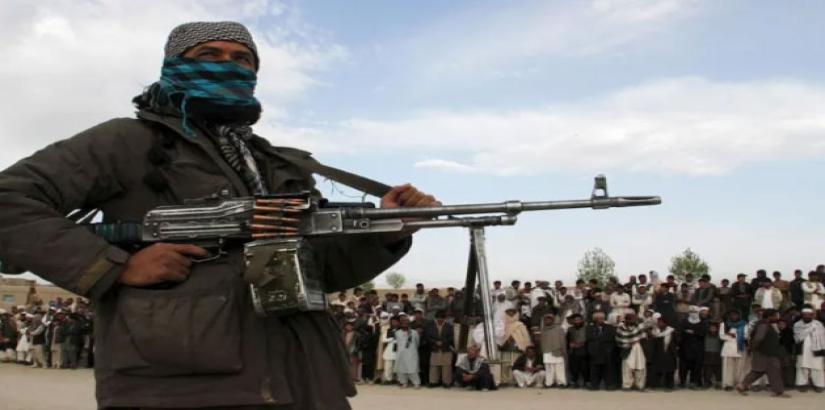
After nearly six months of uneasy calm, the fragile silence along the Af-Pak border has shattered. Pakistan’s recent airstrikes inside Afghanistan, reportedly killing around a dozen people, including women and children, signal a dangerous escalation between Islamabad and the Taliban regime in Kabul. The strikes come amid rising cross-border attacks by militant outfits, particularly the Islamic State Khorasan Province (ISKP), underscoring the deteriorating security landscape.
What was once touted as Pakistan’s doctrine of “strategic depth” in Afghanistan now appears to be collapsing under the weight of internal contradictions and militant blowback. As tensions mount and ties between Islamabad and Kabul erode, the old proxy architecture that sustained Pakistan’s Afghan calculus is fracturing. In this churn, India may find an opening to recalibrate its own Afghan outreach.
Strategic Depth: Patronage, Proxies and Plausible Deniability
For decades, Pakistan nurtured the Taliban as a core component of its strategic depth doctrine against India. During the Afghan-Soviet war and through the 1990s, Islamabad’s security establishment cultivated the Taliban as a friendly regime that would deny India influence in Kabul and provide rear bases for anti-India groups.
Training hubs emerged in provinces such as Khost, Jalalabad and Kandahar, facilitating operations by Pakistan-based groups like Lashkar-e-Taiba (LeT) and Jaish-e-Mohammed. This architecture contributed to destabilisation in Jammu & Kashmir through the late 1980s and 1990s.
Following the 9/11 attacks and the US invasion of Afghanistan, the Taliban regime collapsed under operations such as the CIA’s Operation Jawbreaker. Yet Pakistan’s strategic depth policy did not dissolve. Instead, it was reorganised. The Haqqani network—long considered one of the most lethal insurgent factions—became the linchpin of Islamabad’s proxy strategy. Core Taliban and Haqqani elements found sanctuary in Pakistan’s tribal belt, particularly North Waziristan in the former FATA region, with alleged facilitation from the ISI.
Publicly aligned with Washington’s “War on Terror,” Pakistan simultaneously maintained covert linkages with militant proxies. The ISI’s S Division reportedly oversaw relationships with groups including the Haqqanis, LeT and Jaish, preserving plausible deniability while retaining influence inside Afghanistan.
The 2008 and 2009 bombings of the Indian Embassy in Kabul—attributed to the Haqqani network—were emblematic of this dual-track strategy. India’s diplomatic and development footprint suffered as security threats mounted, forcing a recalibration of its presence.
The Taliban 2.0 Problem
The Taliban’s return to power in 2021 was widely celebrated in Pakistan as the restoration of strategic depth. However, Islamabad soon confronted a sobering reality: this was not the Taliban of the 1990s.
Taliban 2.0 sought autonomy, legitimacy and internal consolidation. Rather than functioning as a pliant proxy, it pursued its own interests—often at odds with Pakistan’s expectations. Border skirmishes increased. Economic tensions simmered. Most critically, the Tehreek-e-Taliban Pakistan (TTP) resurged as a potent threat to the Pakistani state.
Islamabad had anticipated that Kabul would rein in the TTP. That expectation proved misplaced. Ceasefires between Pakistan and the TTP collapsed. Attacks inside Pakistan intensified.
Pakistan’s fallback option—the Haqqani network—also lost reliability. Internal rifts between Sirajuddin Haqqani and Taliban supreme leader Hibatullah Akhundzada widened, reportedly over governance, taxation and women’s rights. The Haqqanis, often seen as comparatively pragmatic, found themselves at ideological odds with Kandahar’s hardline leadership.
With diminishing leverage over Kabul and an emboldened TTP, Pakistan’s strategic depth doctrine has entered a phase of structural decline. The recent cross-border offensives suggest not confidence, but compulsion.
Blowback from FATA
The seeds of today’s crisis were sown in Pakistan’s tribal areas two decades ago. The relocation of Taliban and Haqqani leadership to FATA, alongside permissive cross-border jihadist networks, created an ecosystem of militancy that eventually slipped beyond state control.
Groups such as Tehreek-e-Nafaz-e-Shariat-e-Mohammadi (TNSM), revived under Sufi Mohammad and later Maulana Fazlullah, propagated radical ideologies through platforms like “Mullah Radio.” Meanwhile, Al-Qaeda deepened its footprint. Attempts on then-President Pervez Musharraf’s life in 2003 illustrated the scale of internal threat.
The Shakai Valley Agreement of 2004, aimed at persuading tribal militants to expel foreign fighters, faltered when local commanders continued to shelter Al-Qaeda and Uzbek militants. Leaders such as Nek Mohammad transformed local insurgencies into nodes of a broader transnational jihadist network. The presence of figures like Tahir Yuldashev of the Islamic Movement of Uzbekistan further internationalised the militancy.
US drone strikes—beginning with the killing of Nek Mohammad in 2004—temporarily disrupted militant sanctuaries. Yet the formation of the TTP in 2007 institutionalised anti-state militancy. Subsequent peace deals between Islamabad and the TTP repeatedly collapsed.
The 2011 US operation that killed Osama bin Laden during Operation Neptune Spear severely strained US-Pakistan trust, weakening intelligence cooperation. Although tactical collaboration resumed intermittently—such as reported Pakistani facilitation in the US strike that killed Ayman al-Zawahiri—the structural distrust persisted.
Inflame Anti-Pakistan Sentiment
Today, Pakistan faces simultaneous pressure from the Taliban regime and the TTP. Its recent airstrikes inside Afghanistan, coinciding with high-level Taliban diplomatic engagements abroad, appear intended to signal resolve—both to Kabul and to Washington.
Islamabad may calculate that a tougher posture against the Taliban could revive aspects of its earlier counter-terror partnership with the United States. For Washington, limiting extremist safe havens remains a priority, though strategic focus has shifted elsewhere.
However, coercion carries risks. Airstrikes that result in civilian casualties may further inflame anti-Pakistan sentiment within Afghanistan and strengthen hardliners in the Taliban leadership. Rather than restoring leverage, force could accelerate estrangement.
India’s Strategic Window
For India, the evolving rupture between Islamabad and Kabul presents both opportunity and caution. New Delhi’s earlier approach—marked by development assistance, infrastructure projects and calibrated engagement—yielded significant goodwill but limited strategic insulation when violence escalated.
Re-engagement with Afghanistan since 2021, including the upgrade of India’s technical mission in Kabul, signals a pragmatic shift. India’s broader “Look West” and Central Asian connectivity ambitions align with a stable and sovereign Afghanistan not beholden to Pakistani influence.
A more proactive policy—combining humanitarian outreach, regional connectivity initiatives and calibrated security engagement—could enhance India’s long-term leverage. Yet overreach must be avoided. Afghanistan’s internal dynamics remain fluid, and overt strategic manoeuvring could provoke counter-moves.
The larger lesson is sobering. Pakistan’s experience illustrates the perils of instrumentalising militant proxies for short-term strategic gain. Strategic depth, once viewed as a force multiplier, has become a source of strategic vulnerability. As Islamabad turns to air power to manage a problem decades in the making, the deeper fracture lies not just along the Durand Line—but within the logic of proxy warfare itself.
(The author is a national security analyst specialising in intelligence and security analysis. Views expressed are personal. He can be contacted at srijansharma12@gmail.com.)





Post a Comment