

Pakistan’s Quiet Energy Pivot in a Time of War
The conflict in Iran, in this context, is acting as the moment of revelation. It is showing us what kinds of energy systems are still structurally dependent on distant chokepoints, and what kinds of energy systems are starting to build the foundations for resiliency much closer to home. The trajectory of the Pakistani experience, while still in its early stages, may represent the beginnings of an alternative model, one in which decentralization and renewables are key to managing global instability.
 Mar 27, 2026
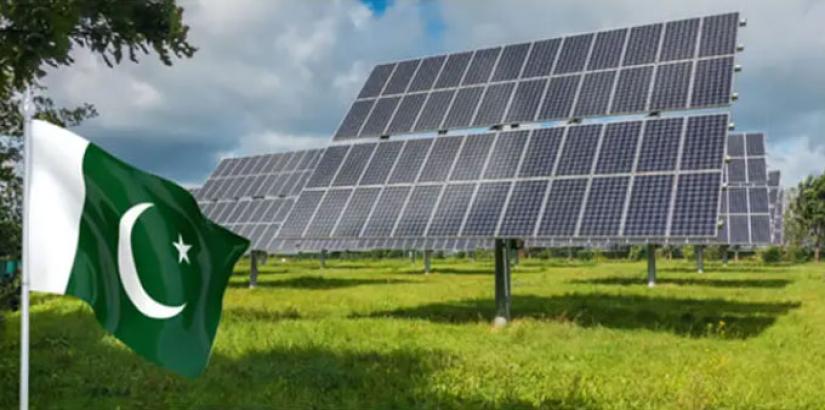
The crisis currently being wrought in the region involving Iran is not simply a matter of geopolitics; it is a test for the energy security of the Global South. However, beneath this surface-level crisis, a more nuanced difference is being created. Pakistan is not experiencing this crisis in quite the same way that others in the region are. While this crisis may look and feel like a monolithic event, it is, in fact, revealing the early outlines of a new energy paradigm that is already being created.
The key to this crisis is the Strait of Hormuz, which is one of the most important channels for global energy supplies. Instability in this region is felt instantly, and it is revealing to see how dependent energy-importing nations truly are. While this is a crisis for much of the Global South, it is not simply a matter of crisis management. Rather, this is a moment that is revealing important differences in how nations are approaching this crisis and how they will be approaching it in the near future.
Changing Pattern of Energy Consumption
Pakistan is increasingly moving towards the latter. The past few years have seen the rise of decentralized solar power in the country. Collectively, rooftop solar, commercial solarization, and distributed energy solutions are changing the pattern of energy consumption. The shift has not been driven by any particular government initiative, but the sum of all the incentives, increasing grid costs, and the availability of technology. The net effect has been the quiet rise of energy self-sufficiency, moving away from imported energy sources towards indigenous energy production.
This shift can be seen quite clearly if one draws regional comparators. Bangladesh, for example, has increased its dependence on gas-based power generation and has correspondingly increased its exposure to the liquefied natural gas markets. What one can see here is not simply a divergence in terms of policy decisions. Rather, it is a divergence in terms of underlying structure. Energy demand in Pakistan is now mediated by the power of the sun, while others are more directly tied to the ebbs and flows of the international fuel markets. In moments of global dislocation, this is no longer simply abstract. Rather, it is a real and quantifiable difference in terms of the pressure that is being put on the local system.
None of this is to say that there is insulation from the crisis. The impact of the international energy shock that was set off by the conflict in Iran is still being felt throughout the Pakistani economy. However, the presence of a growing renewable energy base is helping to mitigate the impact of that shock. It is helping to reduce the marginal dependence on imported fuels and to alleviate some of the pressure that is being put on few years ago.
What is being witnessed, therefore, is not a tale of energy security being secured, but one of energy resilience being built. What is more important is that this points to a broader strategic truth. In the new geopolitical world, energy transitions are no longer being driven by climate concerns. Rather, they are being driven by economic stabilizers and instruments of strategic freedom. For a country such as Pakistan, therefore, not only is the shift to renewables a climate change measure, but also a recalibration. Every increment of home-produced solar power is a hedge against external shocks, however remotely they may originate.
Trajectory of Pakistani Experience
The conflict in Iran, in this context, is acting as the moment of revelation. It is showing us what kinds of energy systems are still structurally dependent on distant chokepoints, and what kinds of energy systems are starting to build the foundations for resiliency much closer to home. The trajectory of the Pakistani experience, while still in its early stages, may represent the beginnings of an alternative model, one in which decentralization and renewables are key to managing global instability.
This trajectory, if continued, has the potential to carry significant implications beyond the conflict. It may represent one of the first cases in which a lower-middle-income country is using distributed renewable energy not only for sustainability, but for geopolitical insulation. And in an increasingly conflict-entangled world where energy flows are key, such a move is not incremental, but strategic.
In most cases, crises do not spark new transformations but rather accelerate and amplify ongoing trends. While Pakistan’s expansion in solar energy may not have been designed in reaction to geopolitical crises, it is currently playing this role. The key now is to build on this pace, to turn this nascent advantage into a lasting framework for resilience, and in doing so, rethink what energy security truly means in the Global South.
(The author is a Pakistani contemporary affairs analyst working with an Islamabad-based think tank. Views expressed are personal. She can be reached at saeedsarah088@gmail.com )





Post a Comment