

Reimagining a Cooperative South Asia: A Next-Gen Agenda to Revive SAARC
The revival of SAARC will not come from dramatic diplomatic breakthroughs. Instead, it will emerge through incremental cooperation in education, digital infrastructure, disaster response and trade facilitation. Crucially, the future of South Asian regionalism may depend on a generation that increasingly experiences the region not through borders but through shared digital, economic and cultural networks.
 Mar 09, 2026
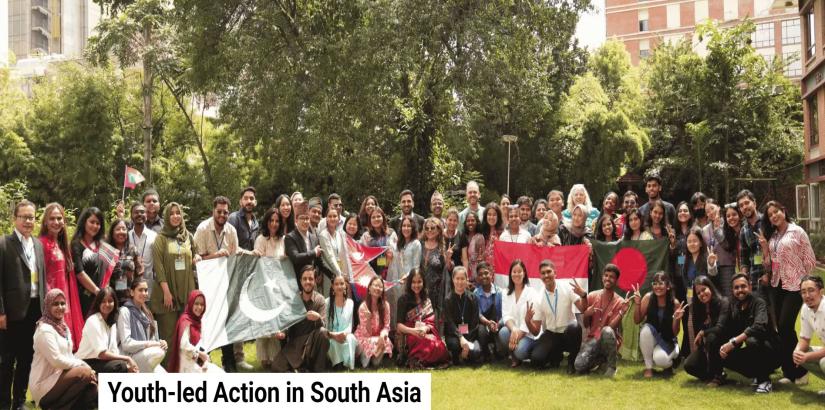
Regional organisations rarely collapse dramatically; they drift quietly into irrelevance. The South Asian Association for Regional Cooperation (SAARC) appears to be caught in precisely such a drift. The organisation has not convened a leaders’ summit since 2014, when the eighteenth SAARC summit was held in Kathmandu.Yet the need for regional cooperation in South Asia, one of the world’s least integrated regions remains pressing.
At the 2025 UN General Assembly, Bangladesh’s interim leader Muhammad Yunus urged the revival of SAARC, noting that South Asia has “no alternative to regional cooperation.”
Yet the structural need for regional cooperation in South Asia has not disappeared. Nearly a quarter of the world’s population lives in the region, but economic integration remains minimal. According to the World Bank, intra-regional trade accounts for only about 5 percent of South Asia’s total trade, making it one of the least integrated regions globally.
This paradox of high interdependence but weak institutions defines South Asian regionalism today. Reviving SAARC will not come from symbolic summits or ambitious declarations. Instead, the organisation requires a pragmatic agenda built on incremental cooperation, civic participation and youth-driven regional networks that can gradually rebuild trust in the region.
Rebuilding Social Foundations
Regional institutions rarely endure without some sense of shared identity. Political psychologist Ashis Nandy has argued that identities in South Asia are frequently negatively defined. Countries define themselves by what they are not, rather than through a shared regional belonging.
One way to counter this fragmented regional imagination is through youth mobility and educational cooperation. The European Union’s Erasmus Programme demonstrates how student exchanges can gradually cultivate regional identity; since 1987, it has enabled millions of students to study across European universities.
A similar initiative in South Asia could be a SAARC Youth Mobility Scheme allowing university students and early-career researchers to spend a semester in neighbouring countries. Even small-scale academic exchanges can create long-term intellectual networks that influence regional policy debates.
Youth Networks as Drivers
Unlike previous generations shaped primarily by territorial nationalism, young South Asians increasingly interact through digital platforms, popular culture and academic collaboration. These informal connections already create a form of regional social space that political institutions have yet to recognise.
Institutionally, SAARC could establish a South Asian Youth Council attached to the SAARC Secretariat. Such councils exist in other regional organisations for example, the ASEAN Youth Organisation facilitates regional youth dialogue and policy engagement.
A SAARC youth council could organise annual South Asian policy labs, where students, entrepreneurs and researchers jointly develop policy proposals on climate change, digital governance and regional connectivity. Youth participation in policy design would ensure that regional cooperation reflects emerging societal priorities rather than only state interests.
Away from Sovereignty Disputes
One structural barrier to SAARC has been the deep sensitivity surrounding sovereignty and territorial disputes. When regional forums become entangled in bilateral conflicts, cooperation quickly stalls.
A more pragmatic strategy would be to focus SAARC cooperation on functional sectors that do not challenge territorial sovereignty. Scholars such as Amitav Acharya highlight that ASEAN initially prioritised technical and economic cooperation while avoiding divisive political questions.
SAARC could replicate this model by enabling sub-regional cooperation within the broader organisation. Energy trade between Nepal, Bhutan, Bangladesh and India already demonstrates the viability of such arrangements.
Civil Society as Engagement Partners
When official diplomacy stagnates, civil society networks often keep regional dialogue alive. Academic collaborations, journalist networks and research institutions have historically maintained communication across South Asia. Nepali journalist and regional thinker Kanak Mani Dixit has emphasised that South Asian cooperation must extend “beyond governments to societies,” arguing that regionalism will deepen only when citizens themselves participate in it.
A SAARC Civic Forum could institutionalise such engagement by connecting universities, think tanks and media organisations across the region. Importantly, youth-led research collaborations and policy competitions could become central components of this forum.
Digital Cooperation as Entry Point
Digital infrastructure offers one of the most realistic opportunities for rebuilding regional cooperation. South Asia is experiencing rapid growth in fintech platforms, digital identity systems and online public services.
ASEAN countries have already begun linking national payment systems to facilitate cross-border digital payments, such as the interoperability between Singapore’s PayNow and Thailand’s PromptPay.
A South Asian digital payments corridor could replicate this model. Young entrepreneurs and technology start-ups could play a crucial role in designing such systems, particularly through regional fintech innovation challenges sponsored by SAARC.
Issue-Based Cooperation
South Asia’s geography ensures that many of its most pressing challenges are transnational. Cyclones, earthquakes and river floods routinely affect multiple countries simultaneously. A coordinated South Asian disaster response mechanism similar to ASEAN’s humanitarian assistance centre could pool satellite data, emergency logistics and climate research. Regional youth organisations and volunteer networks could also contribute to disaster response training and climate monitoring initiatives.
Ultimately, durable regional organisations depend on economic interdependence. According to the World Bank, trade within South Asia could potentially triple if logistical and regulatory barriers were reduced. Small-scale initiatives such as the India-Bangladesh border haats demonstrate how localised economic cooperation can gradually build trust and expand regional trade networks.
Regionalism for Next Generation
The revival of SAARC will not come from dramatic diplomatic breakthroughs. Instead, it will emerge through incremental cooperation in education, digital infrastructure, disaster response and trade facilitation. Crucially, the future of South Asian regionalism may depend on a generation that increasingly experiences the region not through borders but through shared digital, economic and cultural networks. If SAARC is to regain relevance, it must become not merely a forum of governments but a platform that enables the region’s younger generation to imagine and build a cooperative South Asia.
(The author is a final year political science student and geopolitical researcher specializing in great power politics, South Asian studies, and international strategic affairs. She writes on contemporary global issues with a policy-oriented lens. Views expressed are personal. She can be contacted at manyarastogi812@gmail.com )





Post a Comment