

Renewing Ties with Bangladesh: An Agenda for the new Indian High Commissioner
The major bilateral issue is border security and management. While India claims that millions of Bangladeshis enter India illegally, reside and work here, Bangladesh dismisses that contention outright, saying that as their per capita income was higher than India’s, there was no reason for economic migration from Bangladesh to India.
 May 11, 2026
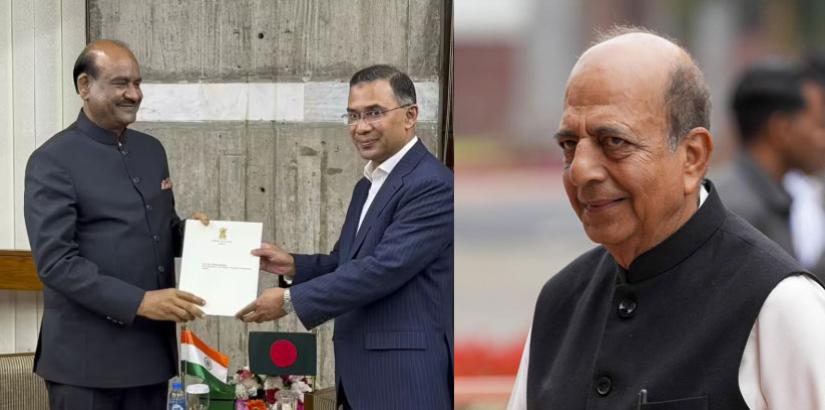
India-Bangladesh relations suffered a serious setback during the unconstitutional Interim Government of Md Yunus after Sheikh Hasina's ouster from power and exile to India in August 2024. Bangladesh repudiated all bilateral treaties, claimed the whole of Northeast India and her own territory in new maps, and broke off economic ties, rail and road transit and reduced flight services. It also cosied up to Pakistan and China politically, militarily and economically.
Consequently, India curtailed visa services except for education and serious medical needs, tightened border controls and restricted trade.The banning of the Bangladesh Awami League from political activity, including participation in electoral politics, added fuel to the fire.
Relations had reached a nadir when the February general elections brought the centre-right BNP to power. India reached out quickly to the new leadership of Prime Minister Tarique Rahman through formal and informal channels and both countries agreed to put their linkages on an even keel once again.
Appointment of New Indian HC
The appointment of Dinesh Trivedi, a ruling party politician and a former cabinet minister, as the next High Commissioner of India to Bangladesh is a welcome step in the process of recalibrating bilateral ties. He is likely to hold cabinet rank, which will help him take bilateral ties to a higher trajectory. His appointment has sent a message to Dhaka and the neighbourhood of the highest importance India attaches to its relations with them within the context of the “Neighbourhood First” policy. The restoration of a legitimate government in Bangladesh gives Trivedi a unique opportunity to make a visible and useful difference to the fractious feelings and antipathy that has prevailed towards India in the last couple of years.
Priority to Border Issues
A native of Gujarat, who has studied in Kolkata and the US, and with access to Prime Minister Narendra Modi and Home Minister Amit Shah, Trivedi's priorities in Dhaka should include cultivation of the entire top echelon of the Bangladeshi power elite. India has been accused of not engaging adequately with the ruling BNP and evolving centre-right forces. That is because India’s earlier experience of the BNP-Jamaat coalition government has not been too good. Now that BNP is back to govern with a new leadership, Indian can balance its engagements better.
The major bilateral issue is border security and management. While India claims that millions of Bangladeshis enter India illegally, reside and work here, Bangladesh dismisses that contention outright, saying that as their per capita income was higher than India’s, there was no reason for economic migration from Bangladesh to India.
Bangladesh refuses to advise its citizens not to illegally cross the International Border, which lies at an average of 150 metres east of the Indian border fence. India's Border Security Force (BSF) should ideally patrol the International Border (IB) and not stay west of the border fence to advance security to the sovereign Indian territory between the fence and the IB. Because of this, smugglers and traffickers from both sides try to breach the border fence, are warned to desist, and shot by the BSF if they persist. This is a perennial source of conflict that India should try and resolve to allow Indian nationals settled east of the border fence to thrive and prosper. The riverine borders also need more intense vigil.
River Water Sharing
The other major issue is sharing of common international rivers. Trivedi may help to decide whether the Ganga Waters Treaty should be allowed to lapse as neither side was ever happy with it. The Teesta agreement needs to be revisited with hard hydrological data. If Teesta flows are inadequate, India may propose to use its Bangladesh aid funds to build a canal from the Jamuna river to divert water to a debouching point upstream of the Teesta Barrage in Bangladesh, entirely within Bangladeshi territory.
The water-sharing formula accepted in the draft Teesta Agreement of sharing water by route length may be incorporated into a single comprehensive agreement sharing all common rivers and obviate the need for tortuous discussions river by river.
Reforming Visa System
Anti-terrorism cooperation should also be a major component of bilateral relations so that visa application scrutiny can be more comprehensive, fast and fair. Reforming the visa application system to eliminate Bangladeshi touts and internal corruption is also a very important task. Institution of visa fees bilaterally to make it a no-loss system will benefit both sides.
Revive Economic, Trade and Transit Ties
Issues in the economic and investment relationship include restoring trade and manufacturing supply chains so that Bangladeshi exports have large Indian component in them; initiate trade and settlements in national currencies; economically support minority business activities by promoting Indian trade with them; revive use of Mongla port and Indian SEZs; ensure transfer of social-security benefit of Indian holders of Bangladeshi work permits; open LCPs and link them by internet services to HCI and DGFT; re-open road and rail transit links through BD: encourage Indian companies and investors to consider business in Bangladesh to take advantage of their global LDC status.
Regarding transport and logistics both sides need to fully restore rail and road transit for mutual benefit. India can promote civil aviation links to Durgapur and Bagdogra to reduce pressure on Kolkata airport; encourage medical tourism to Durgapur; while Bangladesh may consider opening its regional airports to Indian carriers. Inland water transit facilities may be fully used and expanded; invest in Bangladeshi rivercraft and coastal vessel manufacture; and help revive and strengthen the Bangladesh railway system.
Both sides may harmonise standards, ease trading formalities and phytosanitary checks for fresh and perishable trade goods. Accept each other’s phytosanitary certifications promote investments in northern Bangladesh and Sylhet; support primary healthcare initiatives; agro and food processing initiatives.
The problem of cattle smuggling may be resolved by issuing export licences to Indian cattle traders for a per capita fee and modern abattoirs set up by Bangladesh to process the cattle and return the hides to West Bengal’s tanners to process into leather.
Promote People-to-People Ties
To promote people-to-people ties, India must provide greater educational support at all levels to Bangladeshis on self-financing scheme and encourage academic tie-ups with Bangladeshi universities; help maintain and if possible revive minority heritage sites and museums in Bangladesh; create bilateral pilgrim circuits with a new pilgrimage visa for all faiths; collaborate with Chhayanaut, Udichi and similar organisations to promote Bengali culture. Bangladeshis are Bengali by culture and Bangladeshi by nationality. These two identities need to be emphasised, not mixed up.
Trivedi also will need to improve ties between the two civil and military services, and collaborate on environment and wildlife management, and engage on the festering Rohingya issue that has burdened Bangladesh with more than a million refugees who fled persecution in Myanmar, many of whom have also sneaked into India and increased its slum population.
Revival of Regional, Subregional Cooperation
It is hoped that Trivedi will use his vast experience and political wisdom to navigate India's ship of state quickly to more placid and peaceful waters of Bangladesh and together enable mutual growth, prosperity and understanding. A normalised bilateral relationship with Bangladesh will also support the revival of dormant multilateral interactions in South Asia through initiatives like BIMSTEC, SAARC as well as the BBIN sub-regional cooperation group to bring greater well-being and lift all the region's vulnerable populations out of poverty and onto the path to prosperity.
(The writer is a former Indian Deputy High Commissioner in Bangladesh. Views expressed are personal. He can be reached at sarva.chakravarti@yahoo.co.uk)





Post a Comment