

US–India Tariff Framework: Trade Concessions Should not Dictate Foreign Policy Choices
Trade adjustments between major economies inevitably reverberate beyond bilateral channels. Bangladesh’s potential tariff advantages in textiles could redirect labour-intensive supply chains. Pakistan, operating within the China-Pakistan Economic Corridor framework, may use India’s perceived alignment with Washington to advance its own strategic narratives. China itself will interpret these developments within the broader context of great-power competition and recalibrate its economic and strategic posture accordingly.
 Mar 09, 2026
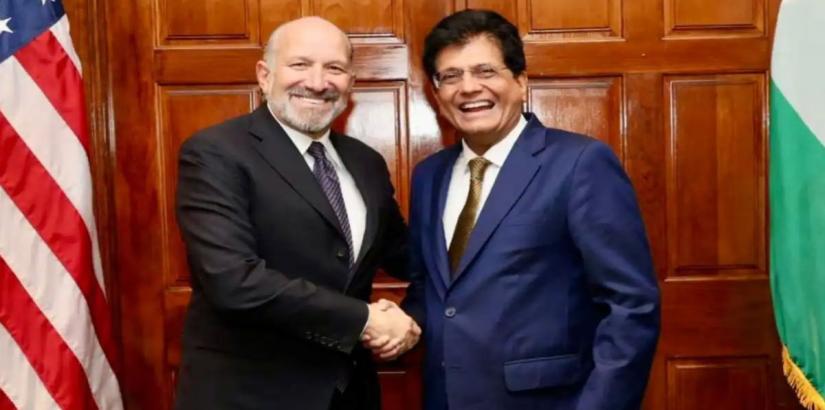
Trade agreements are rarely confined to commerce. They frequently function as instruments through which larger geopolitical alignments are shaped and tested. The recently announced interim trade framework between the United States and India must therefore be viewed through a wider strategic lens. While the reduction of U.S. tariffs on Indian exports from punitive levels to 18 percent appears to offer immediate relief to exporters and stabilise market sentiment, the deeper question concerns the structural expectations embedded within the arrangement. When market access becomes implicitly linked to geopolitical choices, trade diplomacy begins to resemble strategic conditionality rather than purely economic negotiation.
Legal Shock and Pause in Negotiations
Recent developments have complicated the trajectory of the framework. An Indian delegation scheduled to travel to Washington to finalise elements of the arrangement has deferred its visit following a U.S. Supreme Court ruling that struck down sweeping global tariffs imposed under emergency economic powers. The Court held that the executive branch had exceeded its statutory authority. The implications are significant. The tariff regime that initially created negotiating pressure now stands legally unsettled. If the punitive tariffs that catalysed negotiations are constitutionally vulnerable, the commitments extracted during their enforcement inevitably raise questions. Long-term trade arrangements built upon legally contested executive measures risk embedding instability into the architecture of the agreement itself.
Washington has characterised the framework as balanced and reciprocal. Yet the structure of the arrangement reveals a more complex reality. India has indicated willingness to reduce tariffs across a broad spectrum of U.S. industrial and agricultural goods, address non-tariff barriers and negotiate digital trade standards. It has also signalled intent to significantly expand imports of American products, potentially reaching $500 billion over the coming years. In return, the United States has essentially restored tariff levels to competitive parity. More revealing, however, is the context in which tariff relief was granted. U.S. executive language linked the removal of additional duties to India’s energy trade with Russia. Such linkage suggests that trade policy is being used as a tool of economic statecraft, where market access becomes intertwined with geopolitical alignment. For middle powers, this dynamic introduces a persistent dilemma. Economic integration can easily become entangled with strategic expectations.
Energy Politics and Strategic Ambiguity
India’s energy strategy has long been shaped by pragmatic considerations. Discounted Russian crude following the Ukraine conflict helped stabilise inflationary pressures and supported refining margins within the Indian economy. In announcing tariff relief, Washington suggested that the rollback of additional duties reflected India’s commitment to reduce Russian oil imports. Yet the joint bilateral statement issued by both governments made no explicit reference to such a pledge, and no formal codification has been publicly disclosed. This discrepancy illustrates the ambiguity embedded in the framework. Market data continues to show that Indian imports of Russian crude persist, albeit at fluctuating volumes. Meanwhile, the Supreme Court ruling limiting the administration’s tariff authority weakens the credibility of conditional expectations tied to energy sourcing decisions.
Complicating matters further is the evolving security environment in West Asia. Escalation surrounding Iran has revived concerns about the vulnerability of the Strait of Hormuz, a strategic chokepoint through which a significant portion of global oil flows and a large share of India’s energy imports transit. Any disruption in the Gulf could compel New Delhi to reconsider its sourcing strategy. Paradoxically, the same geopolitical pressures that encouraged India to reduce reliance on Russian oil could operate in reverse. If instability in the Gulf constraints supply routes, India may find itself increasing purchases from Russia, reopening the very strategic tension that initially shaped the tariff dispute. Energy procurement decisions cannot realistically be transformed into compliance indicators within another state’s strategic calculus.
Agricultural Sensitivities, Digital Trade
Agriculture represents another area of potential domestic friction. Tariff reductions on American agricultural goods — including feed inputs, edible oils and specialised crops — carry significant implications for India’s rural economy. U.S. agribusiness operates at scales and subsidy levels that Indian smallholders cannot easily match. Even modest tariff adjustments can place downward pressure on farm-gate prices. Indian farm unions have already warned that liberalisation in certain sectors may expose domestic producers to destabilising competition. Government assurances regarding safeguards may mitigate some risks, but perception alone can generate political turbulence.
Less visible but equally consequential are commitments relating to digital trade norms and regulatory standards. Provisions aimed at addressing “discriminatory practices” in the digital sphere may influence India’s approach to data localisation, platform governance and technology regulation. In an era where technological standards determine long-term economic power, the ability to shape regulatory frameworks becomes strategically significant. Incremental adjustments made within trade negotiations can gradually shift regulatory autonomy.
Tariff Relief and Geopolitical Alignment
The agreement also intersects with ongoing debates within international trade law. The United States has increasingly relied on expansive interpretations of domestic legislation — particularly Section 232 of the Trade Expansion Act — to impose tariffs on national security grounds. Critics argue that such measures stretch security exceptions beyond their intended purpose. Under the WTO framework, members remain bound by Most Favoured Nation obligations and negotiated tariff commitments. While security exceptions exist, excessive reliance on them risks weakening the credibility of multilateral trade rules. When tariff relief becomes intertwined with geopolitical alignment, the boundary between legitimate trade regulation and strategic coercion becomes increasingly blurred.
Trade adjustments between major economies inevitably reverberate beyond bilateral channels. Bangladesh’s potential tariff advantages in textiles could redirect labour-intensive supply chains. Pakistan, operating within the China-Pakistan Economic Corridor framework, may use India’s perceived alignment with Washington to advance its own strategic narratives. China itself will interpret these developments within the broader context of great-power competition and recalibrate its economic and strategic posture accordingly.
Strategic Partnerships, Policy Independence
The Indo-Pacific framework was conceived as a partnership among states that retain independent strategic choices while cooperating on shared security and economic concerns. Its credibility rests on the premise that strategic alignment does not require policy subordination. When trade instruments begin to influence decisions on energy sourcing or geopolitical positioning, that balance becomes fragile. Partnerships built on convergence risk drifting toward transactional arrangements where economic incentives are used to shape strategic behaviour. For India, the challenge lies in maintaining the equilibrium between engagement and autonomy. Cooperation with Washington offers technological, economic and security benefits, yet the durability of the partnership ultimately depends on whether policy space remains intact. Strategic partnerships endure when they expand options rather than narrow them.
None of this implies that India should disengage from the United States. Economic cooperation, technological exchange and supply chain diversification remain valuable objectives. However, distinctions must remain clear. Trade concessions should not function as informal mechanisms for supervising foreign policy choices. The interim framework is therefore less a crisis than a cautionary signal. The postponement of negotiations following judicial intervention in the United States highlights a broader reality: contemporary trade arrangements increasingly operate at the intersection of law, strategy and geopolitics. For middle powers navigating this environment, vigilance becomes essential. Sovereignty rarely erodes through dramatic concessions; it diminishes gradually through incremental compromises framed as pragmatic victories.
(The author is an Advocate at the Jammu Bench of the High Court of J&K and Ladakh and a Doctoral Scholar at SCALSAR, Symbiosis International (Deemed University), Pune. Views expressed are personal. He can be contacted at aqib.juris@gmail.com )




Post a Comment