

Why Nepal’s Gen Z Succeeded Where Bangladesh’s Failed
A more comprehensive lesson about 21st-century youth politics can be learned from the story taking place between Kathmandu and Dhaka. Gen Z has extraordinary mobilization skills. Protests can grow quickly and upend established power structures thanks to social media networks. But mobilization is insufficient on its own. Successful political transformation requires organization, leadership, and institutional strategy. Nepal’s youth built those structures quickly. Bangladesh’s did not.
 Mar 09, 2026
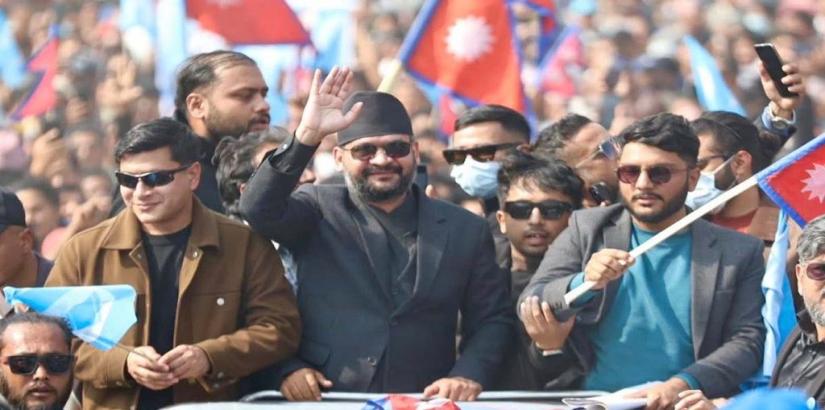
Strange contrasts can be found in the recent history of Nepal and Bangladesh. Two countries with restless youth, similar dissatisfaction with economic stagnation and corruption, and streets brimming with protest banners. The political results, however, could not be more dissimilar. In Nepal, Gen Z as a new political force emerged victorious in the parliamentary election on March 5, 2026, turning the anger into electoral power. The youth-led rebellion that overthrew Sheikh Hasina's government in Bangladesh in 2024 did not result in a similar electoral success.
The contrast is not merely about politics. It is a lesson in organization, leadership, timing, and legitimacy. Nepal’s youth succeeded where Bangladesh’s stumbled.
Nepal's Political Earthquake
The traditional political order in Nepal was shocked by the election held in March 2026. The Rastriya Swatantra Party (RSP), led by rapper-turned-Kathmandu mayor Balendra "Balen" Shah, was sweeping across the political landscape, according to preliminary results. The party led in more than 100 of the 165 first-past-the-post seats and won almost all of the Kathmandu Valley's constituencies. The Nepali Congress and CPN-UML, two longstanding giants, suddenly appeared to be relics.
It took time for this electoral earthquake to manifest. Its origins can be traced back to the Gen Z protests in September 2025, when thousands of young Nepalis descended upon Kathmandu's streets in protest of the government's ban on 26 social media sites, including Facebook, Instagram, TikTok, and WhatsApp. Regulatory compliance was mentioned in the official explanation. The public's interpretation was more straightforward: censorship.
The demonstrations quickly became more intense. Conflicts with the police became fatal in a matter of days. Thousands were hurt, and dozens were killed. The nation's capital became the focal point of a youth uprising after protesters stormed parliament and vandalized the residences of political elites. The pressure forced Prime Minister KP Sharma Oli to resign. But what happened next explains Nepal’s success story.
Turning Protest Into Politics
Revolutions often fail at the moment they must transform anger into governance. Nepal’s Gen Z avoided that trap. Instead of dissolving into chaos or factionalism, the protest movement quickly coalesced around a credible political alternative. The Rastriya Swatantra Party became that vehicle.
Balendra Shah was not an accidental figure. His earlier victory as mayor of Kathmandu had already demonstrated his ability to challenge entrenched political elites. Young voters saw him as both authentic and capable—a rare combination in South Asian politics.
Equally important was how the movement organized itself digitally. Protesters used Discord servers to conduct structured discussions and even informal polls about leadership and political direction. These digital networks—initially built to bypass the social media ban—evolved into a coordination infrastructure for electoral politics.
By the time elections were announced, Nepal’s Gen Z had already solved the problem that usually destroys protest movements: unity. Their message was clear. Anti-corruption, anti-nepotism, and a rejection of what protesters called the “nepo baby” culture of political dynasties. The result was a political wave.
Role of Sushila Karki
Another critical factor was leadership during the transition. After the protests forced Oli from office, Nepal’s youth movement endorsed former Chief Justice Sushila Karki as interim prime minister. Her selection—reportedly discussed and supported through online youth forums—gave the transition government immediate credibility.
Karki represented something rare in regional politics: neutrality. She was not a party leader, not an activist, and not a technocrat seeking power. Her reputation as an anti-corruption judge made her a trusted caretaker figure.
More importantly, she made a promise and kept it. Her government would last six months—just long enough to organize elections. Karki moved quickly. She lifted the social media ban that had triggered the protests, declared those killed in demonstrations as “martyrs,” and provided compensation to their families. She lowered the voting age to sixteen, bringing hundreds of thousands of new young voters into the electorate.
Then she focused on logistics: voter list updates, election security coordination, and international observers. When the election was completed, she stepped aside. In doing so, she preserved the credibility of the entire transition.
Bangladesh’s Missed Moment
Now consider Bangladesh. Sheikh Hasina's long-dominant government was overthrown in 2024 by large-scale youth demonstrations. At first, the uprising seemed to be similar to the uprising in Nepal, with young demonstrators mobilized via social media and incensed about discrimination, political repression, unemployment, and corruption. However, the aftermath took a different turn.
The Bangladeshi youth movement broke up rather than coming together as one cohesive political force. The National Citizen Party (NCP) was an attempt by a number of student leaders, but it was delayed and lacked clear leadership. Enthusiasm was not the issue. Millions of young people cast their first ballots in the election held in February 2026.
The problem was coherence. Votes that might have fueled a youth political breakthrough were scattered across multiple alliances, including traditional parties like the BNP and Islamist groups such as Jamaat-e-Islami. Old political machines absorbed the energy of the uprising. Nepal replaced its establishment; Bangladesh recycled it.
The Leadership Gap
The absence of a nationally recognized youth leader proved decisive. Nepal had Balendra Shah—a charismatic figure with a proven electoral track record. His image as an outsider resonated with voters disillusioned by decades of political patronage.
Bangladesh had no equivalent figure. The 2024 uprising was largely leaderless. While this decentralized structure helped mobilize protests, it proved disastrous for electoral politics, where recognizable leadership matters. Without a credible face of the movement, voters gravitated toward familiar political brands—even those they had recently protested against.
Timing too Matters
Timing also played a crucial role. Nepal moved quickly. Elections were held within six months of the protests. The momentum of the uprising carried directly into the voting booth.
Bangladesh waited nearly eighteen months. By then, the emotional energy of the protests had faded. Economic concerns—jobs, inflation, and stability—began to dominate public discourse. In such circumstances, voters often choose experience over experimentation. That is precisely what happened.
Interim Leadership Contrast
The contrast between Sushila Karki in Nepal and Muhammad Yunus in Bangladesh illustrates another important difference. Karki was selected with clear backing from the protest movement. She pledged a short caretaker role and avoided political ambition.
Yunus entered office through a top-down appointment by the presidency in a military-supported transitional arrangement. His leadership lacked the grassroots legitimacy that Karki had among Nepal's youth, despite his respect on a global scale.
More importantly, political scheming and delays during Bangladesh's transition led young activists to believe that the system was merely restructuring itself rather than changing. Momentum dissipated.
Lesson for South Asia
A more comprehensive lesson about 21st-century youth politics can be learned from the story taking place between Kathmandu and Dhaka. Gen Z has extraordinary mobilization skills. Protests can grow quickly and upend established power structures thanks to social media networks. But mobilization is insufficient on its own. Successful political transformation requires organization, leadership, and institutional strategy. Nepal’s youth built those structures quickly. Bangladesh’s did not.
Parliamentary arithmetic now shows the outcome. A youth-led political party in Nepal has the potential to completely change the political landscape of the nation. The old order is still in place in Bangladesh, albeit slightly altered.
In the end, one sentence can sum up how the two movements differ from one another. Nepal’s Gen Z treated protest as the beginning of politics. Bangladesh’s Gen Z treated protest as the end of it. History rewards the first approach far more often than the second.
(The author is a political and strategic analyst based in Dhaka, Bangladesh. Views expressed are personal. He can be reached at writetomahossain@gmail.com)





Post a Comment