

Why Sri Lanka Needs to Leverage Its Geography And Culture in a Post De-globalized World
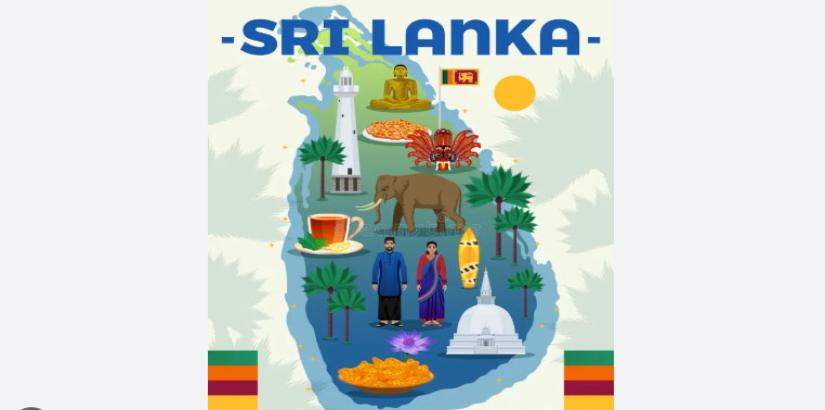
Sri Lanka has a wide range of monetizable opportunities based on its strategic location and also existing domestic business landscape. The ongoing T20 Cricket World Cup is one example. No other country in South Asia, other than Sri Lanka, will find it possible to host a match between India and Pakistan. It is time Sri Lanka works towards leveraging its geographical location to weather global trade reset, while effectively leveraging its cultural foundation to boost its global soft power.
 Feb 17, 2026
Recent geopolitical, security and trade tensions between powerful nations accelerated the 'de-globalization' momentum marked by a shift from rapid trade integration toward protectionism, economic nationalism, and fragmented supply chains. Global trade and investment are being reorganized around national security and resilience, regionalization and “friend-shoring”, rather than cost-driven integration.
Small and developing countries like Sri Lanka face significant and disproportionate challenges from de-globalization. These challenges include suppressed economic growth, increased vulnerability to external shocks, and reduced influence in global decision-making. Sri Lanka’s trade dependency, stagnant foreign inflows, small domestic markets, limited export product basket make Sri Lanka a highly vulnerable country.
World Economic Forum, the world’s leading pro-globalization think tank calls de-globalization as “re-globalization” and forecasts the outcome of currently ongoing changes will be “a multi-nodal, regionally and politically clustered world that still operates on a global scale, but with resilience and security prioritized alongside cost and efficiency”.
During the last few decades, Sri Lanka’s frequent reliance on IMF support programs resulted in Sri Lanka’s economic policies to align with neo-liberalism with underlying globalization agenda. Although, Sri Lanka’s trade dependency ratio of around 44 percent is comparatively moderate, persistent trade deficit, concentration of import and export markets and products, small domestic market make Sri Lanka a highly impacted country due to de-globalization. Moreover, Sri Lanka’s lack of natural and financial resources, together with unfavorable demographic shifts make Sri Lanka’s economy extremely vulnerable.
Needed a Geopolitical Strategy
Sri Lanka has limited strategic options to weather the impact of de-globalization. Perhaps the most effective option Sri Lanka has is the opportunity to leverage the strategically important geographical location. Sri Lanka is already emerging as a critical global geopolitical hub due to its strategic location in the Indian Ocean, acting as a pivotal maritime, logistical, and economic link between east and west. Apart from Sri Lanka being a critical part of China’s Belt and Road initiative, Sri Lanka’s maritime infrastructure is of strategic interest to India and the U.S, as two-thirds of the world's oil trade and half of all container cargo passes through the waters surrounding Sri Lanka.
It goes without saying that leveraging a country's strategic location to catalyze economic growth needs a well-planned geopolitical strategy. In order to cultivate geopolitical influence requires a multi-dimensional strategy that integrates economic strength, military capability, diplomatic alliances, and technological advancement. These can be secured through securing strategic trade routes, building robust infrastructure, fostering, and utilizing soft power to align with international interests.
Boost Soft Power
At present Sri Lanka has a very weak global influence as reflected in weak ratings in Global Soft Power Index. Hence it is essential that Sri Lanka boost its soft power through appropriate actions focusing on culture, political values, and foreign policy. Cultural aspects are considered the most important pillar of a nation's soft power, and Sri Lanka can benefit from building on its cultural foundations rather than risking to change it. Even Joseph Nye, the American political scientist who developed the “International Theory of Neo-Liberalism”, stressed that the culture of a country is the most important pillar of a country’s soft power.
Many analysts point out that Sri Lanka’s current political regime is attempting to change the existing sociocultural fabric which is deeply rooted in Buddhist heritage. Moreover, Sri Lanka’s fast-expanding tourism industry is also deeply rooted in the country's existing cultural foundation and attempts to change it could impact the tourism industry negatively. Recent public discussions on alleged state interventions on LGBT-related issues could work negatively for the country as Sri Lanka is neither known to be a country that discriminates against LGBT persons nor a country that promotes it.
Sri Lanka has a wide range of monetizable opportunities based on its strategic location and also existing domestic business landscape. The ongoing T20 Cricket World Cup is one example. No other country in South Asia, other than Sri Lanka, will find it possible to host a match between India and Pakistan. It is time Sri Lanka works towards leveraging its geographical location to weather global trade reset, while effectively leveraging its cultural foundation to boost its global soft power.
(The author is a Colombo-based independent private market investment advisory professional and a handloom entrepreneur. Views expressed are personal. He can be contacted at indika.h@jupitercapitalpartners.com )





Post a Comment