

Witch-Hunting Persists in South Asia Targeting Vulnerable Women: Needed Stronger Protection Mechanisms
Social scientists argue that witch-hunting is a complex social phenomenon rooted not merely in superstition but in structural inequalities. Scholars studying rural India, including Surinder Jodhka, note that accusations of witchcraft often intersect with caste conflict, gender discrimination, and disputes over property or land. Elderly women, widows, and socially marginalized individuals frequently become easy targets because they lack protection within local power structures.
 Mar 14, 2026
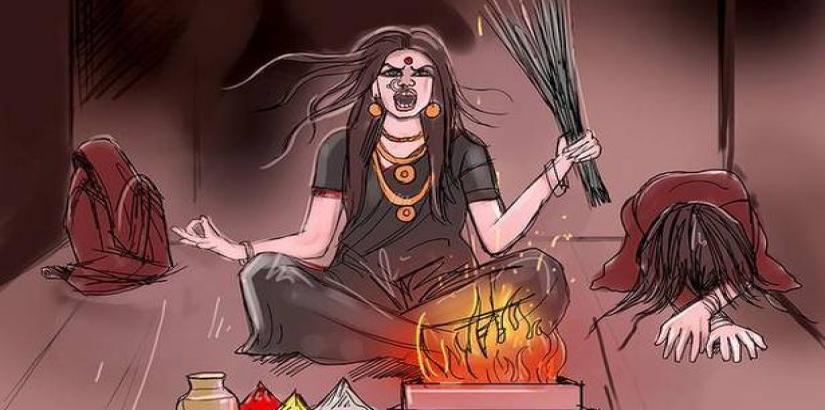
Witch-hunting was once widespread in Europe and has also been reported in regions such as Sub-Saharan Africa, South Asia, Oceania, and the Middle East. A major influence behind these beliefs was the 15th-century book Malleus Maleficarum, which portrayed witches as evil and described how to identify and punish them. Between 1500 and 1700, thousands were executed in Europe, particularly in Germany and Switzerland. Although the Enlightenment helped reduce these persecutions, witch-hunting still occurs in parts of the world today.
The pernicious practice remains prevalent in several South Asian countries, including India, Nepal, and Bangladesh. Women who lack strong family support—especially elderly and socially and economically marginalized women—are often blamed for misfortunes such as death, illness, or crop failure affecting village communities. Colonial and post-colonial administrations did little to dismantle these beliefs, allowing them to remain embedded in local social structures.
Murders Linked to Witch Hunting
Women accused of witchcraft in India are frequently stigmatized and labelled as “daayans,” a term laden with social ostracism and violence. According to the National Crime Records Bureau (NCRB), more than 2,500 women have been killed across India since 2002 after being accused of practising witchcraft. Despite the existence of laws meant to prevent such violence, these crimes continue to occur, reflecting deeply rooted patriarchal norms, caste hierarchies, and administrative indifference.
Incidents have been reported in Bihar, Jharkhand, Assam, Odisha, and parts of central India, where accusations often conceal deeper conflicts over land, inheritance, and gendered power relations. NCRB data from 2000 to 2012 recorded around 2,097 murders linked to witch-hunting, with Jharkhand reporting the highest number of cases. Odisha also records a significant number of deaths, while Assam has reported multiple documented incidents.
Because law and order is a state subject within India’s federal structure, there is no single national law specifically addressing witch-hunting. Instead, several states have enacted legislation criminalizing accusations of witchcraft and related violence. Bihar introduced the Prevention of Witch (Daain) Practices Act in 1999, one of the earliest laws of its kind. Jharkhand followed with a similar act in 2001, while Odisha passed the Prevention of Witch-Hunting Act in 2013. Assam enacted the Assam Witch Hunting (Prohibition, Prevention and Protection) Act in 2015, recognizing witch-hunting as a serious criminal offence and prescribing stricter penalties.
Other legal initiatives include the Karnataka Prevention and Eradication of Inhuman Evil Practices and Black Magic Act, 2017, which seeks to curb harmful practices carried out in the name of superstition, and the Rajasthan Prevention of Witch-Hunting Act, 2015, which criminalizes accusations of witchcraft and aims to protect victims—particularly women—from violence, harassment, and social humiliation.
Prevalent Also in Nepal and Bangladesh
Witch-hunting has also been reported in Nepal, where accusations of witchcraft are commonly referred to as Boksi Pratha. These accusations primarily target vulnerable women alleged to have caused supernatural harm. In many cases, such claims are driven by superstition but are also linked to motives such as property disputes or personal revenge. Poor elderly widows and Dalit women are frequently among the main victims.
Beliefs surrounding boksi often connect illnesses, crop failures, and deaths to supposed spells cast through food or magic. Shamans and village elders may instigate mobs by identifying supposed signs of guilt, such as facial hair or infertility. Victims may face brutal violence, including beatings, forced consumption of human excreta, and public humiliation through naked parades or garlands of shoes. In extreme cases, victims have even been burned alive. Such violence often functions as a means of social control, particularly against widows claiming inheritance rights.
One widely reported case occurred in Kailali district in western Nepal, where a woman was accused of being a witch after a village child fell ill. A local shaman (dhami) declared her responsible, after which villagers tortured her for hours—beating her and forcing her to drink human excreta. A local court later sentenced the main perpetrator to five years in prison. Similar incidents have also been reported in Saptari district (2017) and Chitwan (2012).
Nepal enacted the Witchcraft Accusation (Crime and Punishment) Act in 2015, which specifically criminalizes accusations of witchcraft and related acts of violence or humiliation.
Similar patterns have been observed in Bangladesh, particularly in the Durgapur area of the Garo Hills region, where accusations often arise from events such as crop failure or illness. Witchcraft allegations are most commonly reported among tribal communities in northern Bangladesh, especially near the border with India’s Meghalaya state. These accusations frequently result in violence or social ostracism.
Human-rights organizations have documented cases such as one in Dinajpur district, where a woman was accused of witchcraft after a traditional healer blamed her for a villager’s illness. Villagers subsequently assaulted her and forced her to confess to a crime she had not committed.
Black Magic Accusations
In Pakistan, organized witch-hunts are less commonly reported than in India or Nepal. However, belief in black magic remains widespread, particularly in rural areas. Such beliefs sometimes lead to violence or social exclusion. Reports from Sindh and Punjab describe women being attacked or ostracized after accusations of practising black magic—often linked not only to superstition but also to disputes over land, family conflicts, or attempts to reinforce patriarchal authority.
Both Bangladesh and Pakistan lack specific legislation addressing witch-hunting. Cases involving accusations of witchcraft are usually prosecuted under existing provisions of the Bangladesh Penal Code, 1860, and the Pakistan Penal Code, particularly those relating to assault, intimidation, mob violence, or murder. In the absence of specialized legal frameworks, these incidents are treated as ordinary criminal offences rather than manifestations of a broader social problem, making prevention more difficult.
Breaking the Spell
Social scientists argue that witch-hunting is a complex social phenomenon rooted not merely in superstition but in structural inequalities. Scholars studying rural India, including Surinder Jodhka, note that accusations of witchcraft often intersect with caste conflict, gender discrimination, and disputes over property or land. Elderly women, widows, and socially marginalized individuals frequently become easy targets because they lack protection within local power structures.
Researchers also point out that poverty, limited access to healthcare, and low levels of education may encourage communities to attribute unexplained illness or misfortune to supernatural causes.
Eliminating witch-hunting requires a combination of legal enforcement, education, and social awareness. Governments must ensure strict implementation of laws and hold perpetrators accountable. At the same time, awareness campaigns are crucial, particularly in rural and economically marginalized areas, where programs can challenge entrenched superstitions and promote scientific thinking.
Education—especially among younger generations—is equally important to prevent harmful beliefs from being perpetuated. Since women are disproportionately targeted, stronger protection mechanisms, legal assistance, and economic empowerment programs are essential.
Ultimately, addressing witch-hunting demands coordinated efforts from governments, civil society organizations, and local communities to build a more rational and equitable society where dignity and justice prevail.
Sustained awareness and education remain key. While deeply rooted beliefs can be difficult to change, long-term efforts to inform and empower communities can gradually weaken such harmful practices and enable vulnerable women to live with greater safety and dignity.
(The author is an English Honours student at the University of Delhi whose interests lie at the intersection of literature, politics, and social realities. Her work engages with issues of gender, marginalization, and social justice, with a particular focus on contemporary South Asian contexts. Views expressed are personal.)






Post a Comment