Khamenei and his successor Mojtaba Khamenei, Trump and Netanyahu

Khamenei's Assassination and a Fractured Iran: Regional and Global Ramifications of a War of Attrition

Khamenei’s assassination terminates an epoch of ideological confrontation, yet inaugurates profound uncertainty. Legally and normatively, it imperils protections for sovereign leaders; strategically and politically, it probes Iran’s institutional fortitude; religiously and narratively, it unveils unifying and divisive societal forces. Diplomatic containment—through intermediaries such as Oman or Qatar—must prioritise the transition's fragility without incitement. Absent such prudence, this strike risks catalysing a wider regional conflagration, where initial tactical triumphs yield enduring strategic costs.

Reimagining a Cooperative South Asia: A Next-Gen Agenda to Revive SAARC

The revival of SAARC will not come from dramatic diplomatic breakthroughs. Instead, it will emerge through incremental cooperation in education, digital infrastructure, disaster response and trade facilitation. Crucially, the future of South Asian regionalism may depend on a generation that increasingly experiences the region not through borders but through shared digital, economic and cultural networks.

US–India Tariff Framework: Trade Concessions Should not Dictate Foreign Policy Choices

Trade adjustments between major economies inevitably reverberate beyond bilateral channels. Bangladesh’s potential tariff advantages in textiles could redirect labour-intensive supply chains. Pakistan, operating within the China-Pakistan Economic Corridor framework, may use India’s perceived alignment with Washington to advance its own strategic narratives. China itself will interpret these developments within the broader context of great-power competition and recalibrate its economic and strategic posture accordingly.

Why Nepal’s Gen Z Succeeded Where Bangladesh’s Failed

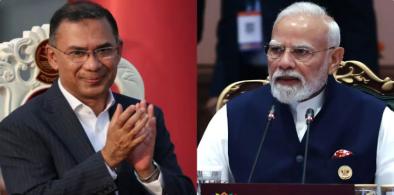
A more comprehensive lesson about 21st-century youth politics can be learned from the story taking place between Kathmandu and Dhaka. Gen Z has extraordinary mobilization skills. Protests can grow quickly and upend established power structures thanks to social media networks. But mobilization is insufficient on its own. Successful political transformation requires organization, leadership, and institutional strategy. Nepal’s youth built those structures quickly. Bangladesh’s did not.

More on Spotlight

'Ideologically confused' Pakistan's murky past haunts its present and future

Pakistan had assiduously sought to acquire “strategic depth” against India in Afghanistan by installing the Taliban, but that has now becomes its “terror depth,” security analysts say.  They lament that the western border has become "riskier" than the eastern one with India.

Is Pakistan on the cusp of unbuilding from inside?

Every chance for Pakistan to swiftly achieve stability and peace is lost due to excessive external dependency on foreign aid, vulnerability to domestic political crisis and shortage of good governance in both vision and practice. It would be unrealistic to expect Pakistan to make the best out of its foreign relations at the geopolitical and international stage in the absence of internal stability.

Three South Asian nations - and common factors in their economic downslide

In post-colonial South Asia, the British who ruled and plundered the region also sowed the seeds of ‘divide and rule’, dividing the people along Hindu-Muslim or Sinhala-Tamil lines. Partition of the subcontinent was also a result of the same policy.

Indian action-hero SRK's latest film is a resounding thumbs-down to cancel culture; box-office success sends out multiple messages

With India's pluralist traditions coming increasingly under question under a Hindu majoritarian dispensation, and a vicious call-out culture directed insidiously against Muslim stars and their films from Bollywood, the overwhelming popular response to the film - with social media images of people dancing in the aisles and in front of the screen across cinema theatres -  has given a resounding thumbs-down to the growing cancel culture and redeemed the country's secular credentials that the world has long known and admired.

The Jaipur Lit Fest: Ushering in a socio-cultural revolution

The Jaipur Literature Festival has also had a significant influence on Indian politics. The festival has provided a platform for political leaders, activists, and academics to discuss important political issues, such as democracy, human rights, and social justice. This has helped to raise awareness about these issues and promote greater political engagement and participation among the Indian public.

Whither 'strategic depth'? Pakistan's grand designs in Afghanistan that backfired

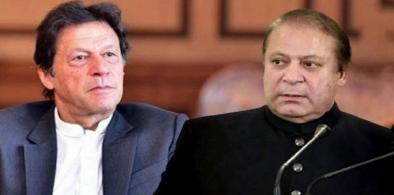
But the elaborate plan of the Pakistani military hierarchy to engineer “strategic depth” in Afghanistan has backfired badly. Shehbaz Sharif is in a pitiable position – a wobbly zebra kowtowing to the army; Imran Khan continuing to stoke political problems; pockets are empty; energy crisis is aggravating; and snakes bred to attain strategic depth are climbing his legs demanding rule of Sharia.

Can ONDC be the UPI moment for India's digital economy?

ONDC is a novel initiative that has still not been attempted anywhere else in the world. However, looking at the potential value that this initiative can generate, its success will be greatly beneficial for the digital economy of the country. 

With some nimble diplomacy, US and Bangladesh seek to move beyond sanctions irritant

In the last two years, both countries have had 18 bilateral visits; Bangladesh sent 7 delegations to the US while the US sent 11 delegations, including the latest visit of Assistant Secretary of State Donald Lu.

Pakistan's mounting TTP threat and India overtures

With constant attacks on CPEC projects and Chinese workers, protests breaking out across the nation against economic hardships, and an increase in internal terrorism, Islamabad is being forced to ramp up its military even while it is being spread thin due to increasing crisis points requiring its attention.

Tensions in Pak-Afghan relations: Lessons in it for India?

Afghanistan is important to India’s continental economic aspirations, including closer ties with Central Asia and Iran. These goals are currently hampered by Pakistan’s blockade of Indian access to the region.

Sectoral economic transition in South Asia: Emerging trends and opportunities

Between 2008 and 2021, the sectoral economic transition witnessed in most countries in South Asia - and in other parts of Asia - has  reduced the sectoral share of GDP in agriculture  and also the  employment burden on agriculture  in most countries.  This trend, however, changed in the wake of Covid -19  when the share of agriculture in GDP in countries rose along with share of employment.

50 Years of climate negotiation: Two daydreams and seven nightmares sum up COP-27

As of December 2022, the total dues to developing countries by developed countries stand at about USD 1 trillion whereas only about USD 10 billion have been disbursed through Green Climate Fund till now.

Need for more transparency in US project funding in Bangladesh

Bangladesh always has had good terms with the US and is one of the largest recipients of US government and private aid. But as the geopolitics of the Indo-Pacific region becomes heated, it has brought in its wake  diverse interests that Bangladesh is not ready to cater to as yet.

Is Gautam Adani, India's richest man, hedging his political bets?

The question is whether Adani, also the world's third richest man, is also sensing shifting political sands in India and is preparing to stabilize himself so as not to trip if such an eventuality comes to be. The answer will unfold over several months until 2024.

China's forked tongue amid sinister regional agenda

With the Communists back in power in Kathmandu, China will be able to push its own agenda, as well as that of Pakistan, in Nepal. It has cross-border ramifications for India at the tactical level, as well as larger ones at the strategic level when seen in concert with Chinese moves in Bhutan and Myanmar.