After the Indian protests over China’s research vessels in the Indian Ocean, Sri Lanka has indicated that Chinese vessels can dock at Sri Lankan ports for replenishment and repairs.


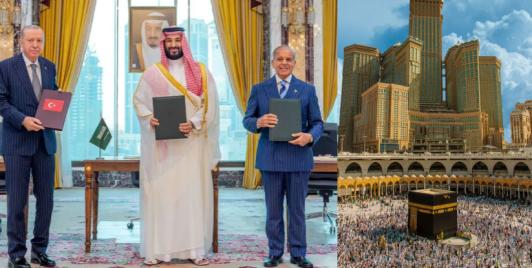
The Mecca Pact, barely a month old, has already been discredited. Its authenticity is in question, its efficacy doubtful. The very notion of an “Islamic Nato” has been exposed as a mirage. Collective defence requires not just declarations but capabilities, coordination and political will. None of these are evident in the pact’s functioning.
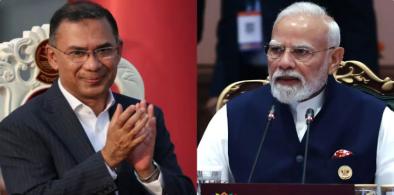
A more sensible and balanced engagement with India might help Bangladesh maintain its national interests while boosting its competitiveness in the region as it moves into the post-LDC transition period. A bilateral visit should happen soon to address Bangladesh's food, fertiliser and fuel shortages.
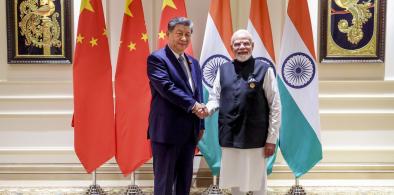
The real change, then, is not merely that Chinese media sounded friendlier towards India. It is that they assigned India a different place in the story. New Delhi appeared as a complex but consequential partner, whose strategic autonomy and cooperation matter to China's imagining of a changing world order.
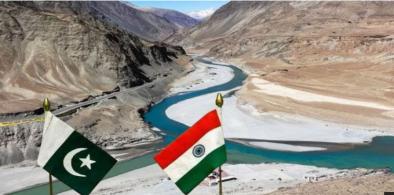
Pakistan, for its part, will have to recognise that the old assumption of an immutable treaty operating independently of the broader India-Pakistan relationship has become untenable. Islamabad cannot expect the water relationship to remain insulated indefinitely from terrorism
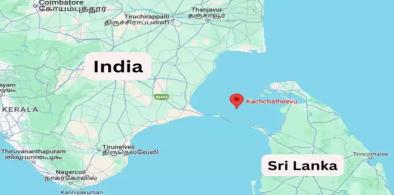
After the Indian protests over China’s research vessels in the Indian Ocean, Sri Lanka has indicated that Chinese vessels can dock at Sri Lankan ports for replenishment and repairs.
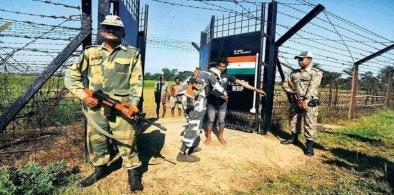
Despite extraordinary diplomatic efforts and landmark agreements between the two countries, the ground reality along the border often reveals deep-seated animosities fueled by historical legacies, socio-economic disparities, and cross-border dynamics.
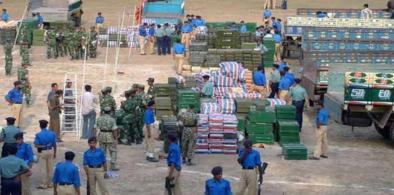
An analysis of Chetia's and Singh's interviews alongside the court's detailed judgement brings out several crucial points. Firstly, there was a concerted effort to transform Bangladesh into a sanctuary for ULFA and other rebel factions from India's northeast, facilitated by Pakistan's intelligence agency.

Strategic initiatives such as "AI in Defense," "Make in India," and "Buy IDDM" demonstrate India's commitment to nurturing indigenous AI solutions.
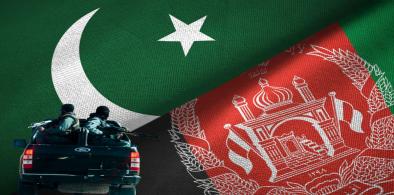
The US, it would seem, was awaiting the formation of the new government in Pakistan to nudge Islamabad to act against the various outfits operating from Afghan territory and this suited Pakistan. Simultaneously, the much-awaited tranche from the International Monetary Fund (IMF) has been cleared at the staff level to help Pakistan ease its economic situation.
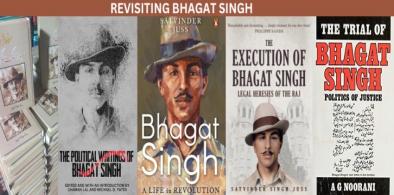
Since 1947, the establishments of Pakistan and India have aggressively promoted identities of ‘separateness’ based on religion. However, the people of both countries have a more mature understanding of the fluidity of identities.
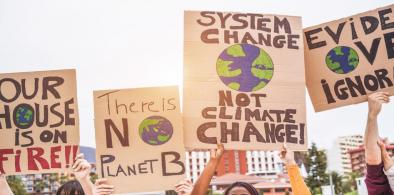
Accelerated climate action would continue if Modi retains his leadership after the election. Expansion of solar and wind infrastructure and enhanced investment in green hydrogen and electrical vehicles have already been announced in the interim budget presented recently.
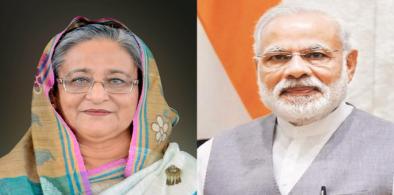
The CAA and its influence on Bangladesh demonstrate the complex interplay of geopolitics, identity, and diplomacy in South Asia.

How the 215.8 million under 30 might vote in the seven-phase election would be a compelling trend to watch.
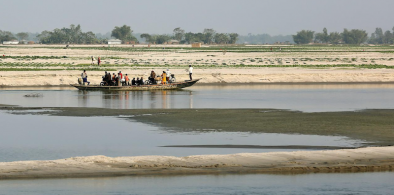
Bangladesh's initiatives have resulted in impressive climate adaptation ventures, including the construction of the world's largest multi-storied social housing project in Coxs Bazar, which will rehabilitate 4,400 families displaced by climate change.
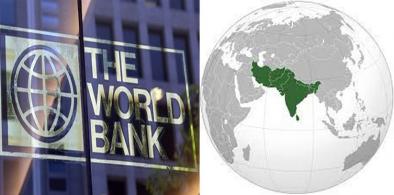
One of the impacts of the pandemic in South Asia has been on education. Yet, at least 11 million primary-age and almost 21 million lower secondary-age children in South Asia are not even in school, according to a recent UIS estimate.

After almost every disaster we see that our leaders come in front of the media to strongly express their grief and form an even stronger investigation committee. But the investigation committee's 'strong' report somehow gets lost in the dark abyss of the Bermuda Triangle.
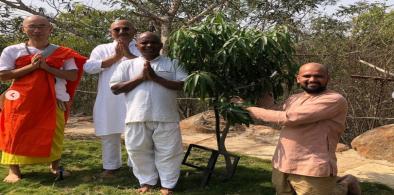
Their vision includes a plan to graft mangoes from Bangladesh this year. These mango trees will bear ‘the fruit of unity’ with three distinct varieties in a few years - from India, Pakistan and Bangladesh. They will be more than just a horticultural marvel - they will be a testament to the subcontinental people’s aspirations for peace and unity.
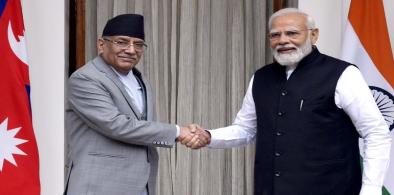
Last month, after Indian Foreign Secretary Vinay Mohan Kwatra met his Nepali counterpart Sewa Lamsal in Kathmandu, a press note issued on this meeting mentioned the two sides discussed “multifaceted cooperation”. However, it did not reference PMP, which is by far the biggest bilateral power project conceived between the two sides.
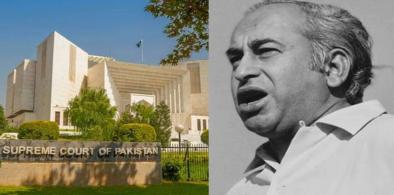
“It shows that even popularly elected prime ministers can be humiliated, incarcerated and even sent to the gallows when the state desires it and that the legal system can be manipulated to suit the whims of powerful forces.”