The United State has warned countries to manage risk when dealing with a state enterprise and subsidiaries in China that has reclaimed the sea in South China Sea and in Sri Lanka



But the choice test applies to India as much as to the countries it hopes will follow its lead. If BRICS genuinely widens India's menu of markets, technology partners and financing sources without deepening its dependence on any one of them, it becomes a credible model for the rest of the Global South.
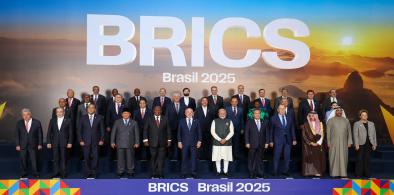
India’s stand for a dollar-based system is not a rejection of BRICS alignment or unity, but it is a determined choice to act in favour of self-interest like any other founding member. The key difference is India’s position has been the most transparent of all founding members rather than standing behind the collective rhetoric.

The evidence indicates that the increase in state borrowing over the past decade is best understood as the outcome of a changing fiscal federal system rather than simply an expansion of welfare politics.
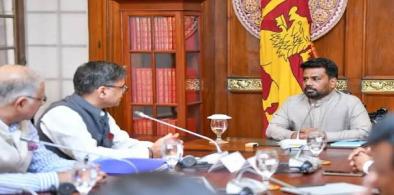
For India, delays in its strategic projects are not merely bureaucratic setbacks but a matter of national security. Colombo’s motives remain opaque, but for New Delhi, a presence in Sri Lanka’s North and East is non-negotiable.
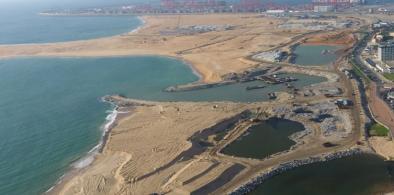
The United State has warned countries to manage risk when dealing with a state enterprise and subsidiaries in China that has reclaimed the sea in South China Sea and in Sri Lanka

India on Thursday asked China to show sincerity in expeditiously restoring peace along the Line of Actual Control (LAC) and border areas through complete disengagement and de-escalation in accordance with the bilateral agreements and protocols

Hit hard by India's move to ban 118 apps, including PUBG, China on Thursday termed the action as "discriminatory restrictions" on Chinese companies and alleged that it violated World Trade Organization (WTO) rules
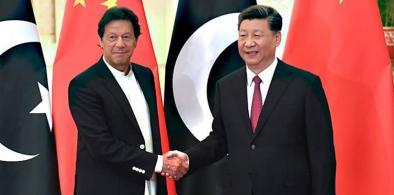
Chinese Ambassador Yao Jing Thursday said the visit of Chinese President Xi Jinping to Pakistan had been rescheduled due to the coronavirus pandemic
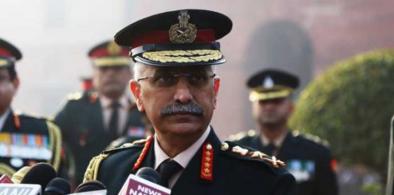
Indian Army chief General Manoj Mukund Naravane is on a two-day visit to Ladakh to review operational preparedness of the force amid border tension with China
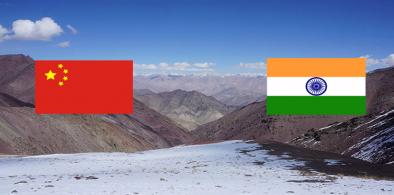
China has deployed five militia squads for rapid response at the disputed Line of Actual Control in Eastern Ladakh. It has done so to "consolidate the border" and "stabilise Tibet region", sources said
China has paid Rs 2.5 crore (in Nepali currency) to various organisations based in Nepal to carry out demonstrations against India along the Indo-Nepal border that stretches to over 1,700 km, intelligence agencies said
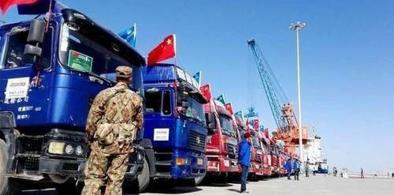
Under its One Belt, One Road (OBOR) policy, China is pursuing projects in Pakistan that would decrease Beijing’s reliance on strategic choke points, says a Pentagon report released on Wednesday
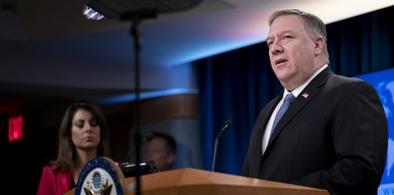
While accusing Beijing of bullying its neighbours, US Secretary of State Mike Pompe said on Wednesday that Washington hopes there would be a peaceful settlement of the escalating tensions along the Line of Actual Control (LAC) between India and China
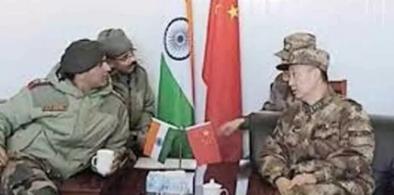
Military talks between India and China on Wednesday remained inconclusive over the Chinese People's Liberation Army (PLA) troops' fresh incursion attempts into India territory
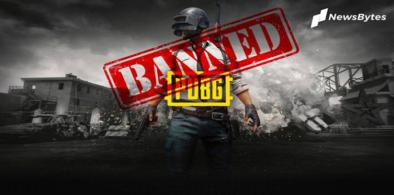
In yet another strike on Chinese apps, the Indian government on Wednesday banned 118 apps, including the immensely popular Player Unknown's Battlegrounds (PUBG) Mobile, Baidu and several VPNs that allowed access to TikTok that was earlier banned

More and more nations around the world are waking up to the threats to global democracy posed by the People Republic of China, the Central Tibetan Administration (CTA) said on Wednesday
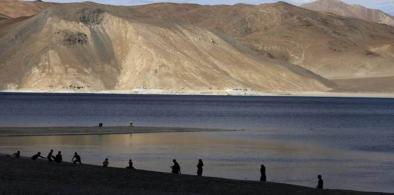
For the first time since the India-China skirmishes began at Ladakh earlier this year, the Indian Army is dominating strategic locations on the south bank of Pangong Lake, even as China enhanced deployment of troops close to the Thakung base in Indian territory and tried to change the status quo

The US administration newly banned 24 Chinese companies from buying American products with an accusation of them constructing on Chinese islands and helping “militarizing” the South China Sea
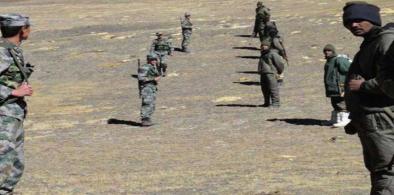
Indian and Chinese militaries began the third round of talks at Chushul on Tuesday to resolve the fresh skirmishes at Pangong Lake in Eastern Ladakh