Jantar Mantar and the Crisis of Policing

Jantar Mantar and the Crisis of Policing: Why India Needs a Citizens’ Police

The Republic does not need a police force that teaches citizens to fear the State. It needs a citizens' police that gives them reason to trust the Constitution. Because the young person standing behind the barricade is not an enemy of the Republic. Sometimes, he has travelled more than a thousand kilometres simply because he still believes enough in Indian democracy to show up.

Will the “Tax Shock” Kill the Sri Lankan Economy?

As Sri Lanka relies heavily on indirect taxes, even government (short term) efforts to stimulate economic activities will automatically reduce the living standards of low and middle income households. This is because any increase in economic activity results in a disproportionate increase in taxes. 

Can India's Student Protests Spur Reform in its Broken Education System? A View From Afar

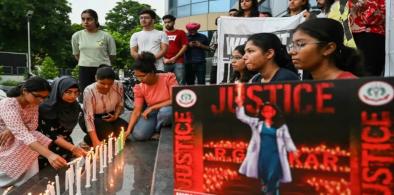
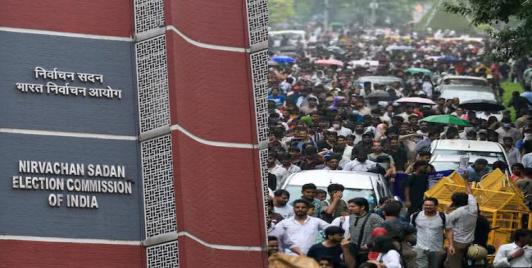
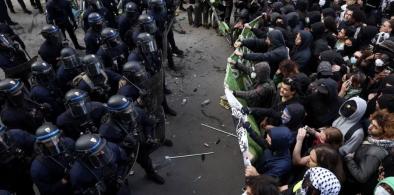
The sheer visual impact of the brutality of July 20 Jantar Mantar police action revealed yet again a society in profound ferment. It is not clear whether the government of Prime Minister Narendra Modi realizes the lasting damage such unbridled brutality does to India’s image. Irrespective of the merit of the cause of the protest—and it is obvious that this one is grounded in a legitimate cause—government at every level in India desperately needs to completely transform policing. 

A Cry of Anguish; a Sad Day for Democracy, but a Glimmer of Hope

Democracy is not just about voting every five years. Democracy is about the ability to look your government in the eye and say “you are wrong” — without fear of being beaten for it.And yes, July 20 was a sad day for democracy. It was sad to see brutal force used against young citizens. It was sad to see the Delhi Police behave in a manner that shames the uniform.

More on Public Policy and Governance

Will PM Modi now find time to visit Manipur?

Now Angoncha Bimol Akojam, newly elected MP from Meitei-predominant Inner Manipur, has lashed out at the deliberate lawlessness and communal violence induced in Manipur, with both the state government and the Centre abdicating their responsibilities of governance in utter disregard of the Constitution. 

Chandrababu Naidu: India's man of the moment with a history of switching sides

When he came to power, Hyderabad was a backward city with dirty roads, Naidu had his vision of development. Taking a cue from neighboring Bangalore, Naidu began promoting hi tech industries and software skills in Hyderabad. He established Cyberabad and to express his seriousness travelled to Seattle and waited outside the office of Bill Gates of Microsoft for an hour to get an audience with him.

Bilateral and regional significance of Nepal PM Dahal’s India visit

The tri-nation hydroelectricity corridor between India, Nepal, and Bangladesh will likely continue. Given that Modi has pushed for “Neighborhood First” in his interactions with South Asian countries, India’s collaboration with Nepal will be essential to the revival of the SAARC mechanism and the advancement of regionalism in South Asia.

A call for equitable legislation: Why a Uniform Civil Code is a social imperative

The path toward progress does not reside in appending supplementary provisions to existing personal laws. Instead, it hinges on the establishment of progressive, gender-neutral, monogamous practices that are devoid of religious distinctions, achieved through the implementation of a uniform civil code.

Modi and Gandhi: Didn't the world know about Gandhi till the Attenborough film?

Modi should just know that today there are a large number of universities in the world where Gandhian studies are a part of their curricula. Many schools are trying to teach his values. Nearly 80 global cities have Gandhi streets and Gandhi statues installed in prominent places.

The Kerala model: Where migrants are guest workers

The internal migration of workers from the rest of the country to Kerala has created a mini remittance economy, as money flows from savings generated in Kerala to the home states like Odisha, Jharkhand, Assam and Bihar.

Bulldozer demolitions are unwarranted and unsanctioned in Indian law: Need for remedial action

The targeted punitive measures against the Muslim community following religious clashes and the consequent demolitions constitute an instance of "ethnic cleansing", according to the UN's characterization

BJP and RSS complement each other: Modi factor looms large in their relationship

The context in which Nadda was making this statement needs to be understood in light of the party's electoral strategy. It no way signals differences in thinking or the parting of ways between the parent organization and its political progeny. Modi’s towering image is needed for the furtherance of the agenda of a 'Hindu nation'.

Free bus rides vs fancy bullet trains: What kind of development must India have

India can be forced to shine but whether the people of India will shine remains the question, and that remains the ground on which the Congress is making huge strides in its fight against the BJP in this election.

Manipur continues to bleed as political skullduggery continues

According to a new report by the Geneva-based Internal Displacement Monitoring Centre (IDMC), conflict and violence triggered 69,000 displacements in South Asia during 2023, with Manipur alone accounting for 67,000.

Are Hindus in danger in India due to rising Muslim population?

It is estimated that the Muslim population which is 14.2 per cent as per the 2011 census will stabilize at 18 per cent by 2050 as the trends amongst the Muslim community show. 

India's leadership in economic migration is a mixed blessing

India’s inward remittances keep growing, having more than doubled since 2010, and showing a growth of over 6 per cent per year, ahead of GDP growth. By comparison, China’s inbound remittances have been falling. Pakistan and Bangladesh get about one-fourth of what India gets.

Three verdicts that upheld India's democracy

If democracy does survive in this sub-continent, posterity will certainly hail these recently pronounced three judgments as the primary reason for its preservation.

Future of Iran-Pakistan gas pipeline project remains in limbo

While Iran’s ties with the West, especially US, may have hit rock bottom, Pakistan despite the public posturing will not be able to go ahead with the project at the cost of annoying the US.

Manipur: Where voters are more concerned about existential threats than electoral preferences

At the heart of the violence lies majority triumphalism combined with a systematic denial of knowledge acquisition, specifically histories, for the minority community in Manipur.