Representational Photo

Why Sinhalese Buddhist Nationalists Adore Israel? An Alternative Reading

These myth-based narratives reveal a deeper psychological impulse: the desire to anchor Sinhalese Buddhist identity within a framework of global uniqueness and divine purpose. While Sri Lanka’s diplomatic relations with Israel have fluctuated since independence, Sinhalese Buddhist nationalist sentiment continues to exhibit a strong emotional affinity toward Israel.

A Distracted Generation And The Erosion Of State Capacity In India

India’s youth are growing up in an ecosystem defined by continuous stimulation and accelerated consumption of information. Attention is fragmented, patience for complexity is declining, and long-form engagement—essential for policy, administration, and strategic thinking—is increasingly marginal. This is not a cultural lament. It is a structural shift with direct consequences for how future administrators, policymakers, and institutional leaders are formed.

India’s outreach to West Asia and Africa: Strengthening Global South Leadership

By engaging Jordan, Ethiopia and Oman, India demonstrated its capacity to operate across geopolitical divides while remaining anchored in Global South solidarity. These visits were not isolated diplomatic events but part of a sustained effort to reshape international engagement through inclusivity, responsibility, and shared growth. As global uncertainties persist, India’s outreach to West Asia and Africa strengthens its claim to leadership rooted in partnership and a collective vision for a more equitable world order.

Growing Mistrust, Fragile Sunni-Shia Political Balance Deepen Gilgit-Baltistan Unrest

The security situation deteriorated further in 2025. A terrorist attack on a Gilgit-Baltistan Scouts checkpost resulted in two fatalities and one injury, heightening tensions. Protests later resumed in Sost, disrupting trade between Pakistan and China via the Khunjerab Pass. The year culminated in two high-profile attacks on October 5, when unidentified gunmen ambushed Maulana Qazi Nisar Ahmed, Ameer of the Ahl-e-Sunnat wal Jamaat in Gilgit-Baltistan and Kohistan, near the police headquarters in Gilgit, injuring him and several others. On the same day, Malik Inayat-ur-Rehman, the Chief Court Judge of Gilgit-Baltistan, narrowly escaped an assassination attempt near the City Hospital.

More on Perspective

Is green hydrogen really the panacea for global warming?

While there are uncertainties with regard to the  possibilities and prospects of generating green hydrogen in a cost-effective manner it is surprising that green hydrogen is being hailed as the ultimate solution to overcome the emission issue and prevent climate disaster.

Social media's war on civility and compassion: Feeds on the psychological vulnerability of individuals

Many of us spend hours on social media doom scrolling, which then ceases to be just a source of recreation; it becomes an alternative world where algorithms and trends decode and shape individuals.

Can IMF’s good-governance conditionalities bring Pakistan economic stability?

Peace and progress go hand in hand. To stabilize the economy, Pakistan needs a conducive political environment to focus on investment, education and health care. Whatever the economic challenges, the solutions would have to come from within. External funds, loans, debts are only temporary solutions

Twin nations that chose different trajectories: A Pakistani perspective

The very idea of Pakistan was based on the Two-Nation Theory which emphasized Muslims’ different way of life from that of the Hindus in the subcontinent. However, the mere religious identity of a nation without reconciling Pakistan’s diverse ethnic, linguistic, and cultural groups was not enough to hold it together. 

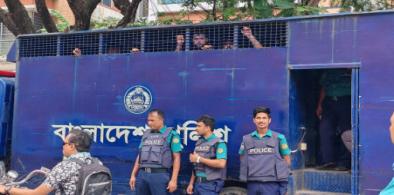
To rebuild Bangladesh interim government needs to reconcile rival ideological camps

Bangladesh is home to people of different religions and cultures, both in the hills and plains. The extreme polarization of thought and ideology between opposing ideological groups is impacting Bangladesh's social fabric. 

Policy reversals and lessons for the Modi government

The BJP is not really taking on the immense political challenge of explaining and then persuading the people to go with the right-wing turns in policies it seeks to implement; it is sneaking it in, and in that it is being met with defeat after defeat.

How the world failed Afghanistan: Three years since the Taliban's return to power

When the world descended on Afghanistan in 2001, Afghans believed it was about them, about a better life for them. It never was. It never is, writes senior reporter Kathy Gannon, who has covered Afghanistan since the 1980s. Looking back at the second Taliban takeover in 2021 she looks at why the ironically named ‘Operation Enduring Freedom’ of 2001 failed and how the aspirations of Afghans have been ignored.

Is Sri Lanka’s state sector inefficient? Facts point to the contrary

Sri Lanka’s current HDI score stands at 0.78 and is the highest in South Asia.

India's healthcare institutions need more women at the helm

A message from the Kolkata case is to rebuild our healthcare workplaces with the intent of making them safe and gender inclusive.
 

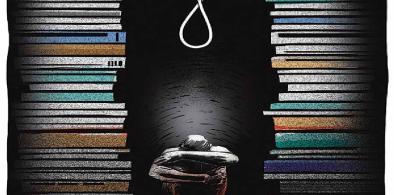
India's discredited coaching centres: Can they redeem themselves in the eyes of students and aspirants?

The exams for IITs, IIMs, Civil Services, in particular, are strong pointers on how traditional pedagogy and mindset of our educational institutions towards learning is found severely inadequate and deficient, and call for a paradigm shift towards critical thinking and building wider perspectives.

Hasina destroyed Bangladesh’s economy; caretaker government needs to handle it well to restore people's confidence

Many of the oligarchic business syndicates that formed around the deposed Sheikh Hasina are now on the run. But their vast industrial establishments remain. It is essential to sustain these industries. Millions of people are working in these establishments that are playing a critical role in the production sector of the country. These industries cannot be shut down because of the crimes of their leaders. 

Threat of sexual violence will deter Indian women’s participation in workforce

After the Nirbhaya case in India, the laws were tightened against sexual violence. We also have stringent laws against child abuse. Yet the laws have not stopped reported sexual crimes from growing as the NCRB data shows.

Changes in visa rules will impact Indian student flow to Western countries

Indian students comprise a significant percentage of the global international student community in not just Canada, but the US, UK and Australia. Some of the changes introduced by Western governments will create challenges in the short run, but they may be good in the long term.

Indian Armed Forces' stellar role in Wayanad disaster relief: Serving the nation in crises

What became a reason for special attention was that the Madras Sappers were led by a woman officer, Major Sita Ashok Shelke. This single-woman officer in a 150-strong team worked hands-on with the locals during the construction,  planning the move of stores, approving the design and ensuring a safe, speedy launch. If the men kept awake for two nights, her responsibility required an even longer spell without sleep.

Violence against Hindus in Bangladesh is a boost to Islamophobia in India

Now, the two important power centres in Bangladesh are the interim government led by Prof Muhammad Yunus and the students who led the protests. Both are stressing the inclusive character of Bangladesh and taking a strong position on the protection of Hindus and other minorities.