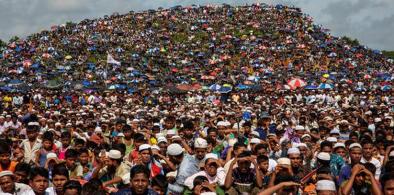
Bangladeshi citizens protest government in July 2024. Screenshot from ABC News Australia report.

Will A Rightwing Victory Transform Bangladesh? Jamaat's Rise Raises Uncomfortable Questions

If Jamaat comes to power it will likely begin with populist moves such as anti-corruption drives, predicts Ahmedur Chowdhury, a Bangladeshi writer and editor who has been living in Norway since surviving a 2015 attack. He says he fears  mobilisation of religious groups to push for declaring Bangladesh an Islamic republic and enforce Sharia law. The result would be shrinking freedoms for women, curbs on cultural life, and serious threats to freedom of expression, religious minorities, and secular political and cultural spaces.

Pakistan Mosque Blast: ISIS' Growing Shadow In The Subcontinent

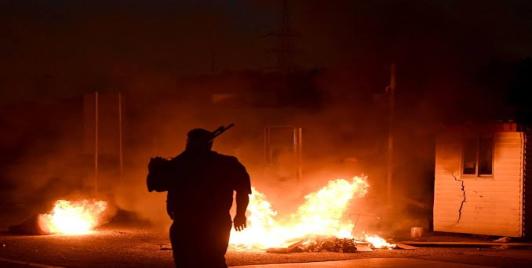
The threat from ISIS-K is real and growing. A resurgence in Pakistan would have serious implications for the broader region, including India. The danger is compounded if Pakistan once again attempts to clandestinely redirect ISIS-K towards Kashmir. What may appear as an isolated terror incident is, in fact, part of a wider pattern that demands sustained vigilance. Pakistan’s internal security instability risks creating openings for cross-border terror movements, potentially hardening new militant modules aimed at India and beyond.

After the Begums: Battle For The Soul Of Bangladesh Has Just Begun

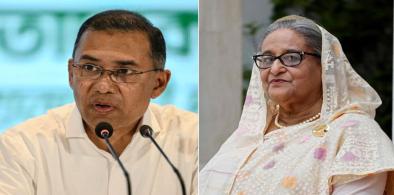
The optimistic view is that the “Twin Election” will force a compromise. The referendum provides a mandate for reform that even a BNP government cannot ignore. The “July Charter”, if ratified, creates checks on executive power that did not exist before. The students, even if they end up on the opposition benches, will form a moral pressure group that cannot be easily crushed. The cynical view is that Bangladesh is merely swapping a monopoly for a duopoly, or worse, a monopoly of a different colour.

Bangladesh Heads to Crucial Elections Amid Political Exclusion: A Divided Nation Needs Democratic Renewal

All signs point to a BNP victory. In a competitive contest without the Awami League, the BNP’s organisational depth and electoral reach make it the frontrunner. Yet victory alone may not translate into authority. The absence of the Awami League, the continued influence of Sheikh Hasina from exile, the rise of Islamist alternatives, and the central role of unelected institutions mean that any new government will inherit a fractured polity. The 2026 election may revive the BNP’s fortunes, but it will not by itself heal Bangladesh’s democratic wounds.

More on Spotlight

Pakistan's 'diminishing democracy': Where dissent is a crime

Thirty prominent human rights advocates and peace activists, who disagree with a lot that is happening in Pakistan. Either living at home, but most of them exiled abroad, participated in the conference titled Enforced Disappearances, State-sanctioned killings, & Diminishing Democracy in Pakistan, writes Mahendra Ved for South Asia Monitor 

Has Rahul Gandhi stolen a march on the BJP?

The BJP found itself on the back foot was when Congress leader Rahul Gandhi was pictured sitting on a pavement, talking to a group of migrants. It was a Haroun al-Rashid moment of a privileged person closely interacting with the unwashed masses, writes Amulya Ganguli for South Asia Monitor

Maldives will seek a balance in its foreign policy

With the support of the United Arab Emirates, the Maldives not only prevented Pakistan from targeting India as Islamophobic during the OIC meeting, but also defended India’s record as a democratic, multicultural society, writes Shubha Singh for South Asia Monitor

India should push for relocating WHO headquarters to New Delhi

This is a time when India should fashion itself as a new global health hub and provide global leadership in health. Pushing a new agenda for the WHO’s relocation from Geneva to India would make immense sense, writes Ram Krishna Sinha for South Asia Monitor

South Asia’s rubber farmers hit hard by COVID-19

From Bangladesh to India and to Sri Lanka, the natural rubbers producers are getting squeezed under lockdowns and social distancing. It is sounding the death knell of the region’s rubber economy,  writes K S Nayar for South Asia Monitor

Future challenge of banks: Bringing digital banking to the last man standing

Banks are generally very traditional in nature even though all the banks and financial institutions are going digital. Traditional nature change is again a challenge. The lockdown has come as a blessing in disguise as the changeover to digital systems can now pick pace, as it  becomes the need of the day, writes Ashim Kumar Goswami for South Asia Monitor 

Have Nepal's communists made it China’s proxy?

Indian policy towards Nepal has been lackadaisical. Belief of mutual Hindu traditions should be viewed in the context of power in Nepal lying with the communists for whom religion is anathema, writes Lt Gen P. C. Katoch (retd) for South Asia Monitor

Lessons from Cyclone Amphan: Need to rethink development strategy

The question that arises uppermost is that are we learning the right lessons from these recurring weather episodes or just concentrating  on immediate short-term disaster relief without taking any steps to make the regions ecologically sustainable and disaster resistant, writes Partha Pratim Mitra for South Asia Monitor

Will the sun shine again on Maldives tourism?

The coronavirus outbreak has hit the Maldivian economy hard, as travel restrictions and other preventive measures affected the country’s lucrative tourism industry, which contributes to the bulk of the island nation’s state revenue and foreign reserves, writes Kavita Bajeli-Datt for South Asia Monitor

A global partnership is needed to combat COVID-19

On April 23, 2020, in a virtual conference ‘Enhancing regional cooperation in South Asia to combat COVID-19 related impact on its economics’ organized by the World Economic Forum, Bangladesh PM Sheikh Hasina placed five-point proposals to combat this global crisis with collective responsibility and partnership from every society, writes Dr. Mohammad Tarikul Islam for South Asia Monitor

Can India and Nepal resolve border dispute with elephant in the room?

The Kalapani issue first came into prominence in 1997 when the Indian and Chinese governments came to an agreement to open a route for the annual Kailash-Mansarovar yatra through Lipulekh pass. Nepal objected to the use of Lipulekh, writes Shubha Singh for South Asia Monitor

Bihar's migrant crisis compounded by resource crunch and communication breakdown

Bihar is the poorest state of the country in per capita terms. Can it find the enormous resources required to fight the virus and its impact on the economy? writes Gulrez Hoda for South Asia Monitor

A territorial dispute with an actress caught in its midst!

The row between the two nations heated up when Nepal’s Communist Prime Minister K P Sharma Oli  on May 20 vowed before the country’s Parliament to reclaim the three “disputed areas” from New Delhi., writes Kavita Bajeli-Datt for South Asia Monitor

Job loss, hunger stalk South Asia in COVID-19 times

South Asia is home to over 1.8 billion people and houses half of the world’s impoverished communities, writes Aashish Kiphayet for South Asia Monitor

Honour killings continue in Pakistan: Feudal-patriarchal mindset still rules

Honour killing has been part of social traditions in Pakistan’s deeply conservative tribal society, but not confined to it. Killings have been reported in Lahore, Karachi and other places as well, writes Mahendra Ved for South Asia Monitor