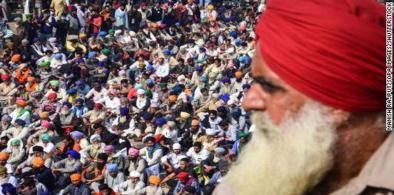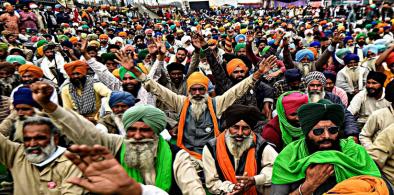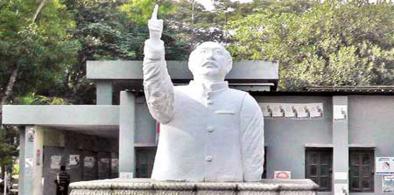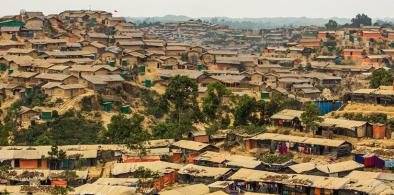

Bangladeshi citizens protest government in July 2024. Screenshot from ABC News Australia report.

Will A Rightwing Victory Transform Bangladesh? Jamaat's Rise Raises Uncomfortable Questions

If Jamaat comes to power it will likely begin with populist moves such as anti-corruption drives, predicts Ahmedur Chowdhury, a Bangladeshi writer and editor who has been living in Norway since surviving a 2015 attack. He says he fears  mobilisation of religious groups to push for declaring Bangladesh an Islamic republic and enforce Sharia law. The result would be shrinking freedoms for women, curbs on cultural life, and serious threats to freedom of expression, religious minorities, and secular political and cultural spaces.

Pakistan Mosque Blast: ISIS' Growing Shadow In The Subcontinent

The threat from ISIS-K is real and growing. A resurgence in Pakistan would have serious implications for the broader region, including India. The danger is compounded if Pakistan once again attempts to clandestinely redirect ISIS-K towards Kashmir. What may appear as an isolated terror incident is, in fact, part of a wider pattern that demands sustained vigilance. Pakistan’s internal security instability risks creating openings for cross-border terror movements, potentially hardening new militant modules aimed at India and beyond.

After the Begums: Battle For The Soul Of Bangladesh Has Just Begun

The optimistic view is that the “Twin Election” will force a compromise. The referendum provides a mandate for reform that even a BNP government cannot ignore. The “July Charter”, if ratified, creates checks on executive power that did not exist before. The students, even if they end up on the opposition benches, will form a moral pressure group that cannot be easily crushed. The cynical view is that Bangladesh is merely swapping a monopoly for a duopoly, or worse, a monopoly of a different colour.

Bangladesh Heads to Crucial Elections Amid Political Exclusion: A Divided Nation Needs Democratic Renewal

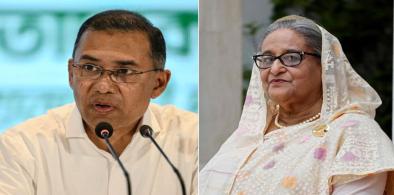
All signs point to a BNP victory. In a competitive contest without the Awami League, the BNP’s organisational depth and electoral reach make it the frontrunner. Yet victory alone may not translate into authority. The absence of the Awami League, the continued influence of Sheikh Hasina from exile, the rise of Islamist alternatives, and the central role of unelected institutions mean that any new government will inherit a fractured polity. The 2026 election may revive the BNP’s fortunes, but it will not by itself heal Bangladesh’s democratic wounds.

More on Spotlight

Recurrent anti-Indianism in Nepal: Need to restructure bilateral ties

As India prepares for anti-Indianism 2.0  it will eventually have to also address the deeper Nepalese yearning for a sense of equality and mutual respect, writes Amb K V Rajan (retd) for South Asia Monitor

Is it the end of the road for two main national parties of Sri Lanka?

Two major national political parties that took turns in ruling the country for seven decades are about bite the dust, perhaps ending a healthy democratic system in which these two parties ensured a stable government and a strong opposition in parliament most of the times, writes Sugeeswara Senadhira for South Asia Monitor

Resilience of the real sector key to sustenance in South Asia

In terms of a more vulnerable population which is less well paid, Afghanistan, India, Bangladesh and Nepal are more vulnerable as compared to the rest of the countries of the region, writes Partha Pratim Mitra for South Asia Monitor

India and the European Union: Virtual summit has sent positive signals to the world

The signing of the India-EURATOM Agreement on research and development cooperation in the peaceful uses of nuclear energy will cover all aspects of research and technological development, writes Amb Bhaswati Mukherjee (retd) for South Asia Monitor

Why the BJP remains unchallenged in Indian politics

There is little doubt, therefore, that the opportunism of Indian politicians is a reason for the BJP’s success, writes Amulya Ganguli for South Asia Monitor

Giving Iran and Afghanistan on a platter to China

China will use its increased presence and influence in Iran and Afghanistan to target Indian interests, writes Lt Gen P. C. Katoch (retd) for South Asia Monitor

To build or not to build a temple - in Pakistan

The government’s move on the temple, some media commentators suggest, is to show Pakistan in a better light in comparison with India,  which is seen as being driven by Hindutva forces that are against India's religious minorities, writes Mahendra Ved for South Asia Monitor

India should extend wholehearted assistance to Maldives government

The Maldivian open support against Pakistan in OIC is a victory of Indian diplomacy, writes Jai Kumar Verma for South Asia Monitor

India-China border dispute has implications for Pakistan and region

Taking into consideration the zero-sum nature of Pakistan-India relations, Islamabad maybe compelled to acquire arms in a tit-for-tat response to New Delhi, writes Maham S. Gillani for South Asia Monitor

High time for Nepal to look beyond India and China

The US aid under MCC is a golden opportunity for Nepal to look beyond India and China and seek greater engagement with other powers and to derive economic benefit and relinquish meaningless geopolitical adventures, writes Vikash Kumar for South Asia Monitor

India need not compete with China in Bangladesh: Focus should be on mutually beneficial issues

Bangladesh is a very important neighbour for India. The fulcrum of India’s Act East policy and vital for development of India’s North East, it has a major role in the success of BIMSTEC, writes Maj Gen Alok Deb (retd) for South Asia Monitor
Nudged by China, Pakistan tries to woo Bangladesh

Bangladesh Foreign Minister A K Abdul Momen met Pakistan’s High Commissioner Imran Ahmed Siddiqui in Dhaka on July 1. According to a media report, the meeting indicates a possible thaw in bilateral relations, writes Mahendra Ved for South Asia Monitor

Need to embrace telemedicine to fix critical gaps in healthcare delivery

Given the doctor-dependent, top-heavy nature of our healthcare system, creating a functional telemedicine network in rural areas by leveraging the vast spread of Community Health Centre (CHC) and PHCs will help increase access to quality medical care, writes Vikram Thaploo for South Asia Monitor

Coronavirus waste: A new form of pollution, putting marine environment at risk

The COVID-19 crisis has slowly generated a new kind of waste made up of disposable masks, gloves and other personal protective equipment (PPE) items, writes Mahmuda Amir Eva for South Asia Monitor

Can India shake off the dragon's growing tentacles in South Asia?

The dragon’s shadow has lengthened over the South Asian region as it has rapidly developed port and transport infrastructure, some of it as part of its Belt and Road Initiative, writes N Chandra Mohan for South Asia Monitor