

Aid, Ports, And The Limits of Incrementalism: What India’s Budget Says About Its Foreign Policy
Yet the strategic costs are real. Reduced engagement in Bangladesh risks ceding influence at a moment when Dhaka is actively diversifying its partnerships. Hesitation over Chabahar weakens India’s leverage in Iran and Central Asia and underscores its vulnerability to US pressure even as it seeks a more multipolar foreign policy. The 2026–27 Budget does not signal a dramatic shift in Indian foreign policy. There is no abandonment of neighbours-first rhetoric or of connectivity-led diplomacy. What it reveals instead is a narrowing circle of feasible economic action.
 Feb 03, 2026
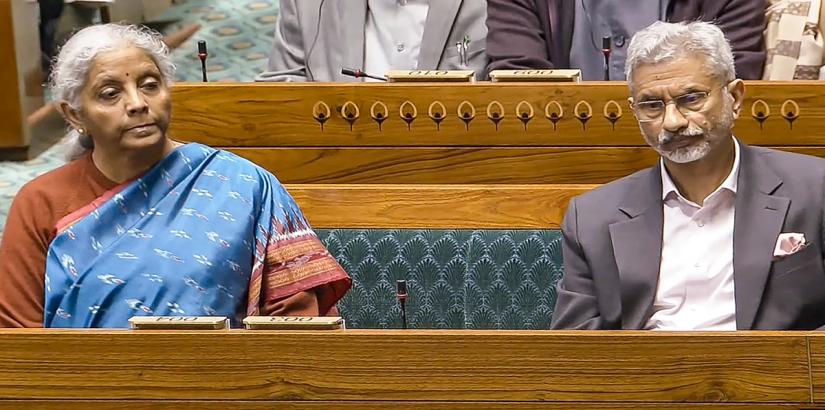
When Finance Minister Nirmala Sitharaman presented India’s 2026–27 Budget, the headline themes were familiar: fiscal consolidation, steady infrastructure spending, and the promise of “incremental reform” amid global uncertainty. But buried in the fine print of external assistance and overseas infrastructure allocations lies a quieter, more revealing story—one about India’s narrowing foreign policy bandwidth and the growing constraints to strategic ambitions.
Two decisions stand out. New Delhi has halved its aid allocation to Bangladesh, cutting it to ₹60 crore, after spending less than a third of the ₹120 crore earmarked in the previous financial year. Simultaneously, for the first time in nearly a decade, India has allocated no fresh funds for Iran’s Chabahar port—a project long framed as a linchpin of India’s continental connectivity strategy and its answer to Pakistan’s geographic veto.
Taken together, these moves underscore how geopolitical friction, domestic fiscal pressures, and external coercion—particularly from the United States—are reshaping India’s neighbourhood policy.
Bangladesh Engagement In Limbo
Until recently, India–Bangladesh relations were widely regarded as a rare success story in South Asia. Under Sheikh Hasina, the two countries deepened cooperation across energy, transport, and connectivity. India backed flagship projects such as the Akhaura–Agartala rail link, the Khulna–Mongla port rail line, and the jointly developed 1,320 MW Rampal thermal power station. Reflecting this momentum, New Delhi raised its aid allocation for Bangladesh to ₹120 crore in the 2025–26 Budget—even after Hasina’s fall in August 2024.
That decision now appears overly optimistic.
The interim government led by Chief Adviser Muhammad Yunus has adopted a markedly sharper public tone toward India. A series of anti-India statements by senior ministers, coupled with retaliatory trade measures on both sides, quickly chilled ties. The result was bureaucratic paralysis - of the ₹120 crore allocated, India spent barely ₹34.48 crore.
This year’s pared-back ₹60 crore allocation is less a punishment than a holding pattern. Indian officials privately signal that New Delhi is unwilling to commit significant resources until a new, elected Bangladeshi government emerges and policy direction stabilises. If relations improve, funding can be restored through supplementary or ad hoc allocations. Until then, projects remain in limbo.
The episode highlights a recurring dilemma in India’s neighbourhood policy: long-term investments are deeply vulnerable to short-term political shifts in partner countries, especially where elite consensus on relations with India is fragile.
Strategic Pause in Iran
If Bangladesh reflects political uncertainty, Chabahar reflects geopolitical constraint. India has invested more than $370 million in developing the Shahid Beheshti Terminal at Iran’s Chabahar port, which is operated by India Ports Global Limited under a 10-year contract. The port offers India a rare strategic prize: direct access to Afghanistan, Central Asia, and potentially Russia—bypassing Pakistan entirely.
Yet the 2026–27 Budget allocates zero fresh funding to the project.
The reason lies in Washington. In October 2025, the US Treasury granted India a six-month conditional sanctions waiver to continue operating Chabahar, despite renewed US threats of secondary sanctions and tariff hikes on countries “doing business” with Iran. That waiver expires on April 26, 2026. In the absence of clarity on an extension, New Delhi has opted for fiscal and political caution.
India continues to operate the port—for now—but the absence of new funding signals a strategic pause. It also marks a quiet retreat from India’s long-articulated ambition to shape Eurasian connectivity on its own terms. Chabahar, once showcased as a symbol of India’s strategic autonomy, now illustrates its limits in a sanctions-heavy global order.
Narrowing Circle Of Fiscal Options
These external cutbacks must be understood in the broader budgetary context. India’s fiscal space is tightening. Capital expenditure remains high at ₹12.2 lakh crore, defence spending has jumped nearly 15 percent to ₹7.85 lakh crore after last year’s brief but intense conflict with Pakistan, and the government remains committed to reducing the fiscal deficit toward 4 percent.
In this environment, overseas aid and strategic infrastructure—always politically expendable—are among the first casualties. Incremental reform at home is being mirrored by incremental retrenchment abroad.
Yet the strategic costs are real. Reduced engagement in Bangladesh risks ceding influence at a moment when Dhaka is actively diversifying its partnerships. Hesitation over Chabahar weakens India’s leverage in Iran and Central Asia and underscores its vulnerability to US pressure even as it seeks a more multipolar foreign policy.
The 2026–27 Budget does not signal a dramatic shift in Indian foreign policy. There is no abandonment of neighbours-first rhetoric or of connectivity-led diplomacy. What it reveals instead is a narrowing circle of feasible economic action.
India is trying to do many things at once: deter adversaries, build infrastructure, revive manufacturing, manage climate shocks, and maintain fiscal discipline—all in a worsening global environment marked by protectionism and great-power rivalry. Something has to give.
For now, it is foreign aid and overseas strategic projects that are absorbing the cuts. Whether this proves a temporary tactical pause or the beginning of a more cautious, inward-leaning phase in Indian foreign policy will depend less on budget lines and more on politics—in Dhaka, in Washington, and eventually in Tehran.
(The author is a veteran journalist and Bangladesh watcher. Views expressed are personal. He can be reached at jrchowdhury@yahoo.com)





Post a Comment