

Bangladesh Heads to Crucial Elections Amid Political Exclusion: A Divided Nation Needs Democratic Renewal
All signs point to a BNP victory. In a competitive contest without the Awami League, the BNP’s organisational depth and electoral reach make it the frontrunner. Yet victory alone may not translate into authority. The absence of the Awami League, the continued influence of Sheikh Hasina from exile, the rise of Islamist alternatives, and the central role of unelected institutions mean that any new government will inherit a fractured polity. The 2026 election may revive the BNP’s fortunes, but it will not by itself heal Bangladesh’s democratic wounds.
 Feb 10, 2026
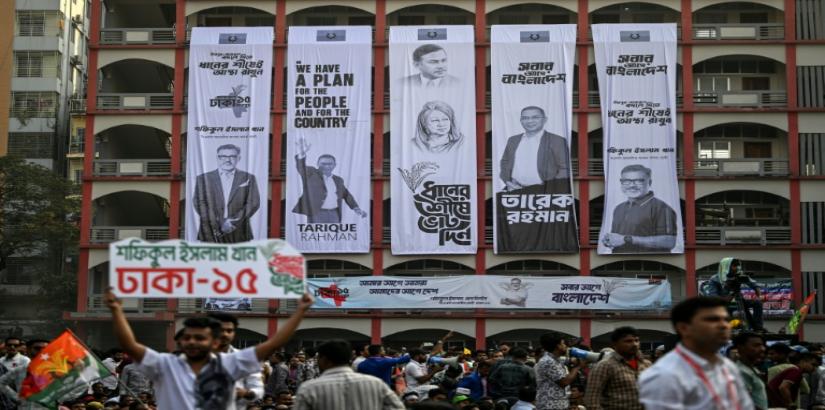
Bangladesh is heading into one of the most consequential elections in its political history. The general election scheduled for February 12, 2026, under the interim administration led by Muhammad Yunus, is expected to be procedurally freer than many polls held in recent times. Yet the exclusion of the Awami League, the country’s oldest and most entrenched political force, casts a long shadow over the process. Even if the Bangladesh Nationalist Party (BNP) secures victory, as most forecasts suggest, the result risks lacking political inclusiveness and moral legitimacy.
The backdrop to the election is extraordinary. It follows the student-led uprising of August 2024 that ended Hasina’s 15-year tenure and forced her to flee to India. In its aftermath, a caretaker government promised accountability, reform, and a decisive break from authoritarian excesses. The ban on the Awami League, justified by its alleged role in violent repression, fundamentally reshaped the political landscape. While many Bangladeshis welcomed Hasina’s fall, the complete exclusion of her party has raised concerns that democratic renewal is being pursued through political elimination rather than reconciliation and institutional reform.
BNP's Restrained Tone, Inclusive Appeal
The BNP has benefited the most from this altered environment. After nearly two decades marked by repression, exile, and imprisonment, the party appears poised for a return to power. Tarique Rahman’s return from London in December 2025 symbolised this revival. The BNP’s manifesto reflects a careful attempt to project moderation and administrative competence, emphasising electoral reform, accountability, and the dignity of the vote. The restrained tone suggests an awareness that voters are weary of confrontation and instability.
Foreign policy occupies a subtle but important place in the BNP’s vision. Without explicitly naming India, the manifesto highlights border killings, push-ins, smuggling, and river-water sharing—longstanding issues in bilateral relations. Promises to secure a fair share of transboundary rivers such as the Teesta and Padma, strengthen the Joint River Commission, and adopt a “Bangladesh Before All” doctrine suggest a desire to recalibrate ties with New Delhi without overt hostility. The absence of any explicit reference to China indicates a preference for strategic flexibility rather than visible alignment with any single power.
Politically, the BNP’s positioning remains contested. Its rejection of a unity government with Jamaat-e-Islami reflects an effort to distance itself from Islamist politics and reassure minorities, urban voters, and international partners. This marks a clear break from the 2001–06 period when BNP and Jamaat governed together. At the same time, the BNP has indirectly benefited from divisions within Islamist politics. Hefazat-e-Islam’s open hostility towards Jamaat, including declarations that voting for Jamaat is religiously forbidden, has weakened Jamaat’s appeal and tilted the balance in BNP’s favour, even as it fragments the broader ideological terrain.
Islamist Challenge, Unelected Actors
The principal challenge comes from the Jamaat-led alliance, which includes the National Citizen Party (NCP) born out of the 2024 student movement. Jamaat’s attempts to rebrand itself around governance and social justice underscore the fluidity of Bangladeshi politics. Yet fears of Islamist dominance, particularly regarding women’s rights and minority security, remain strong. The NCP’s decision to align with Jamaat has damaged its image as an independent reformist force and eroded the moral capital of the student movement.
Beyond party competition, unelected actors continue to shape outcomes. Muhammad Yunus, as chief adviser, faces the delicate task of holding credible elections while managing security and advancing a referendum on the July National Charter. Critics argue that holding a referendum alongside a general election risks confusion and politicisation, particularly as key reform proposals have already been sidelined by major parties. Student leaders accuse the BNP of betraying the spirit of the uprising by signalling openness to the Awami League’s future political space, including Tarique Rahman’s remark that Hasina’s children could enter politics if accepted by the people. For these critics, the BNP and the Awami League increasingly appear as rival elites rather than genuine alternatives.
The military remains the most consequential behind-the-scenes actor. Conscious of Bangladesh’s history of coups but aware of its central role in maintaining order, the army has so far avoided overt intervention. Its refusal to fire on civilians during the 2024 uprising and its facilitation of a civilian interim government marked a significant shift. Yet with police capacity weakened, the army’s nationwide deployment with magisterial powers makes it indispensable to election security. Trials of serving officers for abuses committed during Hasina’s rule are unprecedented and sensitive, creating unease within the institution and complicating civil–military relations for any incoming government.
Hindu Anxieties, Popular Mistrust
Human rights concerns further cloud the electoral moment. The custodial death of former Awami League minister and senior Hindu leader Ramesh Chandra Sen has triggered outrage and allegations of political vendetta. Reports of denial of medical care and a pattern of deaths of AL leaders in custody have raised fears of selective justice. For minorities, particularly Hindus, such incidents deepen anxieties about security and political marginalisation, undermining confidence in the post-Hasina transition.
Street unrest has added another layer of uncertainty. Protests by government employees demanding implementation of a new pay scale, allegations of administrative bias, and warnings of election engineering highlight deep mistrust across the political spectrum. When almost every major actor believes the process is stacked against them, the legitimacy of the outcome becomes fragile, regardless of who wins.
All signs point to a BNP victory. In a competitive contest without the Awami League, the BNP’s organisational depth and electoral reach make it the frontrunner. Yet victory alone may not translate into authority. The absence of the Awami League, the continued influence of Sheikh Hasina from exile, the rise of Islamist alternatives, and the central role of unelected institutions mean that any new government will inherit a fractured polity. The 2026 election may revive the BNP’s fortunes, but it will not by itself heal Bangladesh’s democratic wounds. The real test will be whether the next government can govern a divided nation with restraint, inclusivity, and a genuine commitment to democratic renewal.
(The author is an Associate Fellow, Manohar Parrikar Institute for Defence Studies and Analyses (MP-IDSA), New Delhi. Views expressed are personal. He can be contacted at anand_rai@hotmail.com )





Post a Comment