

Bangladesh–West Bengal Relations: Beyond ‘Islamisation’ and ‘Hinduisation’
Neither Bangladesh nor India — including West Bengal — is likely to fully concede its position. The future instead lies in pragmatic compromise, where domestic political constraints are balanced against the imperatives of regional cooperation. Ultimately, the trajectory of India–Bangladesh relations will depend less on identity politics and more on whether both sides can align economic necessity with political will.
 May 13, 2026
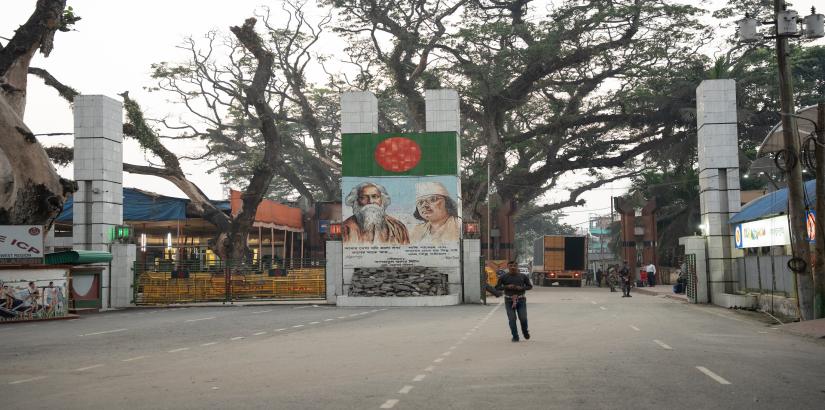
India — particularly its eastern state of West Bengal — and Bangladesh represent one of South Asia’s most complex and sensitive regional relationships. Rooted in common history, language and culture, the relationship has increasingly been shaped by diverging political trajectories — often described in popular discourse as the “Islamisation” of Bangladesh and the “Hinduisation” of West Bengal. While such labels are politically charged and often oversimplified, they reflect shifts in domestic political narratives that influence bilateral engagement.
Beyond identity politics, however, economic interdependence, water-sharing disputes — especially the Teesta issue — border management, and geopolitical alignments remain the principal factors shaping relations between Bangladesh and West Bengal, and by extension, India. The resolution — or lack of resolution — of these issues will determine whether cooperation deepens or tensions escalate.
Political Narratives and Identity Dynamics
Bangladesh was founded in 1971 on secular principles, but over the decades Islam has gained greater prominence in politics and governance. Political parties such as the BNP and Islamist groups have emphasized Islamic identity, although Bangladesh remains constitutionally secular. The perception of “Islamisation” nevertheless has implications for India, particularly regarding minority protection and concerns over extremism.
West Bengal and the ‘Hinduisation’ Debate
West Bengal historically upheld secular and syncretic traditions. However, recent electoral politics have increasingly mobilized Hindu identity, especially around issues such as migration from Bangladesh, citizenship debates linked to NRC/CAA discourse, and “infiltrator” narratives. Political rhetoric around “illegal Bangladeshi migrants” has directly affected bilateral trust and border relations.
Border Management and Security Concerns
One of the most contentious issues in bilateral relations remains cross-border migration.Bangladesh shares a 2.217 km border with West Bengal, out of the over 4000 km border it shares with five Indian states. India accuses Bangladesh of illegal migration through this border , while Bangladesh denies large-scale outflows. Allegations of “pushbacks” or forced deportations have further escalated tensions.
Recent reports indicate that Bangladesh has warned of “appropriate measures” if such practices continue. These challenges require sustained cooperation, but are frequently politicized domestically in both countries.
Teesta Water Dispute: A Core Strategic Issue
No single issue better symbolizes India–Bangladesh tensions than the Teesta River dispute. The Teesta is crucial for irrigation and agriculture in northern Bangladesh and supports millions of livelihoods. At the same time, it is vital for West Bengal’s agriculture and hydropower generation. Bangladesh demands equitable water-sharing, while India’s central government remains constrained by West Bengal’s opposition to proposed agreements.
Domestic politics in West Bengal has repeatedly blocked progress on the Teesta agreement.
The economic consequences are significant. Bangladesh faces agricultural losses due to water shortages, food security concerns, declining rice production, and increased regional poverty and migration pressures.
The Teesta dispute is often described as a “litmus test” of bilateral relations. Failure to resolve it risks eroding trust and may push Bangladesh towards alternatives such as Chinese-backed river management projects, thereby weakening India’s regional influence.
Recent political shifts in West Bengal have nevertheless raised hopes in Bangladesh that a Teesta agreement may finally progress, potentially contributing to regional peace and stability.
The Farakka Barrage Issue
The Farakka Barrage remains an important — though less explosive — issue in India–Bangladesh relations than it was during the 1970s to 1990s. Constructed by India on the Ganges near Farakka in West Bengal, the barrage became a major source of bilateral tension.
The 1996 Ganges Water Sharing Treaty marked a breakthrough by establishing a formula for sharing dry-season water flows and creating monitoring mechanisms that reduced immediate tensions.
Today, the issue is more diplomatic than confrontational, though still politically sensitive in Bangladesh. Concerns include reduced river flow during dry months, climate change impacts, upstream water usage, sedimentation, and ecological stress.
Many Bangladeshis continue to believe India exercises disproportionate control over shared rivers, making water-sharing one of the most persistent unresolved bilateral issues.
Economic and Trade Relations
Despite political tensions, economic ties between India and Bangladesh remain strong and continue to expand.
West Bengal plays a critical economic role as the largest economy in eastern India and a major hub for trade with Bangladesh. Key exports include textiles, steel, IT services and agricultural goods.
Bangladesh, meanwhile, has emerged as one of South Asia’s fastest-growing economies, driven by garment exports, infrastructure development and a growing middle class.
Bangladesh and India’s Act East Policy
Bangladesh occupies a central position in India’s Act East Policy and in regional supply-chain strategies.
Launched in 2014 as an upgraded version of the earlier Look East Policy, the Act East Policy aims to strengthen economic ties with Southeast Asia, improve connectivity with India’s northeast, counterbalance China’s regional influence, expand trade and supply chains, and deepen Indo-Pacific strategic cooperation.
The policy focuses heavily on Bangladesh, Myanmar, Thailand, Vietnam and ASEAN countries.
Supply Chains and Strategic Connectivity
Supply chains today encompass manufacturing networks, logistics corridors, ports, semiconductor routes, energy transport systems and resilient trade linkages.
India seeks to emerge as an alternative manufacturing and logistics hub as global companies pursue “China+1” diversification strategies. To achieve this, India requires faster transport links, cheaper logistics, port access and deeper regional integration — making Bangladesh strategically indispensable.
Bangladesh serves as a gateway to India’s northeastern states. Without Bangladeshi transit access, goods must pass through the narrow Siliguri Corridor, popularly known as the “Chicken Neck.” Transit through Bangladesh makes transport shorter, cheaper and strategically safer.
Bangladesh has also become an important manufacturing economy, particularly in garments, textiles, pharmaceuticals and light industry. India increasingly views Bangladesh not merely as a neighbour, but as a production partner, regional supply-chain node and growing consumer market.
Discussions on integrated industrial corridors, joint manufacturing initiatives and energy cooperation are expanding.
Bay of Bengal and Indo-Pacific Geopolitics
The Bay of Bengal has emerged as a major strategic zone in Indo-Pacific geopolitics. Bangladesh’s location gives it importance in maritime trade, energy shipping, submarine cable routes, naval strategy and regional logistics.
India seeks to strengthen eastern maritime connectivity linking Kolkata, Bangladesh, Myanmar, Thailand and Singapore — a core objective of the Act East Policy.
Trade Imbalances and Emerging Economic Issues
Bangladesh is one of India’s largest trading partners in South Asia. Cross-border trade through West Bengal remains critical, while rail, road and inland waterway connectivity projects are expanding.
However, important economic challenges persist, including trade imbalances, infrastructure bottlenecks, non-tariff barriers and competition-versus-complementarity concerns in manufacturing.
Geopolitical Competition and Bangladesh’s Strategic Position
Bangladesh is increasingly balancing relations between India, China and the United States. China’s involvement in infrastructure projects, including Teesta-related proposals, has introduced a new strategic dimension to regional competition.
India’s concerns include limiting Chinese influence in its neighbourhood, maintaining Bangladesh as a strategic partner, and securing connectivity to its northeastern region.
The Strategic Importance of the ‘Chicken Neck’
The “Chicken Neck” refers to the Siliguri Corridor — a narrow strip of land in northern West Bengal connecting mainland India to its eight northeastern states.
At its narrowest point, the corridor is only about 20–22 kilometres wide and lies between Nepal, Bangladesh and Bhutan. Any disruption could potentially isolate northeast India from the rest of the country.
Historically, after Partition in 1947, India lost direct routes to the northeast that passed through what later became Bangladesh. Consequently, India became heavily dependent on the Siliguri Corridor.
Today, cooperation with Bangladesh through railway restoration, inland waterways, road transit and port access is helping reduce this strategic vulnerability.
Climate Change and Environmental Challenges
Climate change is emerging as a critical shared challenge for both India and Bangladesh because the two countries share rivers, coastlines, weather systems and densely populated ecological zones.
Key concerns include rising sea levels, flooding, cyclones, river volatility and water scarcity during dry seasons. These pressures intensify disputes such as Teesta while also creating migration pressures, economic stress and broader human security concerns.
Shared Climate Risks
Low-lying coastal areas in both countries are vulnerable to sea-level rise. The Sundarbans region of West Bengal faces erosion and saltwater intrusion, while millions could eventually be displaced due to coastal flooding.
The Bay of Bengal has also witnessed increasingly intense cyclones such as Amphan, Sidr and Remal, causing widespread damage to agriculture, infrastructure and livelihoods.
India and Bangladesh also share major river systems including the Ganges, Brahmaputra and Teesta, making downstream flooding and glacier-related water variability major concerns.
The Sundarbans: A Shared Ecological Hotspot
The Sundarbans, one of the world’s largest mangrove forests and a UNESCO World Heritage region, faces severe climate threats including rising sea levels, stronger storms, habitat loss and displacement of local communities.
India has expanded renewable energy and climate-resilient infrastructure initiatives, while Bangladesh has invested significantly in cyclone shelters and disaster preparedness mechanisms.
Policy Constraints and Bilateral Challenges
A key structural issue in India is its federal system. While foreign policy is controlled by the central government, water-sharing agreements require state-level cooperation. This creates policy bottlenecks, particularly in negotiations involving West Bengal.
Political transitions within Bangladesh also affect policy continuity and bilateral engagement.
Bangladesh strongly prioritizes Teesta resolution and equitable water-sharing, while simultaneously diversifying strategic partnerships, including with China.
India and West Bengal, meanwhile, remain focused on domestic agricultural requirements, political sensitivities and border security concerns.
Future Trajectories
Possibility 1: Cooperative Growth
A Teesta agreement is reached, trade and connectivity expand, and both countries undertake joint climate and water-management initiatives.
Possibility 2: Managed Tensions
Disputes persist but remain controlled, while economic engagement continues despite political friction.
Possibility 3: Strategic Drift
Bangladesh tilts more decisively towards China, border tensions intensify, and mutual trust weakens further.
Narrative Hinges on Economics
While narratives of “Islamisation” and “Hinduisation” influence political discourse, they are not the primary determinants of Bangladesh–West Bengal relations. The relationship ultimately hinges on water diplomacy, economic interdependence, border management, migration concerns, geopolitical competition and climate pressures.
The Teesta issue remains both the most symbolic and the most substantive challenge. Its resolution would not only address economic and humanitarian concerns, but also signal political trust and regional stability.
Neither Bangladesh nor India — including West Bengal — is likely to fully concede its position. The future instead lies in pragmatic compromise, where domestic political constraints are balanced against the imperatives of regional cooperation.
Ultimately, the trajectory of India–Bangladesh relations will depend less on identity politics and more on whether both sides can align economic necessity with political will.
(The writer is a retired Special Secretary, Government of India. Views expressed are personal. He can be reached at ppmitra56@gmail.com)





Post a Comment