

The Cartography of Power: Why the India–Nepal Border Dispute Will Shape South Asian Geopolitics
Ultimately, the India–Nepal border dispute is not only about the origin of a river. It is about how neighboring countries engage with shared history, evolving national identities, and shifting geopolitical environments. In a region shaped by growing strategic competition and enduring historical legacies, the conversation around Kalapani and Lipulekh remains a significant chapter in South Asian diplomacy
 Dec 05, 2025
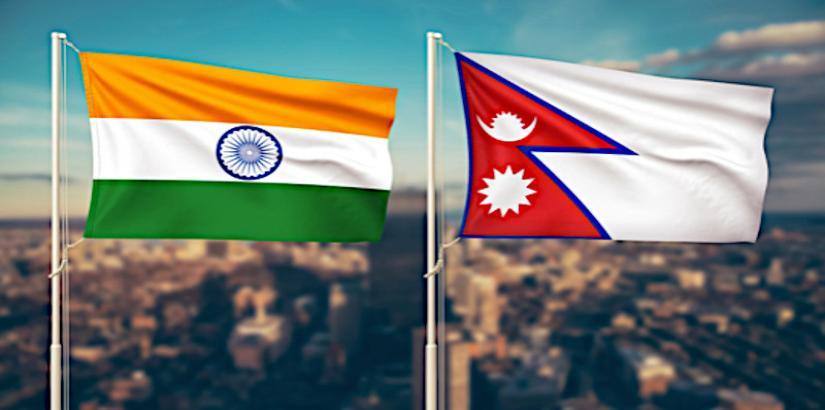
In a region where many borders were drawn under colonial administrations and later interpreted by independent states, the India–Nepal dispute over Kalapani, Lipulekh, and Limpiyadhura remains more than a technical disagreement. It reflects how historical ambiguity and evolving national priorities continue to shape diplomacy in South Asia.
Nepal’s recent release of a new NPR 100 banknote featuring a revised national map — one that includes the contested areas — has brought a long-standing issue back into public attention. For many in Nepal, the new design resonates as an affirmation of national identity. For India, it raises concerns about unilateral steps on a sensitive matter. For the wider region, it illustrates the complexities of how neighboring states navigate historical legacies and contemporary strategic interests.
A Colonial Treaty
The origins of the dispute lie in the 1816 Sugauli Treaty between the East India Company and the Kingdom of Nepal, which established the Kali (Mahakali) River as Nepal’s western boundary. However, the treaty did not clearly define the river’s source — a gap that has led to divergent interpretations.
·Nepal holds that the river originates at Limpiyadhura, which would place the disputed territory within its borders.
·India maintains that the river’s source lies further east, near Kalapani, therefore considering the area part of Indian territory.
These contrasting readings are supported by differing historical maps, administrative practices, and strategic calculations. For both countries, the interpretations have become intertwined with national narratives and policymaking.
Why The Junction Matters
Kalapani, Lipulekh, and Limpiyadhura lie at a geographically and strategically sensitive junction near India, Nepal, and China (Tibet).
·For India, access through Lipulekh is important for border management, religious pilgrimages, and broader Himalayan security considerations.
·For Nepal, the area carries symbolic and practical significance related to territorial integrity.
·For China, developments in the region indirectly influence India’s broader Himalayan posture.
Although small in size, the area plays a notable role in the region’s security and diplomatic landscape.
Nepal’s New 100-Rupee Note: A Symbol With Regional Resonance
In late 2025, Nepal introduced a redesigned NPR 100 banknote incorporating the updated map that includes the disputed territories. The move sparked varied reactions:
·It received broad public support in Nepal, where many viewed it as aligning national symbols with official claims.
·Indian officials expressed concern, describing the step as unilateral and inconsistent with ongoing dialogue.
·Some border towns experienced short-term economic disruptions as traders hesitated to accept the new notes.
The development highlights how symbolic actions — even those involving national currency — can influence diplomatic atmospheres and public sentiment.
Perceptions, Power And Challenges
The dispute reflects broader patterns seen in regions where states of differing size and capacity share borders. Negotiations have periodically advanced through bilateral mechanisms, yet delays, misalignments in political priorities, and occasional unilateral decisions by both sides have contributed to recurring mistrust.
In Nepal, the issue often resonates as a matter of national sentiment and historical interpretation. In India, it tends to receive less sustained public attention, given the country’s broader strategic concerns. These differing domestic contexts shape how both societies perceive the dispute.
Maps As Mirrors Of Regional Relationships
In South Asia, maps often serve not only as geographic records but also as expressions of identity and political interpretation. The India–Nepal border discussion underscores several enduring themes:
1. Colonial-era boundaries continue to influence contemporary diplomacy.
2. Neighboring states may approach the same historical documents with different priorities and lenses.
3. Symbolic actions — such as map updates — can shift the tone of public discourse more rapidly than formal diplomatic exchanges.
A Constructive Path Forward
A sustainable resolution would require steps that acknowledge both historical documentation and present-day realities:
1. A Joint Technical Boundary Review
Using archival material, modern mapping technologies, and mutually agreed hydrological assessments.
2. Political Commitment on Both Sides
Technical processes are most effective when backed by consistent political will.
3. Transparent Communication
Avoiding unilateral actions and emphasizing consultation can help rebuild trust.
4. A Community-Centered Approach
Border residents often experience practical challenges during disputes; their needs and perspectives should inform policy discussions.
Influence On Regional Dynamics
Ultimately, the India–Nepal border dispute is not only about the origin of a river. It is about how neighboring countries engage with shared history, evolving national identities, and shifting geopolitical environments. In a region shaped by growing strategic competition and enduring historical legacies, the conversation around Kalapani and Lipulekh remains a significant chapter in South Asian diplomacy — one that will likely continue to influence bilateral and regional dynamics in the years to come.
(The author is a medical student and political journalist with Nepal's IN-Depth Story. Views expressed are personal. She can be contacted at pokharelsiya1@gmail.com )





Post a Comment