

Gulf War Strains Bangladesh's Economic Fragility, Test for New Government
The current war has exposed Bangladesh’s structural vulnerabilities: dependence on imported energy, fragile reserves, and narrow fiscal space. For the new government, the stakes are clear—stabilize fuel and food supplies now while building resilience through diversified energy, broader exports, and stronger social protection. Wars in the Gulf may be fought thousands of miles away, but their economic shockwaves reach Bangladesh within days. In the end, the crisis will be felt in three simple pressures shaping everyday life: oil prices, food costs, and migrant jobs.
 Mar 19, 2026
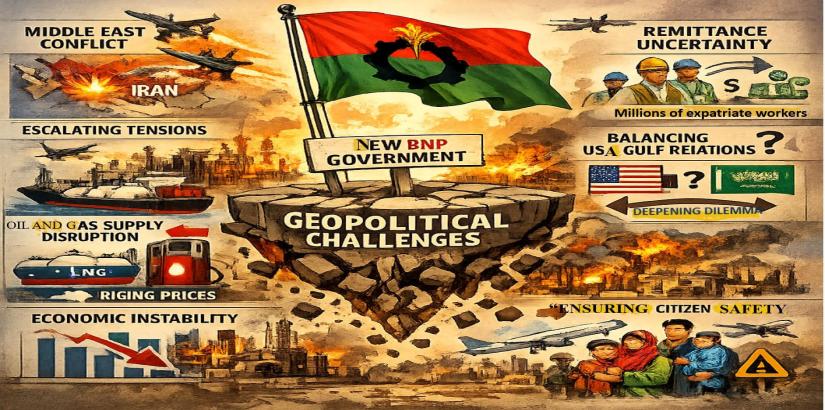
The latest Gulf War has rapidly escalated into a regional crisis with global economic consequences. Coordinated strikes by the United States and Israel on Iran—and Tehran’s subsequent closure of the Strait of Hormuz—have disrupted one‑fifth of global oil supply and around 20 percent of LNG shipments. Crude oil prices have surged, sending shockwaves through Asian economies, including Bangladesh.
For Bangladesh, the implications are immediate. Heavy dependence on imported fuel, Gulf labour markets, and global shipping routes means turmoil in West Asia quickly translates into economic pressure at home. Escalating conflict in the Gulf threatens to trigger energy shocks, inflation, and fiscal strain in Bangladesh—testing the economic resilience of the country’s new administration. The first signs are already visible in fuel queues, rising food prices, and growing anxiety among households and businesses. For the new government, this is not a distant geopolitical crisis but an early test of economic management.
Energy Shock and Inflation
These pressures are already most visible in the energy sector, where Bangladesh’s dependence on imports leaves the economy exposed to global volatility. The country meets about 65% of total power supply through imported fuels and electricity, with petroleum imports alone costing over BDT 79,000 crore in December 2025. Domestic gas fields still provide the bulk of supply, but rising demand has forced greater reliance on LNG imports. With Brent crude hovering above $100 per barrel, import costs have surged, leaving policymakers with stark choices: raise domestic fuel prices—risking inflation and unrest—or expand subsidies that strain fiscal space.
The shock is rippling across the economy. Manufacturing industries—especially readymade garments—face irregular gas supplies and rising energy costs that threaten production schedules and export competitiveness. Energy‑intensive sectors such as cement and steel are squeezed, while smaller factories without backup power are cutting hours and jobs.
Transport systems are equally strained. Buses and trucks struggle with rationed diesel, fares are rising, and freight costs are climbing—feeding directly into food inflation as produce becomes more expensive to move from farms to cities. Global shipping disruptions add further delays and costs, weakening Bangladesh’s competitiveness abroad.
Agriculture faces another layer of vulnerability. Bangladesh imports most of its chemical fertilizers from the Gulf, and supply chains are tightening as the conflict intensifies. Prices have already spiked, pushing subsidies higher. Farmers report delays in deliveries and rising diesel costs for irrigation. If fertilizer prices rise by 20–30%, rice production could fall by 8–10%, with wheat and maize also affected. For rural households, this means lower yields and higher living costs—a double shock that compounds urban inflation.
Inflation was already a pressing concern before the conflict erupted. By February 2026, Bangladesh’s inflation rate had climbed to 9 percent, and the war threatens to push it significantly higher. For low‑income households, these changes translate into daily hardship. Families in urban slums often spend more than half their income on food, and even modest price increases force them to reduce consumption of protein‑rich foods, vegetables, and dairy products. Rural communities face similar pressures, with farmers squeezed by rising costs and falling purchasing power. The nutritional consequences are troubling: reduced protein consumption and micronutrient deficiencies are likely to worsen, particularly among children.
Remittances and External Accounts
While households struggle with rising costs, remittances remain Bangladesh’s most dependable buffer against external shocks. In the first seven months of FY2025–26, migrant workers sent home $18.12 billion—over six percent of GDP. Behind these flows are five to six million Bangladeshis in the Gulf, each supporting a family whose survival depends on their earnings. For them, remittances mean food, school fees, and medical care.
The Iran war threatens this lifeline. Economic disruptions in Saudi Arabia, the UAE, Qatar, and Kuwait could slow construction, reduce hiring, or delay wages. Even a modest decline would weaken rural consumption, deepen poverty, and heighten risks of malnutrition. Protecting this stream of income—through labour diplomacy and diversification of migration destinations—must remain central to Bangladesh’s economic strategy.
Beyond household incomes, the external accounts show similar fragility. Foreign exchange reserves—around $30 billion under IMF accounting—could erode quickly if energy import bills continue to rise. As noted earlier, petroleum imports in December 2025 alone exceeded BDT 79,000 crore—illustrating how quickly reserves can erode when global prices spike.
The pressure is already visible in the currency market. The taka has begun weakening against the dollar, reflecting higher import costs and investor concerns about external stability. Continued depreciation would raise the price of imported goods, intensify inflation, and further erode household purchasing power. External debt, now estimated at $70 billion, limits Bangladesh’s room for manoeuvre, while subsidies already consume hundreds of billions of taka. A prolonged conflict could widen the current account deficit, accelerate the taka’s slide, and force policymakers into painful choices: tighten monetary policy, cut subsidies, or seek additional support from institutions such as the IMF.
Fiscal Strain and Policy Choices
Fiscal policy offers little room to absorb additional shocks. With a tax‑to‑GDP ratio of barely eight percent, Bangladesh operates with one of the narrowest fiscal bases among emerging economies. Subsidies have long served as the government’s shock absorber, but at steep cost: fuel subsidies exceeded BDT 290 billion in FY2022–23, fertilizer BDT 280 billion, and electricity BDT 170 billion in FY2024–25. Despite recent efforts to trim the deficit, fiscal space remains precarious.
A prolonged war threatens to unravel this fragile balance. Passing higher fuel costs to consumers risks inflation and unrest; absorbing them through subsidies would widen deficits, crowd out development spending, and deepen reliance on external borrowing. With reserves under pressure and the taka already weakening, fiscal fragility compounds external vulnerability.
The government thus faces a stark dilemma: contain inflation at the expense of fiscal stability, or protect public finances while allowing prices to rise. Either path underscores the urgent need to broaden the tax base, target subsidies more effectively, and strengthen social protection for vulnerable households.
The current war has exposed Bangladesh’s structural vulnerabilities: dependence on imported energy, fragile reserves, and narrow fiscal space. For the new government, the stakes are clear—stabilize fuel and food supplies now while building resilience through diversified energy, broader exports, and stronger social protection. Wars in the Gulf may be fought thousands of miles away, but their economic shockwaves reach Bangladesh within days. In the end, the crisis will be felt in three simple pressures shaping everyday life: oil prices, food costs, and migrant jobs.
How the government responds now will determine whether this crisis deepens economic fragility—or becomes the catalyst for a stronger, more resilient Bangladesh economy.
(The author is Professor and Chair of the Department of Economics, International University of Business Agriculture and Technology (IUBAT), Dhaka. His research focuses on regional trade, sustainable development, and South Asian economic cooperation. Views expressed are personal. He can be reached at golam.grasul@gmail.com)





Post a Comment