

The Illusion of Strategic Mastery: How India’s Tactical "Smartness" Created a Diplomatic Opening for Pakistan
A significant factor in this "strongman" narrative is the influence of the Indian diaspora. Many unusually wealthy Indians living in the U.S. or U.K. cheer when India stands up to Western leaders. Their focus is emotional—seeking the pride of a "strong India" from the comfort of their adopted homes. However, these elites are dangerously out of touch with the majority of the Indian population.
 Apr 22, 2026
In the high-stakes arena of global diplomacy, the year 2026 has witnessed a remarkable and sobering role reversal in South Asia. For over a decade, New Delhi enjoyed the status of Washington’s "indispensable partner," while Islamabad languished in strategic isolation. However, by prioritizing immediate economic gains through discounted Russian oil and maintaining a calculated silence on the invasion of Ukraine, the Indian leadership may have fallen into the trap of being "too smart" for its own long-term interests.
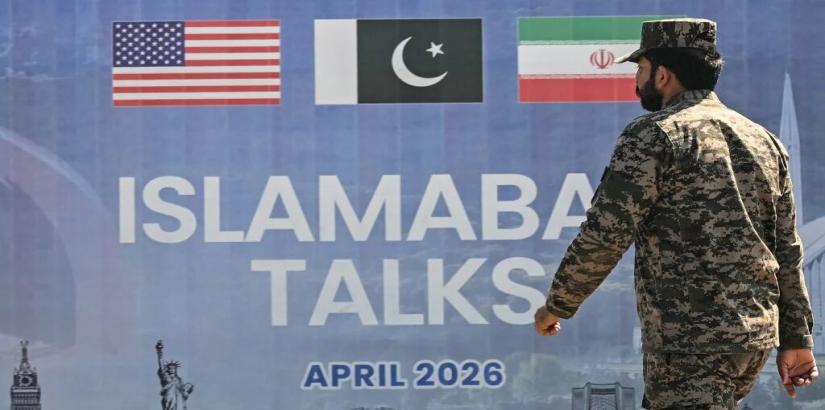
As a scientist who has spent a career analyzing complex systems and securing 30 U.S. patents, I have learned that "optimizing" one variable in a vacuum—whether in a chemical reaction or a trade deal—often leads to a systemic collapse elsewhere. India’s pursuit of "strategic autonomy" is a textbook case of this failure. By focusing on the tactical goal of cheap energy, India created a diplomatic vacuum. Today, as peace negotiations between the United States and Iran unfold not in New Delhi, but in Islamabad, it is clear that India’s archrival has seized the spotlight that India inadvertently left behind.
Pattern of Premature Declaration
To a structural thinker, India’s current diplomatic friction is part of a recurring pattern of hubris. We saw this during the COVID-19 pandemic. In early 2021, the Indian leadership prematurely declared victory over the virus, shipping oxygen and vaccines abroad as a "show of power," only to be decimated by a second wave that claimed more lives than almost any other nation.
We are seeing a geopolitical ‘second wave’ today. By standing up to Western powers in 2022 to secure cheap crude, India sought the instantaneous self-gratification of "strongman" optics. The leadership calculated that India was "too big to fail" and too important to be penalized. But in systems thinking, no node is indispensable if it becomes a point of friction rather than a point of flow. By being "smart" about oil prices, India failed to prepare for the diplomatic toll: the erosion of trust with the world’s only superpower.
Profit Over Principle
The foundation of this shift lies in the "profit over principle" calculation made following the 2022 invasion of Ukraine. India chose to bypass Western sanctions, significantly increasing its imports of Russian crude to over 2 million barrels per day. While framed as a masterstroke of energy security, the "Ego Tax" has been steep.
The United States responded with 50% secondary tariffs on key Indian sectors in late 2025. While subsequent negotiations have softened these blows, the "special status" India once enjoyed in Washington has evaporated. This friction has trickled down to tangible losses: a dwindling of student and work visas and a chilling effect on high-tech defense transfers. By being tactical about the price of a barrel, India lost the strategic advantage of being the West's primary democratic anchor in Asia.
The Mediator’s Premium
While India was busy navigating trade wars and defending ties to a decaying Russia—a country that has struggled unexpectedly to occupy Ukraine—a geopolitical opening emerged in the Middle East. As tensions between the U.S. and Iran reached a breaking point in late 2025, a mediator was desperately needed. Historically, India’s democratic credentials and ties to Tehran made it the natural bridge. However, India’s perceived closeness to the Russia-Iran axis made it an unsuitable partner for a Washington seeking neutral ground.
In a surprising turn of diplomatic opportunism, Pakistan stepped into the breach. Leveraging its Islamic network and religious commonality with Tehran, Pakistan acted with a clever, measured, and high-visibility role that India was too distracted to play.
The Islamabad Talks of April 2026 represent a total shift in the regional spotlight. Pakistan, a country once dismissed for harboring instability, has reinvented itself as a "security facilitator." While India maintains the larger total GDP, Pakistan has gained the "mediator’s premium”—the invaluable leverage that comes with being the only actor capable of bringing bitter enemies to the table. By being proactive while India was being reactive, Pakistan has moved from the periphery to the center of global peace-making, even as rumours of Nobel Peace Prize nominations begin to circulate in diplomatic circles.
The Diaspora Disconnect
A significant factor in this "strongman" narrative is the influence of the Indian diaspora. Many unusually wealthy Indians living in the U.S. or U.K. cheer when India stands up to Western leaders. Their focus is emotional—seeking the pride of a "strong India" from the comfort of their adopted homes. However, these elites are dangerously out of touch with the majority of the Indian population.
For the ordinary person in India, "standing up to the West" is a hollow victory. What matters is per-capita GDP, which remains a fraction of the West’s or even China’s. While the leadership chases the ego-gratification of "Total GDP" rankings, the standard of living for the masses depends on trade, outsourcing, and technological collaboration with the U.S.—the very things currently being sacrificed. The diaspora's "fancy desires" for a defiant India are a luxury that the ordinary Indian citizen cannot afford.
Virtue of Growing in Silence
If I were advising foreign policy as a chief scientist, I would point to the models of South Korea, Taiwan, and Singapore. These nations did not grow by provoking superpowers or seeking the limelight; they grew silently and quietly. They focused on the "middle-class livelihood" variable rather than the "global ego" variable. They understood that real power is not declared; it is built through economic integration and quiet stability.
India must perform a foreign-policy recalibration. Russia is a decaying power; China is an untrustworthy rival. The commonality of democracy makes the U.S. the only logical strategic partner for India’s long-term aspirations. India must lower its ego, stop the premature declarations of superpower status, and return to a policy of quiet progress.
The Cost of Being "Too Smart"
Ultimately, India’s strategy has been an example of strategic overreach. In the zero-sum game of regional influence, India’s withdrawal into self-centered neutrality allowed its archrival to occupy the center stage.
As the peace talks progress in Islamabad, the message to the world is clear: Pakistan was smart enough to recognize a vacuum, and India was too smart to realize it was creating one. By prioritizing tactical financial wins over strategic geopolitical trust, India has inadvertently made itself a spectator in a theater where it once expected to lead. True smartness is not found in the cheapest barrel of oil, but in the lasting strength of a nation’s seat at the table.
(The author is a retired US-based scientist and the director of the Reddy Centre for Critical and Integrated Thinking. With a PhD in science and 30 U.S. patents, he utilizes structural thinking to analyze contested public debates. His work focuses on the intersection of international policy and structural systems. Views expressed are personal. He can be contacted at mpreddy54@yahoo.com)





Post a Comment