

India-Russia Civil Nuclear Cooperation: Why So Crucial And The Road Ahead
Amid fragmented supply chains, the Russia-Ukraine war, Russia-China convergence, and escalating US-China tensions, India’s nuclear cooperation with Russia helps hedge against overdependence on the West and ensures Moscow remains embedded within India’s strategic ecosystem. While Russia needs stable export markets, India needs dependable technology and supply chains — a mutual dependence strengthened by sanctions and geopolitical flux.
 Dec 05, 2025
In global politics, nuclear activity and debate have taken on renewed urgency. The United States’ successful test of the B61-12 tactical thermonuclear bomb in August 2025, followed by President Donald Trump’s remarks alleging nuclear testing by North Korea, Pakistan, Russia, and China, has been seen by many as justification for Washington’s decision to resume testing after more than three decades. His comments, which implicitly cast doubt on Pakistan’s nuclear conduct, also raise questions about India’s nuclear capabilities.
According to the Stockholm International Peace Research Institute (SIPRI), India and Pakistan have continuously refined their nuclear delivery systems since 2023. While India’s deterrence strategy has traditionally been Pakistan-focused, China has emerged as an increasingly central factor in recent years.
Why Russia Matters To India
Against this backdrop, it makes strategic sense for India to enhance its nuclear arsenal and capacity. India maintains nuclear partnerships with France, Canada, Russia, the United Kingdom, and the United States. Yet Russia remains India’s most enduring and trusted nuclear partner, having stood by New Delhi during its 1974 and 1998 nuclear tests, when most Western powers imposed sanctions and withheld cooperation.
Current geopolitical trends suggest that India and Russia may deepen their nuclear engagement. During a recent visit to India, the Director-General of Rosatom, Russia’s state nuclear corporation, stated that both sides are exploring joint ventures for small modular reactors (SMRs) and increased localization of nuclear plant components. Rosatom underscored that such collaboration could expand cooperation across the nuclear fuel cycle and reinforce civil nuclear partnership.
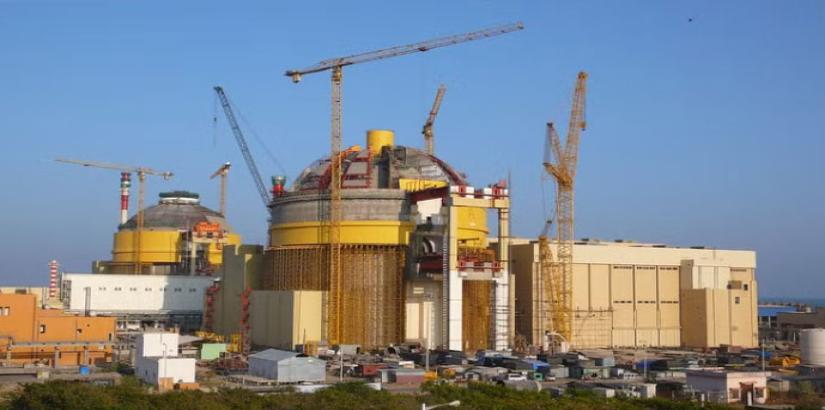
India’s largest nuclear plant — the Kudankulam Nuclear Power Plant (KNPP) — exemplifies this cooperation, having been built using Russian technology. Analysts believe that the 23rd India-Russia Annual Summit in December 2025 could see major advances in bilateral civil nuclear ties.
Reliability, Liability And Strategic Autonomy
Russia continues to supply reactors, fuel guarantees, maintenance support, and training to India — making Moscow a more dependable partner than others. Notably, while Russia has built reactors and committed to building more, the United States has not constructed a single reactor in India since the 2008 civil nuclear agreement. New Delhi prefers partnerships that deliver tangible results rather than paper agreements.
India’s Civil Liability for Nuclear Damage Act (CLNDA) assigns suppliers some liability in case of an accident — a provision that has deterred American and French companies but was accepted by Russia, which proceeded with Kudankulam’s construction. The Indian government has since signalled its intention to amend both the CLNDA and the Atomic Energy Act.
Where the US imposes strict export controls limiting technology transfers, Russia has provided both technology and capacity-building support. Moreover, Moscow has committed to long-term, unconditional fuel supply guarantees — unlike the US, where fuel supply remains bound by legal, non-proliferation, and regulatory conditions under frameworks such as the Hyde Act and Nuclear Suppliers Group (NSG) rules.
Strategic autonomy is a long-standing pillar of Indian foreign policy. Amid fragmented supply chains, the Russia-Ukraine war, Russia-China convergence, and escalating US-China tensions, India’s nuclear cooperation with Russia helps hedge against overdependence on the West and ensures Moscow remains embedded within India’s strategic ecosystem. While Russia needs stable export markets, India needs dependable technology and supply chains — a mutual dependence strengthened by sanctions and geopolitical flux.
Clearer Roadmap Expected
The summit in New Delhi between Prime Minister Narendra Modi and President Vladimir Putin is expected to announce several developments in civil nuclear cooperation. Discussions will likely cover progress on Kudankulam Units 3–6, fuel assurance, waste management, technology transfer, localization of components, SMR expansion, and new reactor projects. New intergovernmental or commercial agreements may emerge, moving nuclear cooperation away from transactional engagement toward long-term strategic alignment. The summit may also open doors for broader energy collaboration — including renewables, hybrid systems, and cleaner technology partnerships.
India hopes to secure a clearer roadmap for civil nuclear cooperation — a comprehensive framework rather than isolated projects. Yet challenges persist. The Ukraine conflict delayed the supply of the S-400 missile systems and reshaped global energy flows, complicating logistics — though rupee–ruble settlements and alternative payment systems may offer solutions. India also remains cautious about overdependence on Russia and will continue balancing ties with other key partners to uphold strategic autonomy.
(The author is a Doctoral Research Candidate in International Relations at Jadavpur University, India. Previously, she was a Senior Research Fellow under a University Grants Commission project. Views expressed are personal. She can be reached at anujasaha.ju@gmail.com)





Post a Comment