

Nepal at a Crossroads: Will the Elections Usher in a Generational Shift in Country's Murky Politics?
A prominent feature of this election is the massive influx of youth participation. Approximately 800,000 first-time voters are preparing to cast their ballots, and over 1,000 candidates under the age of 40 are contesting, signaling a profound generational shift. The political landscape is witnessing fierce competition between established traditional parties and emerging youth-centric forces. A key contest is unfolding in the Jhapa 5 constituency, a traditional stronghold where 35-year-old former Kathmandu mayor Balendra "Balen" Shah, representing the Rastriya Swatantra Party (RSP), is challenging former Prime Minister KP Sharma Oli of the Communist Party of Nepal (UML).
 Mar 03, 2026
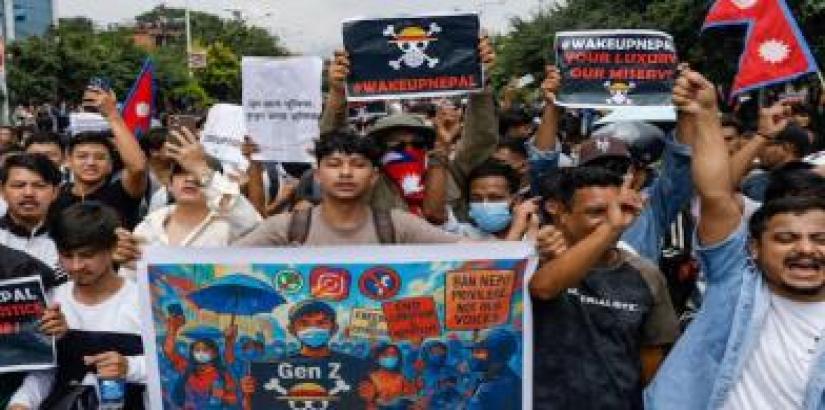
On March 5, 2026, nearly 19 million Nepalis will head to the polls to elect a new House of Representatives. This general election marks a critical juncture for the Himalayan republic, emerging from the turbulent aftermath of the September 2025 youth-led anti-corruption protests. The demonstrations, initially triggered by a social media ban, rapidly escalated into a nationwide movement against economic stagnation and systemic graft, eventually toppling the government.
Under the stewardship of an interim administration led by former Chief Justice Sushila Karki, Nepal is navigating a highly fragile transition. The upcoming ballot represents a fundamental test of its democratic resilience and a defining moment for South Asian regional politics.
Youth Participation, Electoral Challenges
A prominent feature of this election is the massive influx of youth participation. Approximately 800,000 first-time voters are preparing to cast their ballots, and over 1,000 candidates under the age of 40 are contesting, signaling a profound generational shift. The political landscape is witnessing fierce competition between established traditional parties and emerging youth-centric forces. A key contest is unfolding in the Jhapa 5 constituency, a traditional stronghold where 35-year-old former Kathmandu mayor Balendra "Balen" Shah, representing the Rastriya Swatantra Party (RSP), is challenging former Prime Minister KP Sharma Oli of the Communist Party of Nepal (UML). Alongside them, the Nepali Congress under 49-year-old Gagan Thapa and the Nepali Communist Party led by Prachanda remain formidable contenders. The urban vote, particularly the 15 seats in the Kathmandu Valley, will serve as a crucial barometer of the public mood.
Nepal’s 2015 constitution established a mixed electoral framework designed to ensure diverse societal inclusion. Out of the 275 parliamentary seats, 165 are decided through the First Past The Post (FPTP) system, while the remaining 110 are allocated via Proportional Representation (PR). The dual system makes an outright absolute majority difficult for any single party, meaning coalition-building will be essential to form a government. To expedite the democratic process, the Election Commission of Nepal has pledged to release the FPTP results within 24 hours of ballot collection, a significant acceleration from the two weeks required in 2022.
Despite the structural provisions for inclusion, profound challenges remain embedded within the political system. The Asian Network for Free Elections (ANFREL) recently published a pre-election assessment highlighting a stark reality - while political competition is expanding superficially, representation is still heavily constrained by entrenched gatekeepers. Centralized party nominations and the immense cost of campaigning disproportionately disadvantage young candidates, women, and marginalized groups. Political finance is a critical vulnerability. The wide gap between legal spending limits and actual campaign expenditures fuels a shadow economy of patronage, eroding the integrity of the contest. The absence of out-of-district and overseas voting effectively disenfranchises internal migrants and the large Nepali diaspora, exposing significant flaws in the realization of universal suffrage.
The rapid evolution of the digital information space introduces a severe risk to electoral integrity. Misinformation, hate speech, and AI-enabled manipulation are spreading faster than institutional oversight can manage. Online platforms have become decisive battlefields for shaping voter perceptions and driving polarization. The Election Commission’s establishment of the Information Integrity Promotion Centre is a necessary step to combat this threat. Its success will depend entirely on transparency, speed, and the ability to safeguard freedom of expression while simultaneously neutralizing digital coercion.
Election's Wider Implications
Beyond domestic governance, the 2026 election carries immense geopolitical weight. Nepal’s strategic location nestled between India and China transforms its internal politics into a theater for broader regional rivalry. India has historically wielded outsized influence in Kathmandu, yet its relationship with previous administrations, particularly under KP Sharma Oli, has been fraught. New Delhi views Oli’s active pursuit of closer ties with Beijing, including engagement with the Belt and Road Initiative (BRI), with deep strategic suspicion. China is closely monitoring the electoral outcome, heavily invested in ensuring the next government aligns with its strategic and economic interests. The United States is equally engaged, coordinating its strategic objectives closely with India to counterbalance Beijing's footprint in the Himalayas.
The outcome in Kathmandu will reverberate across the broader architecture of South Asian politics. A stable, accountable government in Nepal is a prerequisite for meaningful progress within regional forums like the South Asian Association for Regional Cooperation (SAARC) and the Bay of Bengal Initiative for Multi-Sectoral Technical and Economic Cooperation (BIMSTEC). For decades, political volatility in member states has hampered the efficacy of these institutions. A resilient administration in Nepal could serve as a vital catalyst for revitalizing stalled regional dialogues. Critical transnational challenges such as cross-border migration and border security require cohesive bilateral engagement. Nepal’s open border with India facilitates massive labor migration, demanding robust policy frameworks to protect migrant rights and regulate informal economies.
Equally pressing is the realm of environmental politics. The fragile Himalayan ecosystem, heavily impacted by climate change, requires urgent attention and sustainable development strategies. Glacial melt and changing weather patterns threaten water security across the entire subcontinent. A forward-looking government in Kathmandu must prioritize environmental diplomacy, working collaboratively with neighboring states to mitigate these shared ecological threats. A fractured or externally dependent government, conversely, would stall regional integration and complicate border management dynamics across South Asia.
Nepal stands at a crossroads. The electorate is tasked with choosing between the inertia of the old guard and the untested promises of a rising generation. Addressing the root causes of the 2025 protests—endemic corruption, unemployment, and social inequality—must be the absolute priority for whoever assumes power. For democracy to consolidate in Nepal, the electoral process must transcend mere procedural compliance. It requires the dismantling of financial barriers to political entry, robust defense against digital subversion, and a foreign policy that navigates great power competition without sacrificing national sovereignty. The millions of ballots cast on March 5 will shape the immediate future of the Nepali people and redefine the geopolitical contours of South Asia.
(The author is a research scholar in the Department of International Relations, Jahangirnagar University, Dhaka, Bangladesh. Views expressed are personal. He can be reached at md.saiful.stu2018@juniv.edu/ LinkedIn )





Post a Comment