

Pakistan Needs Integrated Maritime Strategy: Fragmentation Carries Strategic Costs
Pakistan’s maritime domain offers multiple avenues for economic and strategic expansion. However, these remain underdeveloped. Coastal tourism has potential but lacks infrastructure and regulation. Offshore energy, including wind and tidal sources, remains largely unexplored. Marine biotechnology is another emerging sector with minimal investment. These gaps reflect a broader issue: the absence of long-term strategic planning
 May 09, 2026
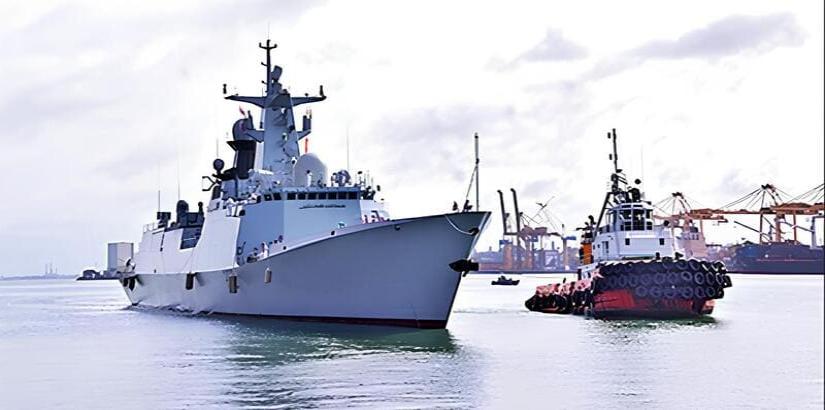
Pakistan’s coastline is not peripheral; it is strategic. Stretching over 1,000 km along the Arabian Sea, it connects critical sea lanes, energy corridors, and regional markets. In geopolitical terms, it represents both opportunity and vulnerability. Yet, it remains underutilized within Pakistan’s national strategy.
The global shift toward the blue economy reflects a broader transformation in how states conceptualize maritime power. It is no longer limited to naval strength. It includes economic resilience, resource management, and institutional capacity. For Pakistan, this presents a strategic opening. However, without coherent policy direction, it risks becoming another case of unrealized potential. The central question is not economic alone. It is strategic. Can Pakistan integrate its maritime domain into national power, or will fragmentation persist?
Blue Economy in Strategic Context
The blue economy extends beyond fisheries. It encompasses ports, shipping, offshore energy, tourism, and emerging sectors such as marine biotechnology. For modern states, it is a component of comprehensive national power.
Pakistan’s geographic position is significant. It sits near major sea lanes connecting the Middle East, Africa, and Asia. This provides natural strategic leverage. However, geography does not translate into influence without policy alignment. Maritime development in Pakistan remains fragmented. Institutions operate in silos. Policy responses are reactive rather than strategic.
Karachi serves as the primary trade hub, while Gwadar is projected as a future gateway. Yet, these assets are not embedded within a broader maritime doctrine. As a result, their strategic potential remains underdeveloped.
Fisheries and Resource Security
From a political economy perspective, fisheries are not merely a livelihood sector. They are a component of resource security. Coastal populations depend on them, and they contribute to national exports.
However, the sector is in decline. Overfishing, illegal trawling, and weak enforcement mechanisms have reduced fish stocks. This reflects a governance deficit rather than a resource shortage. The absence of effective regulatory frameworks undermines sustainability.
The impact is uneven. Small-scale fishermen face declining incomes, while larger actors exploit regulatory gaps. This creates both economic inequality and social instability. In strategic terms, neglecting coastal livelihoods can generate long-term governance challenges.
Marine ecosystem degradation further compounds the problem. Mangrove loss and pollution are not isolated environmental concerns. They directly affect economic output and resilience. Resource insecurity at sea translates into broader national vulnerabilities.
Ports, Connectivity, and Strategic Infrastructure
Pakistan’s port infrastructure represents a critical component of its maritime potential. Karachi Port and Port Qasim handle the majority of trade, while Gwadar is positioned as a strategic node in regional connectivity.
However, infrastructure without integration has limited impact. Ports must be connected to inland transport networks and industrial zones. Currently, this integration is incomplete. Gwadar, despite its strategic significance, faces connectivity and operational challenges.From a defence perspective, ports are dual-use assets. They support both economic activity and strategic mobility. Weak integration reduces both economic efficiency and strategic flexibility.
Shipping capacity presents another limitation. Pakistan’s reliance on foreign vessels reduces control over trade flows. Maritime autonomy requires a national shipping presence. Without it, economic dependence persists.
Governance and Institutional Fragmentation
The central constraint remains institutional. Maritime governance in Pakistan is dispersed across multiple entities. Federal ministries, provincial bodies, port authorities, and regulatory agencies operate with limited coordination.
This fragmentation undermines policy coherence. Overlapping mandates create inefficiencies. Accountability remains unclear. While policies exist, implementation is inconsistent.
From a political science perspective, this reflects a classic case of weak state coordination in a strategic sector. Effective maritime strategy requires centralized planning combined with decentralized execution. Pakistan’s current model lacks this balance.
The absence of reliable data further complicates decision-making. Policy without data becomes reactive. Monitoring and enforcement mechanisms remain underdeveloped. These are structural limitations that directly affect outcomes.
Climate Security and Coastal Vulnerability
Climate change introduces an additional layer of strategic risk. Rising sea levels, coastal erosion, and extreme weather events increase vulnerability along Pakistan’s coastline. Mangroves serve as natural defensive infrastructure. Their decline reduces coastal resilience. In security terms, this exposes both civilian populations and critical infrastructure.
Pakistan’s climate policy has focused largely on inland challenges such as water and agriculture. Coastal resilience remains underprioritized. This creates a strategic gap.
The intersection of climate change and maritime policy is critical. Weak coastal ecosystems increase disaster risks, economic losses, and potential displacement. These outcomes have direct implications for national stability.
Missed Strategic Opportunities
Pakistan’s maritime domain offers multiple avenues for economic and strategic expansion. However, these remain underdeveloped. Coastal tourism has potential but lacks infrastructure and regulation. Offshore energy, including wind and tidal sources, remains largely unexplored. Marine biotechnology is another emerging sector with minimal investment.
These gaps reflect a broader issue. The absence of long-term strategic planning limits diversification. States that effectively utilize maritime resources enhance both economic resilience and strategic autonomy. Pakistan has yet to fully pursue this path.
Domains Operate in Isolation
Maritime strategy is not confined to naval power. It integrates economic capability, environmental sustainability, and geopolitical positioning. The Arabian Sea is increasingly contested. Regional actors are expanding their presence. Sea lanes remain vital for global trade and energy flows. In this context, maritime neglect carries strategic costs.
Pakistan’s naval capabilities provide deterrence. However, deterrence alone is insufficient. A comprehensive maritime strategy must align defence, economic policy, and environmental management. Currently, these domains operate in isolation. This fragmentation reduces overall strategic effectiveness.
Policy Imperatives
Addressing these challenges requires structural reform. Pakistan needs an integrated maritime strategy that aligns economic and security objectives.
Fisheries management must be strengthened through effective regulation and enforcement. Coastal ecosystems must be protected to ensure long-term sustainability. Port development must be linked with national connectivity frameworks. Gwadar, in particular, must transition from symbolic significance to operational functionality.
Investment in national shipping capacity is essential for reducing external dependence. Environmental protection must be integrated into policy planning. Climate resilience should be treated as a security priority. Finally, institutional reform is critical. Clear roles, improved coordination, and data-driven policymaking are necessary for effective governance.
Policy Needed to Match Potential
Pakistan’s maritime domain represents both opportunity and constraint. The blue economy offers a pathway toward economic growth and strategic depth. However, current policy failures limit its realization.The issue is not resource scarcity. It is institutional capacity and strategic vision. Without reform, the risks of economic stagnation and environmental degradation will increase.
In political science terms, this reflects the broader challenge of aligning state capacity with strategic objectives. For Pakistan, the coastline is not merely geographic space. It is a test of governance and strategic coherence. The outcome will depend on whether policy evolves to match potential.
References
Ahmed, Q., & Mustafa, U. (2022). Blue economy of Pakistan: Challenges and opportunities. Pakistan Institute of Development Economics (PIDE), Islamabad.
Baloch, M. A., & Tanik, A. (2018). Development of marine fisheries sector in Pakistan: Constraints and opportunities. Ocean & Coastal Management, 152, 125–132.
Government of Pakistan. (2019). Pakistan National Maritime Policy. Ministry of Maritime Affairs, Islamabad.
Government of Pakistan. (2021). Pakistan Climate Change Policy (Updated). Ministry of Climate Change, Islamabad.
Hasan, Z., & Raza, S. (2020). Maritime security and governance challenges in Pakistan. National Defence University Journal, 34(2), 45–60.
Islam, M. S., & Wahab, M. A. (2005). A review on the present status and management of mangrove wetland habitat resources in Bangladesh with emphasis on mangrove fisheries and aquaculture. Hydrobiologia, 542, 165–190. (useful for comparative coastal policy framing)
Khan, M. A., & Amjad, S. (2019). Coastal zone management in Pakistan: Issues and challenges. Journal of Coastal Conservation, 23(2), 321–330.
Ministry of Maritime Affairs. (2020). Pakistan Blue Economy Policy Framework (Draft). Government of Pakistan.
Qureshi, T. M., & Nabi, G. (2021). Climate change and coastal vulnerability in Pakistan. Environmental Science and Policy Review, 14(3), 67–79.
United Nations Development Programme (UNDP). (2020). Blue economy and sustainable development in South Asia.
World Bank. (2019). Pakistan: Blue economy potential and coastal development challenges.
World Wide Fund for Nature (WWF-Pakistan). (2021). State of Pakistan’s coastal and marine ecosystems.
(The author is a policy analyst based in Islamabad. Views expressed are personal. He can be reached at masoodtariqqq@gmail.com. )





Post a Comment