Pakistan's Foreign Minister Shah Mahmood Qureshi said on Wednesday that the recent conflict between China and India was triggered by the latter's "illegal constructions" in Ladakh, Radio Pakistan reported
India’s rise coincides with China’s structural slowdown, reshaping Asia’s strategic landscape. For Malaysia, the choice is not between India and others—but between preparing early for India’s ascent or adjusting late. Prime Minister Modi’s visit represents a strategic inflection point. Deepening ties in defence, technology, semiconductors, energy, food security, education, and culture is not merely prudent—it is foundational to Malaysia’s long-term prosperity, security, and strategic autonomy.
But in NSS 2025 the specific reference to the “Quad” appears less central as compared to its 2022 prominence. The document emphasized the allies assuming primary responsibility for their own region even as it identified the Indo-Pacific as a key economic and geopolitical battleground. It reiterates that alliances and strengthening partnerships “will be the bedrock of security and prosperity long into the future”
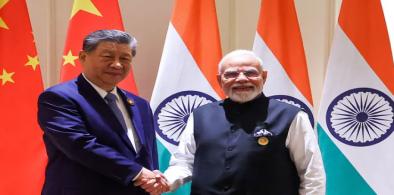
It’s heartening to see that China has resumed the pilgrimage of Indian pilgrims to the sacred Mount Kailash and Lake Manasarovar in Southwest China’s Xizang Autonomous Region this year after a five-year break, and India has restarted the issuance of tourist visas to Chinese citizens suspended since 2020. Recently, several direct flights between the two countries have been restored. This development is expected to strengthen exchanges in people-to-people fields, as well as in trade, culture, and other areas.
Despite China's might and backing, Gyeltsen Norbu has lacked legitimacy and following among Tibetans and Tibetan Buddhists elsewhere, and many suspect the 15th Dalai Lama appointed by Beijing will suffer the same fate. The Dalai Lama has emphasised that China must reach a resolution on the Tibetan question during his lifetime, and many fear that without his moral authority, no solution will have widespread acceptance among the Tibetan people.
Pakistan's Foreign Minister Shah Mahmood Qureshi said on Wednesday that the recent conflict between China and India was triggered by the latter's "illegal constructions" in Ladakh, Radio Pakistan reported
Hu Wei, Chargé d’affaires of the Chinese Embassy in Sri Lanka has said that at a time Sri Lanka is faced with two “arduous tasks” of combating the COVID-19 epidemic and reviving the economy, Chinese banks and other enterprises are providing strong support for the country’s economic recovery via financial, investment and other channels
China feels that India is also acting against it; hence, it is creating troubles for India. Before the protest from Nepal, it instigated Pakistan, writes Jai Kumar Verma for South Asia Monitor
Indian Prime Minister Narendra Modi held a meeting with the country's top defence and foreign affairs officials and the National Security Advisor (NSA) over the prevailing tense situation at the Line of Actual Control (LAC) with China. NSA Ajit Doval and the Chief of Defence Staff, General Bipin Rawat, were part of the meeting. During the meeting, Modi wanted to know how to end the standoff and resolve the issue
The only India-China conflict that remains etched in our collective memory is the 1962 war, which India tragically lost. But five years later, in 1967, India and China faced off once again in the heights of Cho La and Nathu La at the Sikkim border. This time, overcoming the odds, India triumphed
Indian Army and China's People's Liberation Army held several meetings to resolve the face-off in eastern Ladakh at Line of Actual Control, however no breakthrough has taken place till Monday, sources said
No invitation to Taiwan for the WHA meeting was a foregone conclusion with DG WHO loyal to Beijing. The probe into the origin of COVID-19 may peter out with China having destroyed the evidence in Wuhan, writes Lt Gen P. C. Katoch (retd) for South Asia Monitor
Outraged by the subtle support that the ruling BJP extended to the democratically elected government of Taiwan, the Chinese Communist Party (CCP) regime has asked India to "refrain from such acts."
Increased tension between China and India along the Line of Actual Control (LAC) has forced both the countries' militaries to increase deployment of men in thousands and assets at forward locations within their respective territories
The melodramatic act performed by Ceylon’s (now Sri Lanka) third prime minister Sir John Lionel Kotelawala had simply upset the apple cart of the Bandung conference and India’s first prime minister Jawaharlal Nehru’s motive of introducing Chou En-Lai to the decolonized states, write Punsara Amarasinghe & Eshan Jayawardane
Pakistan's foreign ministry has said that the China-Pakistan Economic Corridor (CPEC) is a transformational project contributing positively and transparently to the country's national development
The Indian government has denied China's claims that India is carrying out any activity in violation of the Line of Actual Control in Ladakh and Sikkim
The Chinese Embassy in Islamabad termed the speech of US Principal Deputy Assistant Secretary of State for South and Central Asia Alice Wells totally baseless and attempt to defame Sino-Pak relations and the China Pakistan Economic Corridor (CPEC)
MP for Maradhoo Ibrahim Shareef has called on the government to obtain loans from China to repair the damage caused to the economy of the country and the financials of the state due to COVID-19
Action against China can be on the economic front and/or military front. Action on the economic front primarily means to stop all imports from China to the extent possible, writes Vinod Aggarwal for South Asia Monitor