India and China have started the process of de-escalation at the Line of Actual Control with the withdrawal of troops, guns and combat vehicles from three standoff positions in eastern Ladakh, sources said on Tuesday


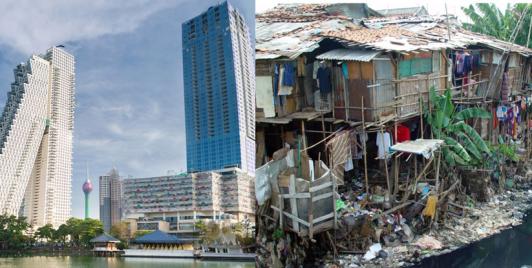
In 2025, Sri Lanka was ranked as the second most expensive housing market in the world based on rentals compared to average income. It is possible that market distortions caused by black economy and corruption have contributed to this.
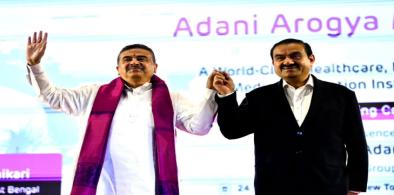
The larger opportunity before West Bengal is therefore not another round of infrastructure creation in isolation. It is the creation of an ecosystem in which infrastructure, private capital, local enterprise and skilled labour reinforce one another.
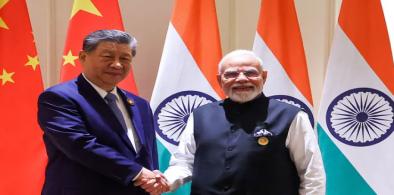
Why not begin by reopening serious discussions with Chinese conglomerate BYD about an Indian factory? BYD is now one of the world’s dominant EV manufacturers. Its Indian ambitions were caught in the post-Galwan investment freeze. Invite it back to the table—but on Indian terms
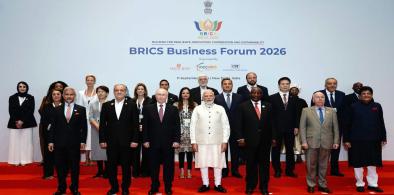
But the choice test applies to India as much as to the countries it hopes will follow its lead. If BRICS genuinely widens India's menu of markets, technology partners and financing sources without deepening its dependence on any one of them, it becomes a credible model for the rest of the Global South.

India and China have started the process of de-escalation at the Line of Actual Control with the withdrawal of troops, guns and combat vehicles from three standoff positions in eastern Ladakh, sources said on Tuesday

China has agreed to defer repayment period of the loans obtained by the Maldives from China. China has granted loan deferment eases to 77 countries, including Maldives, in response to the COVID-19 pandemic

India and China have reached a consensus not to escalate the situation further , and maintain peace and stability along the border together, China's Foreign Ministry spokesperson Hua Chunying said

A 10-member Chinese medical team with expertise in treating Covid-19 patients reached Dhaka today

China is running full-blown propaganda on its high-altitude war preparations, threatening India as troops of both sides remain locked in a face-off along the Line of Actual Control (LAC) in eastern Ladakh

In my assessment, the present PLA intrusions are obviously with the approval of C-in-C and President Xi Jinping, China's supreme leader, writes Lt Gen P. C. Katoch (Retd) for South Asia Monitor

Pakistan Railways’ Mainline-I Project – the lone strategic project of the China Pakistan Economic Corridor (CPEC) – cleared its first hurdle on Saturday when the government approved it at a cost of $7.2 billion, setting the stage for negotiations with China and International Monetary Fund (IMF)

India and China military top brass began talks on Saturday to resolve the stand-off situation in Eastern Ladakh region and de-escalation of forces across the Line of Actual Control
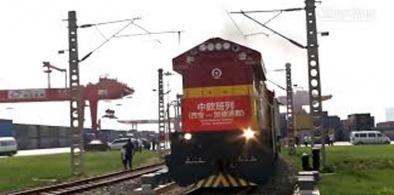
A new avenue to access transnational markets has opened up for Nepal as freight trains have begun departing from China on a weekly basis with goods destined for Nepal, in an initiative that is said to be the first of its kind in South Asia

The Chargé d’affaires of the Chinese Embassy in Sri Lanka, Hu Wei, met with Sri Lanka’s Minister of Higher Education and government spokesman Bandula Gunawardena Wednesday and donated masks to the Ministry of Higher Education for the universities, vocational training institutes and other higher education institutions
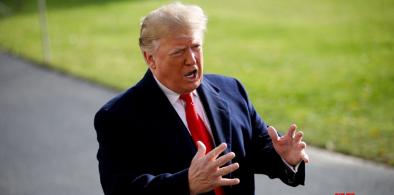
China has backed down on a ban on flights of US airlines after President Donald Trump's administration retaliated by threatening to block carriers from that country flying into the US

A team of Chinese medical experts, who have the first-hand experience in containing coronavirus and treating patients with success, is expected to arrive in Bangladesh with necessary medical equipment on June 8

China has made a slight retreat at Galwan Valley, one of the flashpoints leading to a standoff with India, in Ladakh region on Wednesday, sources said. In a bid to resolve the issue, China's People's Liberation Army moved back two kilometres and the Indian Army has moved back by one kilometre
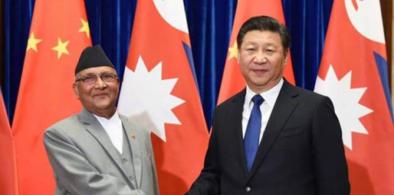
Nepal has endorsed China's new national security law for Hong Kong even as the Western block led by the US have jointly called Beijing's move a direct violation of international treaties
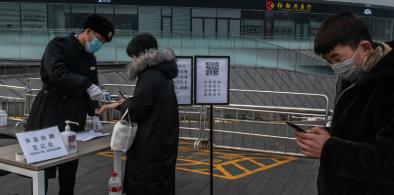
Chinese President Xi Jinping is a troubled man who appears to be going berserk with mounting external and internal challenges