The Indian military views no disengagement in Arunachal Pradesh as part of a wider strategic recalibration, prompting India to match Chinese force rebalancing by shifting strike corps and resources equally across both northern and eastern fronts.



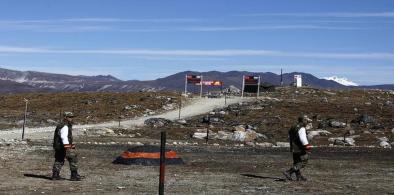
The Indian military views no disengagement in Arunachal Pradesh as part of a wider strategic recalibration, prompting India to match Chinese force rebalancing by shifting strike corps and resources equally across both northern and eastern fronts.
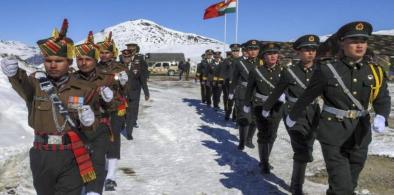
Hopes for Sino-Indian relations centre on a cautious diplomatic thaw, institutionalised border stability and renewed high-level engagement. Indian negotiators and defence planners are well aware that “trust must be verified”. While the activation of these eight points provides valuable channels to prevent an accidental kinetic clash on the…
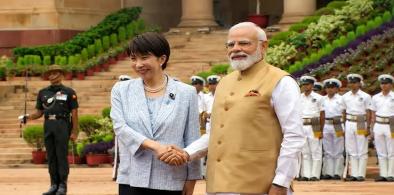
Amid concerns regarding U.S. reliability on trade and defence commitments under the current White House, both India and Japan are leaning on each other to build supply chain and economic resilience—acting as a pragmatic "middle power" buffer rather than purely relying on Washington.
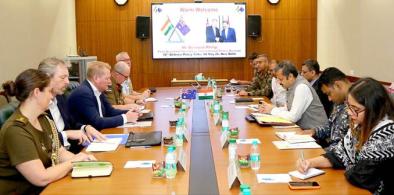
A significant factor that emerged after India launched Operation Sindoor against Pakistan in May 2025 was the strain in the India-US relationship under the Trump administration, driven by aggressive tariff disputes and policy friction. This indirectly accelerated India’s push to diversify partnerships, prompting New Delhi to lean more…

The strategic significance of the offensive lies in control over Kachin State’s heavy rare-earth deposits, which account for roughly half of the world’s supply and are critical for electric vehicles and wind turbines. The KIA took control of these lucrative mining areas near Pangwa and Chipwi in late 2024 and has since heavily fortified its…
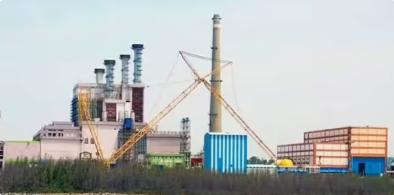
India maintains a separation between civilian and military nuclear programmes and remains outside the Nuclear Non-Proliferation Treaty (NPT). Consequently, the PFBR is not under International Atomic Energy Agency (IAEA) safeguards.
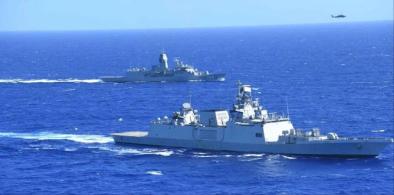
India is managing intense US pressure about its involvement in the Chabahar port, with Washington providing only a six-month sanctions waiver set to expire in April 2026. While India has officially stated that exiting the project is "not an option" due to strategic interests in connecting with Afghanistan and Central Asia, it is actively…
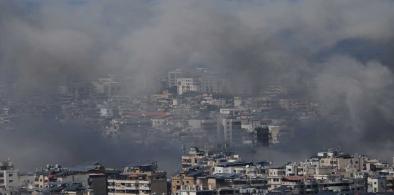
The first 15 days of the conflict have demonstrated that Iran is far from a pushover. While the United States and Israel dominate in technological sophistication and overall military strength, Iran’s resilience, indigenous capabilities, and asymmetric strategies have prevented a quick or decisive victory. What was perhaps expected to be a short…
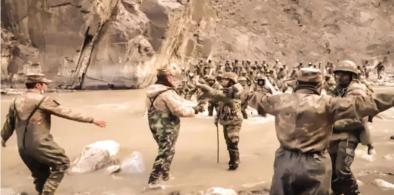
Officially, India maintained that no territory was lost. Strategically, however, many analysts described the situation as a shift in the status quo—an altered operational environment in which access, patrolling patterns and tactical depth were recalibrated.

Breaking from the tradition of only marching columns, the Indian Army showcased a "phased battle array" for the first time, mirroring real combat-zone deployment. This included a sequence of new military, technological, and specialized units, highlighting the country's defence self-reliance and modernization.