Experts have even called for Japan to deepen bilateral security cooperation with India, Britain and France, countries that have shown a new resoluteness towards Chinese actions in the Indo-Pacific.



But the choice test applies to India as much as to the countries it hopes will follow its lead. If BRICS genuinely widens India's menu of markets, technology partners and financing sources without deepening its dependence on any one of them, it becomes a credible model for the rest of the Global South.
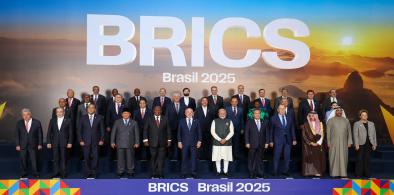
India’s stand for a dollar-based system is not a rejection of BRICS alignment or unity, but it is a determined choice to act in favour of self-interest like any other founding member. The key difference is India’s position has been the most transparent of all founding members rather than standing behind the collective rhetoric.

The evidence indicates that the increase in state borrowing over the past decade is best understood as the outcome of a changing fiscal federal system rather than simply an expansion of welfare politics.

For India, delays in its strategic projects are not merely bureaucratic setbacks but a matter of national security. Colombo’s motives remain opaque, but for New Delhi, a presence in Sri Lanka’s North and East is non-negotiable.
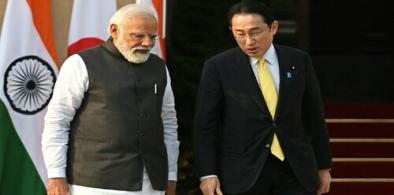
Experts have even called for Japan to deepen bilateral security cooperation with India, Britain and France, countries that have shown a new resoluteness towards Chinese actions in the Indo-Pacific.
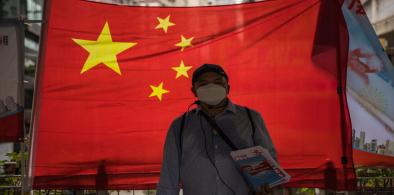
No country comes close to China’s sophisticated influence-seeking tools and the way it leverages its soft power. The relentless pursuit by Chinese propagandists, out to stake their claim on the global information order, are challenges that the independent global information order needs to meet.
The launching of supply chain resilience in the Indo-Pacific region is another attribute of the rising interest in India. India’s strong leadership in the region evokes new opportunities to reap benefits from its low-cost hub, laden with high IT technology.

Colonna tweeted in French that it was the “launch of a new trilateral format in the #Indo-Pacific zone with India and the Emirates“ with “a common ambition to move forward in 4 areas: #security and #defence, #Climate, #Technologies and people(-to-people) exchanges”.
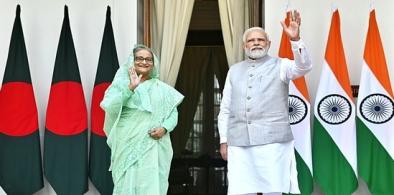
Professor Thussu says, ”Although New Delhi remains a traditional friend of Dhaka, the growing presence of China in Bangladesh and elsewhere in South Asia, makes it difficult for Hasina to prioritize India over China: the scale and depth of Chinese investment, aid etc. can’t be matched by India.”
In this regard, both ASEAN and Malaysia seem to have lost their appeal to the West for a deeper security foothold, with Washington realising that the current situation of the region's pandering to Beijing makes it difficult for the US to establish rooted military alliances and placement of strategic anti-missile capacities, among others

Not surprisingly, India has not come out with any condemnation of China for its atrocities in Xinjiang, a classic example of India in recent times trying to steer clear of global contestations
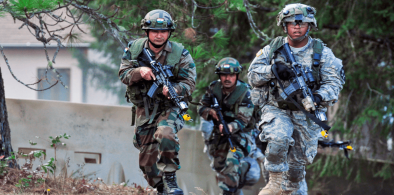
It will be for the first time that the Pentagon is getting involved in a high-altitude exercise with Indian troops, a fact that will not go unnoticed in Beijing. Is staging these combat drills so close to the disputed region indicative of a strategic shift on the part of New Delhi?
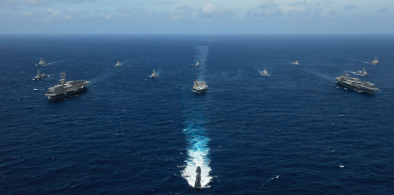
A new, long and potentially ugly physical and mind games have begun, where conventional and tactical firepower alone would not guarantee long term success and acceptance
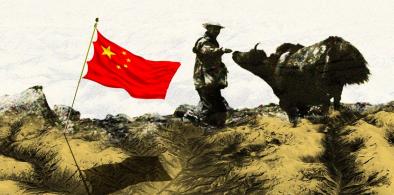
With no diplomatic ties with Bhutan, prevailing border tensions with India and a changing geo-strategic sphere in Nepal, China's Himalayan neighbourhood security is critically tied to safeguarding Tibet

Ever since Sri Lanka leased Hambantota port to China, both India and the US have flagged their concerns that this may eventually lead to it becoming a hub for the PLA Navy in the Indian Ocean
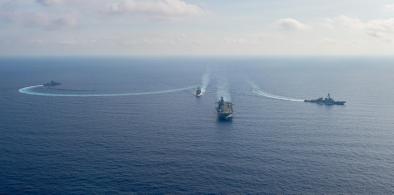
Both Sri Lanka and Bangladesh remain crucial in the eyes of New Delhi and Washington in denying further incursions by Beijing, underscored by the scramble for reassertion of American influence and ties with both nations
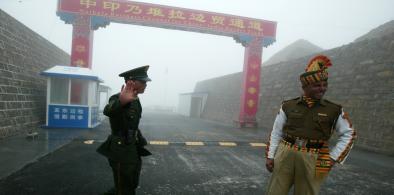
One particular observation that gets highlighted, although not explicitly stated as such by the author, is the huge clout and influence wielded by some key diplomats and political advisers who seem to have literally hijacked the formulation of policy and response to this, complex relationship during the Nehru years
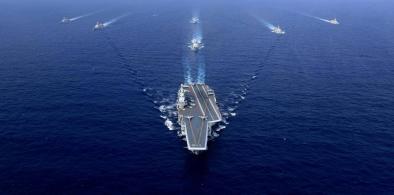
Beijing should be wise enough in realizing the dangerous impact of its using pugnacious responses to Pelosi’s visit that can risk greater backfiring from its strategic adversaries in the future
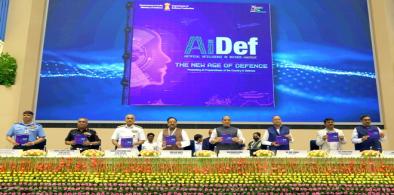
In view of China’s build-up all along the Line of Actual Control (LAC) till Arunachal Pradesh, it is just as well that India is pursuing efforts to equip its armed forces with AI-backed systems