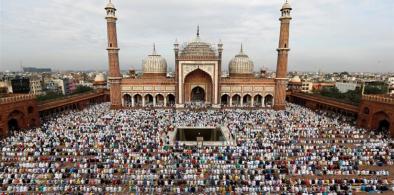
The BJP may have also harmed itself by its poisonous communalism which cannot but have put off some of the party’s own sensible supporters, not to mention the Left-Liberals, writes Amulya Ganguli for South Asia Monitor
More importantly, the alleged sabotage occurred during a period of political transition following the developments of August 2024. Institutional loyalties, political rivalries, and competing networks of influence continue to shape Bangladesh's political landscape. In such a context, any breach involving the Prime Minister's secure communications infrastructure deserves careful examination.
India's MSME sector, the backbone of its export economy, remains largely unequipped to navigate European standards and certification requirements. As ABC Live noted, the next stage will be tougher than negotiation: India must now prove that its exporters, MSMEs, regulators, ports, testing labs, and state governments can actually use the agreement. A framework signed in Gothenburg means nothing to a textile exporter in Tiruppur who cannot get a product certified to EU standards.
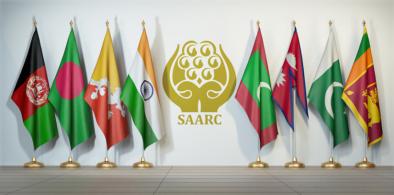
The central lesson is simple: unresolved India-Pakistan hostility weakens South Asia from within. It prevents trade, blocks institutions, raises nuclear risk, politicizes water, militarizes borders, and diverts attention from human development. Both countries will continue to disagree on major issues. But disagreement does not require permanent hostility. Strategic maturity means building rules to manage conflict before conflict manages the region.
The Quad's Critical Minerals Initiative provides an important platform for achieving these objectives. Through coordinated investments, technology sharing and supply-chain diversification, the initiative seeks to create resilient and transparent mineral supply networks. Australia contributes abundant mineral reserves, Japan offers advanced processing technologies, the United States brings investment and innovation capabilities, while India provides a rapidly expanding market and growing manufacturing base.
The BJP may have also harmed itself by its poisonous communalism which cannot but have put off some of the party’s own sensible supporters, not to mention the Left-Liberals, writes Amulya Ganguli for South Asia Monitor
The US pullout from Iraq, which will be perceived as withdrawal under pressure, will have a fallout in Afghanistan, writes Lt Gen PC Katoch (retd) for South Asia Monitor
In a country like Pakistan, where freedom of expression is strictly curtailed, guaranteeing that everything is in line with an openly orthodox and conservative interpretation of religion will only multiply the problem, writes Sanchita Bhattacharya for South Asia Monitor

How Ehsan could escape high-security detention and how he could reach Turkey, along with his family, remains a mystery that Islamabad is unable or unwilling to answer, writes Mahendra Ved for South Asia Monitor

If the Muslims were indeed considered equal citizens of a secular India, why would government ministers speak so disparagingly, and even scornfully, of anti-CAA protesters who are mainly burqa and hijab-clad women - ranging in ages from the twenties to the eighties - most of whom are out for the first time in the streets, writes Tarun Basu for South Asia Monitor

What is required to be done is that all enforcement agencies, like ED, CBI and, at the state level, the police, should be completely insulated from political masters, writes Vinod Aggarwal for South Asia Monitor

Increasing Islamic radicalisation and the influence of Pakistan and China in the island nation may be troublesome and India must adopt necessary measures to counter their influence at the earliest, writes Jai Kumar Verma for South Asia Monitor

The enhanced allocation of resources serves as a signal to both Iran and Afghanistan that India is ready to walk the talk and hasten the completion of the project, especially at a time when the almost complete Gwadar port in Pakistan received its first container shipment, in mid-January, writes Nilova Roy Chaudhury for South Asia Monitor
The US-India relationship has a number of contentious issues, trade being the most important of them, writes Pranay Kumar Shome for South Asia Monitor
The MCC, which has approved 37 compacts for 29 countries since its inception in 2004, could extend a claim on products originating or produced from Nepal, which would unfortunately lose its sovereign rights over certain products which have their origin in Nepal, write Jivesh Jha and Nil Prasad Paneru for South Asia Monitor
The success of Modi’s populist campaigns in 2014 and 2019 Lok Sabha elections, followed by the majoritarian mobilizations and lurking use of repression, pose a serious threat to liberal democracy in India, writes L T Om Prakash for South Asia Monitor
With Delhi assembly elections set for February 8, the battle lines are sharply drawn between two pitting ideologies that have polarised national discourse like at no time before, writes Tarun Basu for South Asia Monitor
The re-emergence of IS would have a definite impact on the Af-Pak region, with its consequential fallout for India and regional peace and stability in South Asia, writes Brig Anil Gupta (retd) for South Asia Monitor
What makes the Shaheen Bagh rare in the history of Indian civil society movements is that this is the first-time Muslim women are leading a protest against a law passed by the state, writes Alakh Ranjan for South Asia Monitor
It is widely believed that India’s decision on CAA would ‘question the principle of equality before the law’ and emotionally impact the Muslim community of both India and its neighbouring countries, writes Sukanya Bali for South Asia Monitor