China, Russia and the US, however, give little value to international laws. They accept them only if they suit their own interests. They reject them if they conflict with their interests.
Ultimately, sustainable peace between India and Pakistan cannot be built merely through meetings or declarations. It requires a fundamental transformation in Pakistan's approach towards terrorism, regional stability and bilateral relations. Until that happens, comprehensive dialogue is unlikely to produce meaningful outcomes.
When a Chinese company won the contract to establish hybrid wind and solar energy projects on three islands off the northern Jaffna peninsula—just 45 km from Rameswaram in Tamil Nadu—the security implications extended far beyond economics. Against this backdrop, India’s concerns are entirely justifiable. Sri Lanka faces a pressing question: how will the nation confront the infiltration of Chinese global criminal networks? Since Mahinda Rajapaksa’s tenure, Chinese presence in Colombo has steadily increased, with Sri Lanka positioned as a partner state in Beijing’s Belt and Road Initiative.
The growing role of middle powers adds another layer of complexity. Yet the term itself remains imprecise. Not every country outside the United States and China qualifies as a middle power, and many reject the label altogether. India, for example, increasingly sees itself as a leading power pursuing strategic autonomy rather than as a middle power seeking alignment with one bloc or another.
If India and Japan genuinely envision Northeast India as the gateway connecting South Asia with the Bay of Bengal and the Indo-Pacific, then the next chapter of the partnership cannot remain confined to New Delhi and Tokyo. It must also be written in Guwahati, Shillong, Aizawl, Imphal, Agartala, Kohima, Gangtok and Itanagar
China, Russia and the US, however, give little value to international laws. They accept them only if they suit their own interests. They reject them if they conflict with their interests.
India and China have long been strategic rivals in South Asia. China's significant economic footprint in Sri Lanka, through investments in infrastructure projects like the Hambantota Port and the Colombo Port City, has raised concerns in New Delhi about Beijing’s growing influence. The debt deal, involving China, adds another layer to this complex relationship.
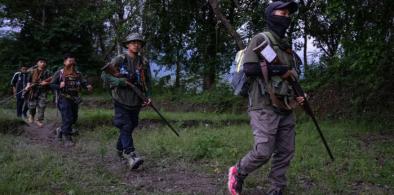
The AA’s control over large swathes of territory in Rakhine State, including strategic border areas, increases the risk of arms smuggling, human trafficking, and other illicit activities. Bangladesh's geography puts it at the heart of three major Asian drug trade routes - the Golden Wedge, the Golden Triangle and the Golden Crescent. This makes the country a lucrative transit for the region's drugs, especially from Myanmar and India, undermining Bangladesh’s internal security.
The arrest of four Sri Lanka nationals last month in Ahmedabad, India by Gujarat's Anti-Terrorism Squad caught the attention of Sri Lankan authorities. During interrogation, the four admitted to being closely involved with the banned NTJ and confessed they joined IS through Pakistani handler Abu Bakr Al Baghdadi.
Nearly 20 years Modi’s junior, Gandhi now has the opportunity to directly counterbalance a prime minister who for ten years since 2014 lorded over legislative actions because no opposition party had managed to win the required 10 per cent of the 543 parliamentary seats.
The judiciary in Pakistan is at a crossroads. The current trend, characterised by politicisation and inefficiency, jeopardises the basic foundations of justice and the rule of law.
The Act does not sufficiently address the root causes of paper leaks, such as systemic corruption and the involvement of organized networks. Without tackling these underlying issues, the Act risks becoming a reactive tool rather than a proactive solution.
If the world is not to waste this opportunity to declare an all-out war on the looming climate crisis, climate negotiators need to ‘huddle together’ with urgency to save ourselves from the scorching temperatures, devastating wildfires, deadly floods and other climate extremes of the future.
Despite Pakistan’s repeated deniability of its proxy wars it conducts against India, it is a known fact that the State’s idea of counter terrorism is to selectively crack down on some terror outfits while overlooking the actions of the ones it nurtures and aligns with on similar strategic objectives. In an effort to mollify its "iron brother" China, Pakistan has carried out heavy-handed operations against its citizens who are not supportive of China and its growing presence in Pakistani affairs.
It would be helpful to understand the context and background behind support to the Khalistanis by five western governments that particularly stand out i.e. the US, Canada, the UK, Germany, and Australia.
The inclusion of merchants with evident vested interests in the EAC exemplifies the ethical quandary at the heart of Pakistan's economic administration. Their close financial links to the industries they are supposed to supervise and advise on are a typical example of putting the fox in charge of the henhouse.
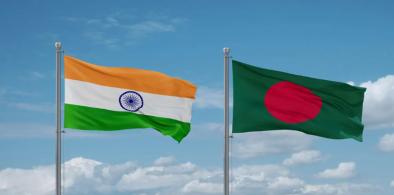
India may in principle approve the supply of electricity from Bhutan to Bangladesh using its power grid. Bangladesh will seek smooth supply of essentials like wheat, sugar and onions from India.
As the situation in Rakhine state remains severe, with recurrent clashes between the Arakan Army and the Tatmadaw providing no apparent resolution, sustaining the lives of over 1.3 million Rohingya is a massive challenge for Bangladesh.
By combining Bangladesh's strong readymade garment industry with the Netherlands’ circular economy knowledge, one can create a win-win situation.
A temporary lull in militancy in Jammu and Kashmir a few months back was followed by spikes in killings with a sudden spurt last week as the ISI and the terror masterminds in Pakistan had been intending to thwart any attempts at peacemaking. They wanted to dispel any myth that the J&K situation had been resolved in favor of India.