Over the past two months, a series of alleged push-in incidents along the Bangladesh-India border has reportedly left scores of people stranded in zero-line and no-man's-land areas under difficult conditions.


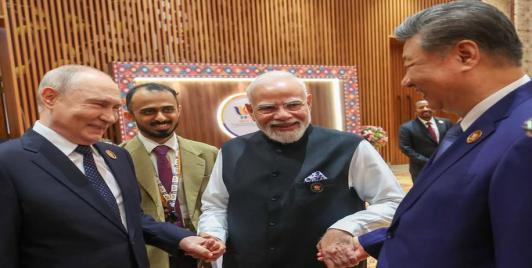
The timing of the EU announcement coincided with the BRICS+ Summit in New Delhi, creating speculation about whether the EU was seeking to reinforce its strategic engagement with India amid the growing influence of the BRICS grouping.
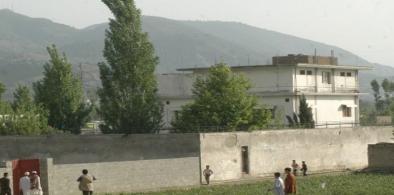
Abbottabad itself is symbolic. Just 30 miles north of Islamabad, along the historic Karakoram Highway, it is home to Pakistan’s premier military academy. For bin Laden to live there undetected is not simply a mystery—it is a reminder of the uncomfortable realities of counterterrorism

Amid strategic challenges from Beijing in Bangladesh, New Delhi cannot separate border management with foreign policy. New Delhi should hold high-level dialogue with Dhaka and develop a cooperative roadmap to facilitate the identification and repatriation of undocumented migrants from India.

The visit therefore should not be viewed simply as another bilateral defence engagement. It represents an attempt by New Delhi to institutionalise India's security relationship with Sri Lanka, while simultaneously reassuring Colombo that India's expanding security interests need not threaten Sri Lankan sovereignty.
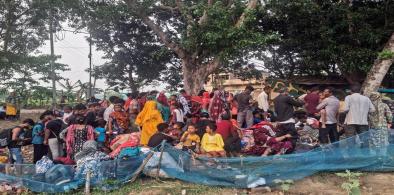
Over the past two months, a series of alleged push-in incidents along the Bangladesh-India border has reportedly left scores of people stranded in zero-line and no-man's-land areas under difficult conditions.
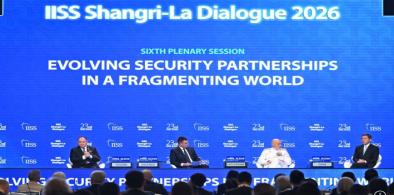
The central message at the Shangri-La Dialogue is that America is staying, but on new terms. It will remain the core military balancer in the Indo-Pacific, but it expects allies and partners to become serious contributors. The era of strategic free-riding is ending. The new Indo-Pacific order will increasingly be defined by those willing and able to share the burden of preserving it.
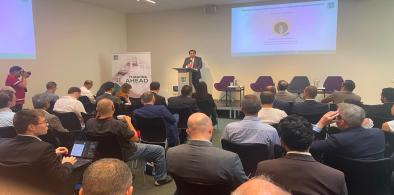
The CEPS conference shows Pakistan is shifting the Indus issue from technical water management to geopolitical norm contest. That’s the key transition. Once a river dispute enters Brussels policy networks, international arbitration, climate diplomacy, and security discourse it becomes much harder to keep it bilateral. And that is likely Pakistan’s main strategic objective.
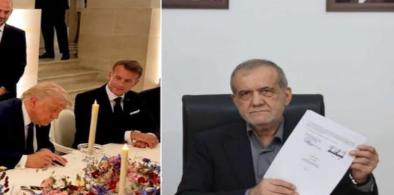
The Islamabad Memorandum has bought time. But time is not neutral. It can be used to construct a more durable settlement, or by spoilers in Washington, Tehran and Tel Aviv to rebuild the case for war. The ceasefire will endure only if the difficult questions postponed in Islamabad are answered before those who opposed the truce succeed in answering them on the battlefield.
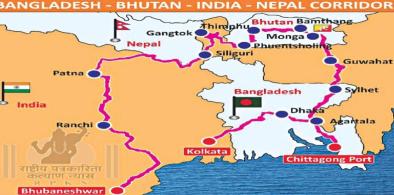
A big development happened in 2025. Nepal started exporting electricity to Bangladesh through India's transmission network. This was the first time Nepalese hydropower was commercially transmitted to Bangladesh via Indian territory. The initial export volume was 40 megawatts. The significance of the agreement is much bigger. It showed that regional energy cooperation can overcome political barriers.
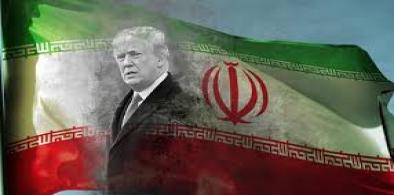
India's rise as a major global power will depend not on the promises of allies or the intentions of adversaries but on its capacity to build economic strength, military capability, technological innovation, and strategic resilience. Partnerships will remain important. Cooperation will remain valuable. Engagement with the United States and other powers will continue to serve Indian interests. But the foundation of India's security cannot rest in Washington, Moscow, Beijing, or any other foreign capital.

However, evolving regional dynamics, particularly China’s expansion and Pakistan’s tactical nuclear developments, continue to test the durability and interpretation of this doctrine. While India has officially reiterated its commitment to No First Use, debates persist within strategic circles about its future applicability under extreme scenarios.
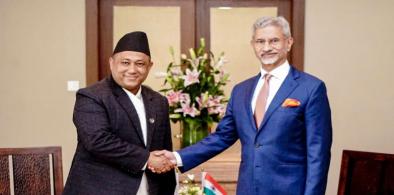
The significance of Shisir Khanal’s visit therefore lies not only in the agreements reached but in the broader message it conveyed. Both Kathmandu and New Delhi are signalling a willingness to move beyond the grievances and suspicions that have periodically defined their interactions. If the emphasis on development diplomacy, economic integration, and pragmatic cooperation is sustained, the current moment could indeed mark the beginning of a new chapter in India–Nepal relations.
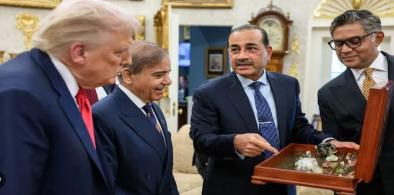
This is also the terrain through which the US 62 billion China-Pakistan Economic Corridor (CPEC) traverses, facing security threats from north to south, losing men and material in attacks by militants. That being the case, the US entry brings in another global player, ready to guard its interests against China’s looming presence. Is the South Asian region headed for a proxy war?
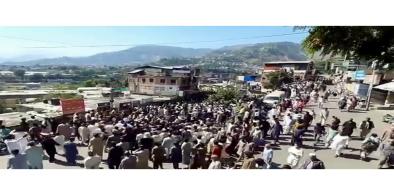
This contradiction—peace abroad, repression at home—defines Pakistan’s current posture. While Islamabad seeks international recognition as a mediator, its domestic record is marred by bloodshed and denial of democracy. The JAAC movement, rooted in basic economic grievances, has become a symbol of resistance against this hypocrisy.
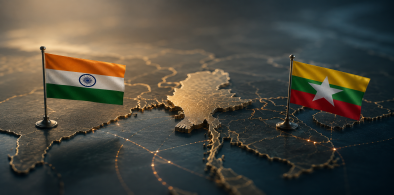
The strategic significance of the offensive lies in control over Kachin State’s heavy rare-earth deposits, which account for roughly half of the world’s supply and are critical for electric vehicles and wind turbines. The KIA took control of these lucrative mining areas near Pangwa and Chipwi in late 2024 and has since heavily fortified its positions.
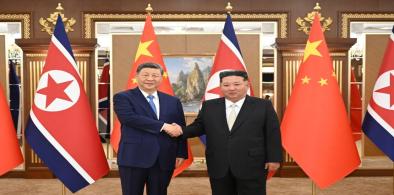
China in recent times has elevated some of its key bilateral relations, Vietnam, Pakistan, North Korea, to the level where they are now considered by Beijing as consequential to regional and global peace and stability. China’s foreign and 'grand strategy' is aimed at realizing a shared destiny for mankind and nurturing a new type of great-power relations within a multipolar world. This requires a strategic alignment between China’s strategy and others.
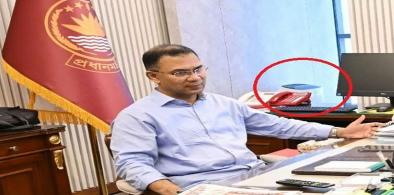
More importantly, the alleged sabotage occurred during a period of political transition following the developments of August 2024. Institutional loyalties, political rivalries, and competing networks of influence continue to shape Bangladesh's political landscape. In such a context, any breach involving the Prime Minister's secure communications infrastructure deserves careful examination.
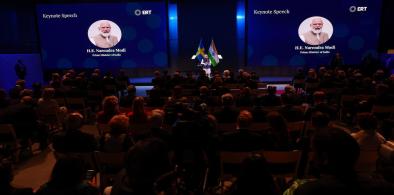
India's MSME sector, the backbone of its export economy, remains largely unequipped to navigate European standards and certification requirements. As ABC Live noted, the next stage will be tougher than negotiation: India must now prove that its exporters, MSMEs, regulators, ports, testing labs, and state governments can actually use the agreement. A framework signed in Gothenburg means nothing to a textile exporter in Tiruppur who cannot get a product certified to EU standards.
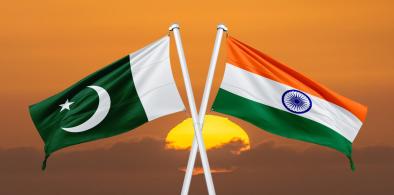
The central lesson is simple: unresolved India-Pakistan hostility weakens South Asia from within. It prevents trade, blocks institutions, raises nuclear risk, politicizes water, militarizes borders, and diverts attention from human development. Both countries will continue to disagree on major issues. But disagreement does not require permanent hostility. Strategic maturity means building rules to manage conflict before conflict manages the region.