Representational Photo

India-China Eight-Point Agreement: A Tactical Thaw, but Trust Remains Elusive

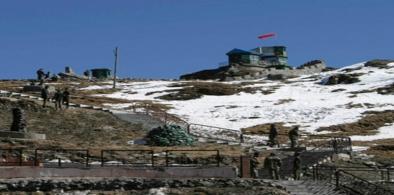
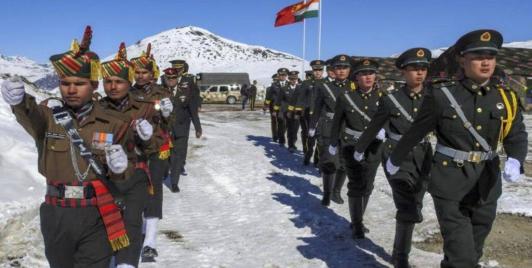
Hopes for Sino-Indian relations centre on a cautious diplomatic thaw, institutionalised border stability and renewed high-level engagement. Indian negotiators and defence planners are well aware that “trust must be verified”. While the activation of these eight points provides valuable channels to prevent an accidental kinetic clash on the ground, the real test of China’s sincerity will not be the joint statements signed in Beijing, but whether it ceases infrastructure build-ups and respects the historical patrolling rights of Indian troops along the LAC.

What's in a Name? Nomenclature Diplomacy Says Much About Changing Geopolitics

By removing the ‘Indo’ prefix from Indo-Pacific the US implicitly acknowledges that it no longer unilaterally defines the eastern strategic landscape. Regional organisations like BRICS continue to redefine the lexicon of ‘rules-based order’ to insulate themselves from western domination.

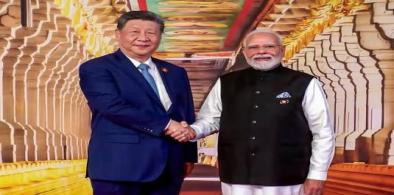
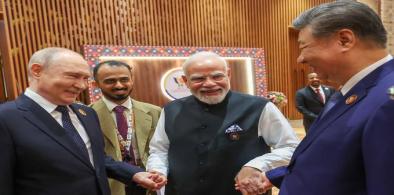
India-China Ties: Modi-Xi Meeting Signals Limited Thaw

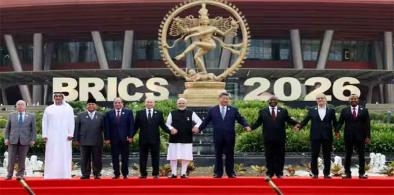
The bilateral discussion between Prime Minister Narendra Modi and Chinese President Xi Jinping on the sidelines of the 18th BRICS Summit indicates surge in mutual ties, particularly by way of trade. However, little can be expected by way of full settlement of the boundary dispute.

EU Fast-Tracks FTA with India as BRICS Summit Signals Shifting Geopolitical Dynamics

The timing of the EU announcement coincided with the BRICS+ Summit in New Delhi, creating speculation about whether the EU was seeking to reinforce its strategic engagement with India amid the growing influence of the BRICS grouping.

More on Geopolitics, Security and Strategic Affairs

India@75: On right path, but some drags on growth

During the last eight years, Prime Minister Modi has elevated the quality of governance to a higher level  and has introduced several imaginative schemes,  keeping in view the requirement of the people at the lower economic level as well as the compulsive need to forge ahead in terms of technology and productivity

Make in India in defence manufacturing: Significant initiatives but still a long way to go

In recent years there has been a paradigm shift in the manner in which the government is bringing about significant policy measures to make India self-reliant and instituting mechanisms to overcome bureaucratic bottlenecks which had plagued the system for long

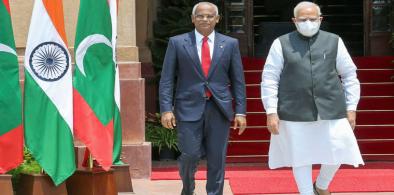
India-Maldives ties set for consolidation, but China remains elephant in the room

Although the Solih visit went off very well, concerns remained over domestic politics in the Maldives.

Bhutan, the 'world’s happiest country’, needs a peace and reconciliation process

To reconcile the people of Bhutan and bring peace, we need collaborative efforts. Community agencies, local organizations, religious leaders, politicians, the King of Bhutan and businesses, all can play essential roles in this process

The importance of fraternity in India’s social democracy

The challenges in the path of the fraternity project are many. But we must overcome them, as it is on the pillar of fraternal relations that a well-functioning and healthy democracy rests

Making learning fun: And why it is important to teach students ethics of work

Yet, with new technologies of 3D printing, reasonably priced materials and the Internet, one can teach students in such a way so that learning becomes enjoyable

Pakistanis asked to renew national pride through new national anthem

The entire exercise can be seen as a striving to raise national morale among the people buffeted by economic stress and political turbulence

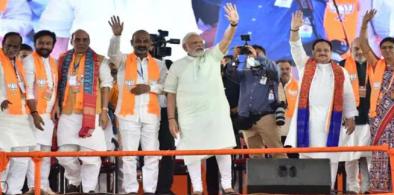
Modi’s call to woo Pasmanda Muslims: Clever politics or change of stance?

What is needed more is an end to the hate campaigns against the Muslim community and the start of affirmative action for the weaker sections of the Muslim population, writes Dr Ram Puniyani for South Asia Monitor

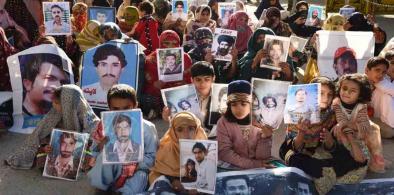
Balochistan's missing persons and Pakistan's violation of the right to truth

Thousands of Pakistani families are bearing the violation of the right to truth. Balochistan has been confronted with the burning issue of missing persons for the past two decades, writes Nizam Hassan for South Aisa Monitor

Is China eyeing more territory in India and Bhutan?

The visit by the Indian Army chief to Bhutan in the backdrop of China’s territorial advances in Bhutan and India have brought into focus China’s future intentions, writes Lt Gen P. C. Katoch (retd) for South Asia Monitor

Why India should reconsider its ties with Russia

But even if we put the moral aspect aside and try to be pragmatic, to regard Russia as a future strategic partner is also wrong. It will not bring any benefit - economic or military – to India, write Prof (Dr) Vesselin Popovski, Prof Abhinav Mehrotra and Surabhi Bhandari for South Asia Monitor

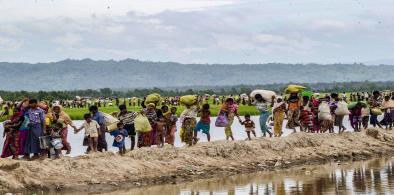
Will ICJ ruling open the door to Rohingyas' return to Myanmar?

By holding the military accountable for its atrocities against the Rohingya, the ICJ might create the incentive for further international action to ensure justice for all victims of Myanmar’s security forces, writes Dr Arpita Hazarika for South Asia Monitor

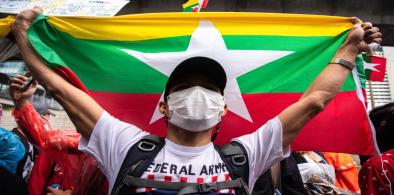
Myanmar’s executions: A people let down by the world

The recent executions are an attempt to terrorize the people to move away from that path of dissidence and political activism, writes Sreeradha Datta for South Asia Monitor

Population as a democratic dividend: Skill training at international levels is key to India securing its citizen’s future

High quality STEM education will enable India to lead the world in the evolving technological and knowledge-based economy, writes Amb Sarvajit Chakravarti (retd) for South Asia Monitor

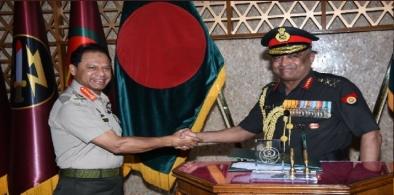
Indian Army chief’s Dhaka visit: Bilateral security and strategic ties are set to get stronger

India-Bangladesh bonhomie on the security front has reached newer heights. Their strategic relations will continue to add more depth and momentum, writes Kamal Uddin Mazumder for South Asia Monitor