

Iran's Hormuz Card Has a Shelf Life

Iran's Hormuz Card Has a Shelf Life: Energy Diversification Will Reduce its Strategic Leverage Over Time

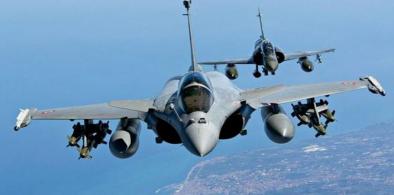
India's energy profile has changed significantly over the past decade. Crude imports from Russia, increased purchases from the United States, Brazil, Angola and other suppliers, together with expanding strategic petroleum reserves, have reduced dependence on any single source. India's energy vulnerability has not disappeared, but it has become more diversified.

How the Money Moves: The Velocity Challenge in South Asia's Growth Story

As South Asia seeks to become one of the principal engines of global growth in the twenty-first century, velocity may emerge as one of the most important indicators of economic vitality. The countries that prosper most will not necessarily be those that create the most money, but those that use it most effectively.

Growing Salience of BIMSTEC : Reconnecting the Bay of Bengal Civilisation Through Trade and Connectivity

If the twentieth century was shaped by the Atlantic and the early twenty-first century witnessed the rise of the Pacific, the coming decades may well belong to the Bay of Bengal. The foundations of that future will not be built solely through trade agreements or infrastructure projects. They will emerge from a shared commitment to connectivity, cooperation and civilisational understanding.

West Bengal's Economic Transformation: A Blueprint for Growth

West Bengal has the resources, talent, culture, and strategic location necessary to become one of India’s most prosperous states. By combining efficient governance, investment-friendly policies, infrastructure development, education, innovation, trade expansion, tourism growth, environmental sustainability, and social inclusion, the state can achieve rapid economic transformation and substantially raise incomes, employment, and overall quality of life.

More on Geoeconomics, Trade and Development

Is China engineering a new world order?

As Beijing midwives a multipolar world as an alternative to the world order dominated by the US, there are many issues that stand in the way. They include simmering border disputes with India and its aggressive behaviour along the Line of Actual Control, its claims on the Japanese islands of Senkaku, and the dispute over the Spratly Islands that involve the Philippines, Taiwan, Malaysia, Vietnam, and Brunei.  Above all is its menacing posture towards Taiwan.

AUKUS is strong regional insurance against Indo-Pacific domination by China

AUKUS remains a symbol of a clear message to Beijing, and regional players, as a powerful deterrence to step up militarily if necessary; and remains a crucially needed counterbalancing measure that will bring assurances and guarantee that the West’s pivot and readiness to maintain its Indo-Pacific presence are here to stay.

Is Japan's move towards militarisation beneficial for the region?

Instead of relying solely on the West and strengthening military preparations against Beijing, Japan should play its own diplomatic role as China's neighbor in de-escalating regional tensions, creating a different atmosphere in the Indo-Pacific region. 

Firefight-phobic PLA purchases advanced maces. How much longer will India manage disputed borders ‘bulletlessly’?

The CPC-PLA combo’s very smart use of bullet-less border management agreements, incursions/transgressions, and building villages along the LAC is continuing because the Indian Army is following bullet-less methods initiated by the Chinese even after losing 20 soldiers including a colonel by PLA’s brutal and barbaric attack in June 2020.

The free world should not succumb to Beijing’s Taiwan blackmail

The rest of the democratic world and the alliance of free nations need to stand in solidarity with Taiwan now more than ever, as Taiwan remains the last bastion against the growing autocratic forces, even surpassing Ukraine in terms of criticality and the costs at stake.

Hard power replacing soft power: China’s spy balloon marks a new phase of big-power confrontation

The balloon incident is a brazen willingness by Beijing to flex its power outside its region, and to challenge the US at its continental base, magnifying its continuous attempts to expand its influence across the world through intelligence efforts targeting businesses, universities and other institutions.

India's 'complex' ties with Russia, Indo-Pacific security to figure during Blinken visit to India

“What will be even more interesting is immediately following that ministerial meeting, the Secretary will participate in a panel at the Raisina Dialogue”, Lu said. “I’m not aware that they’ve ever had an hour-long public event where the four foreign ministers have had a chance to talk about the Quad, and to demonstrate how it is getting tangible and concrete things done in the Indo-Pacific”, he said. 

Can good journalism shape better India-China relations?

Journalism takes the centre stage in Sino-Indian relations as it builds narratives, perceptions and a repertoire of political attitudes that can recreate, reshape and reprocess the original information that journalism disseminates. This becomes even more challenging when the audience is a few billion people  - considering China and India together - and their consumption of information is not just restricted to the conventional legacy media but also vibrant social media in the digital space. 

China's military and economic muscle-flexing puts Indo-Pacific region on a knife-edge

Taiwan is but one piece in China’s arc of aggression that runs through the Indo-Pacific region and veers into the Himalayas for the border confrontation with India. The US sees Beijing’s policy in the region as a step towards global domination.

Nepal's strategic importance makes it courted by major powers

Like other nonaligned states in South Asia, Nepal seeks strategic space to pursue relations with China, India, and the United States on its own terms. That’s harder to do as countries fall over one another to court Kathmandu.

Bangladesh-Myanmar military cooperation can enhance regional stability

Strengthening military cooperation has the potential to provide strategic benefits for both of them. Due to their geostrategic importance, Bangladesh and Myanmar have become a hotspot in the western front’s Indo-Pacific Strategy (IPS) and China's Belt and Road Initiative (BRI).

Top US, Indian security officials discuss military coordination over China threat; India's regional leadership commended

Separately at a meeting of the India-US initiative on Critical and Emerging Technology (iCET) led by Doval and US National Security Adviser Jake Sullivan, the US committed to expeditiously review a GE proposal to jointly produce jet engines to power jet aircraft manufactured indigenously by India, according to the White House

Indonesia, Malaysia mull joint deterrence against 'common threats' in Indo Pacific

Indonesia sees Malaysia and Australia as key players, including Vietnam and the Philippines, in forming a stronger common cooperative platform in facing the challenges of China in the Indo-Pacific.

Bangabandhu Tunnel: A game-changing connectivity infrastructure coming up in Bangladesh with Chinese help

The tunnel will link the Asian Highway network. Through this route, goods can be moved directly across the border between India, Bangladesh, and Myanmar.

With BrahMos missile, India acquires significant strike capabilities

China’s English language publication Global Times had said these "observers" - euphemism for party apparatchiks - had warned New Delhi of “new barriers” in talks related to de-escalation if India were to go ahead with the transportation of its most advanced missile to the western side of the LAC. It was also reported that China was quite riled about widening of roads on the Indian side of the LAC for the purpose of transporting heavy equipment, including BrahMos missiles.